李在明在上任后将其政治命运与股市表现紧密相连,曾承诺在任期内将 Kospi 指数推升至五千点,并积极鼓励民众将资金投入股市。政府甚至在五月底批准了高风险的单一股票杠杆型 ETF,吸引了大量资金。(关键数字:5,000)
然而随著市场反转,Kospi 指数从六月的高点暴跌近百分之四十,导致许多年轻投资者与散户面临巨额亏损。这不仅引发了民众对政府施政的强烈不满,更可能对执政党未来的选举选情造成严重的政治冲击。(关键数字:40)
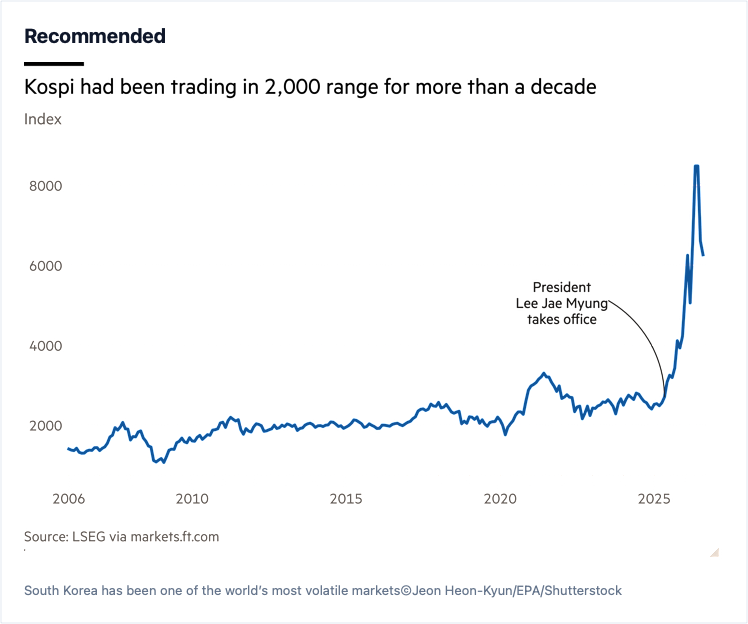
The recent extreme volatility and tech sell-off in the South Korean stock market have caused heavy losses for retail investors, directing public anger toward President Lee Jae Myung and driving his approval rating down to around 44.5 percent. Many investors are facing margin calls and strongly blaming the government for overly fueling the stock market frenzy.
Upon taking office, Lee closely tied his political fate to the stock market's performance, promising to push the Kospi index to 5,000 during his term and actively encouraging citizens to invest their wealth in equities. The government even approved risky single-stock leveraged ETFs in late May, which attracted massive amounts of capital.
However, as the market turned, the Kospi index plummeted by nearly 40 percent from its June peak, leaving many young and retail investors with massive financial losses. This has not only sparked strong public dissatisfaction with the administration but also poses a severe political threat to the ruling party's prospects in future elections.