尽管美国千禧一代(目前年龄在30岁出头至45岁左右)去年在牛油果上的花费估计仍高达约15亿美元,但关于这一代人经济拮据的刻板印象已不再符合事实。这与2010年代形成了鲜明逆转:当时希腊青年失业率超过50%,英国同龄人工资停滞,约40%的德国年轻人与父母同住。《经济学人》汇总了32个富裕国家的千禧一代收入数据,发现按通胀调整后的收入计算,仅有意大利、希腊和日本三个国家的千禧一代不如同龄时的前几代人:意大利千禧一代在30岁时的收入比同龄时的X世代(约生于1965年至1979年)低10%;希腊千禧一代仍落后于2009年危机前的2000年代年轻人;日本35岁人群在2019年的家庭收入也低于1994年泡沫破裂后不久的同龄人。在其余29个国家中,千禧一代的实际收入均高于前几代人。此外,美国千禧一代成为管理者的概率与同龄时的X世代相当,占美国亿万富翁的近十分之一(是2011年X世代占比的两倍多),执掌着Anthropic、OpenAI和Meta三大人工智能巨头,并在匈牙利、荷兰、沙特和纽约市掌权(在10月25日巴西总统决选中,一位45岁的千禧一代右翼候选人也有望击败80岁的左翼现任总统),同时占美国国会议员的14%,博彩市场甚至认为下一任美国总统有约50%的概率是千禧一代。
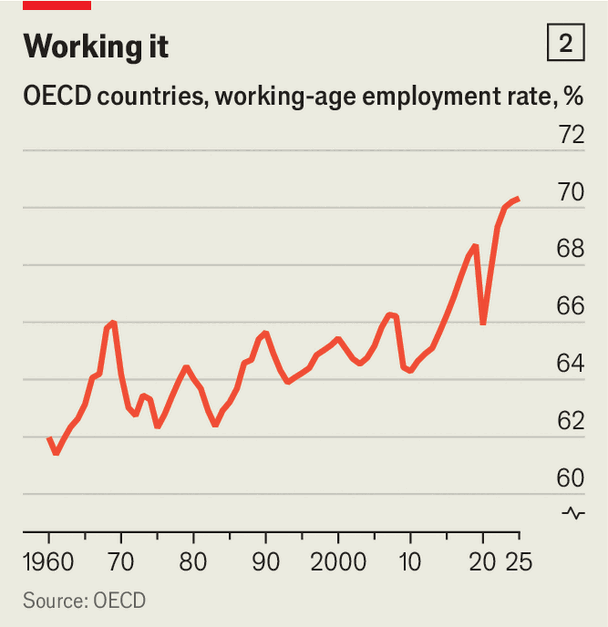
千禧一代命运的逆转主要归功于强劲的劳动力市场和人口结构变化。2007至2009年的金融危机曾重创刚步入职场的年轻人,但如今富裕世界的劳动力市场处于历史最强水平,例如35至44岁的希腊人中有近80%实现了就业,创下该年龄段的历史最高比例。人口结构也提供了助力:新冠疫情加速了婴儿潮一代(生于1946年至1964年)的退休进程,美国一项研究发现,截至2022年底出现了300万“超额退休人员”;同时,在经合组织(OECD)的38个成员国中,有10个国家的劳动年龄人口正在下降,这种相对的劳动力稀缺使千禧一代受益匪浅。
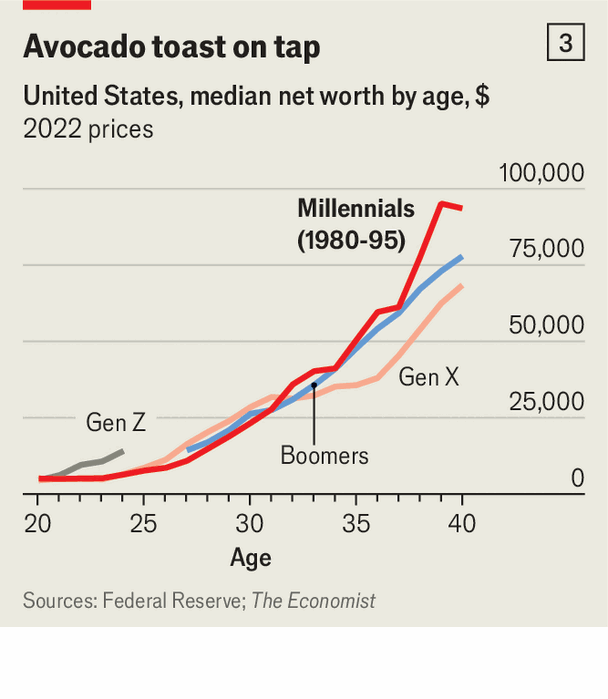
在住房和财富积累方面,千禧一代也迎头赶上。虽然美国千禧一代在30岁时的住房拥有率仅为40%左右(远低于同龄时的X世代),但如今已步入40多岁的最年长千禧一代的拥房率已与X世代完全持平;英国财政研究所(IFS)的数据也显示,英国千禧一代在30岁时的自住率落后前几代人20个百分点,但到40岁时这一差距已缩小了一半。除经济改善、抵押贷款放宽和还清学生债务外,受教育时间延长和晚婚(美国男性初婚中位年龄从20世纪90年代的27岁升至31岁)也是此前推迟购房的原因,这也解释了为何年收入超过20万美元的富裕年轻人拥房率远低于前几代同等人。如今,千禧一代的财富积累速度已快于同龄时的前几代人:他们不仅在人工智能冲击中占据管理层优势(真正受冲击的将是生于1997至2012年的Z世代),还将迎来相当于富裕国家每年GDP约10%的遗产浪潮——IFS估算,英格兰20世纪80年代出生者的实际继承遗产中位数将达到约13.6万英镑(18万美元),远高于60年代出生者的6.6万英镑。
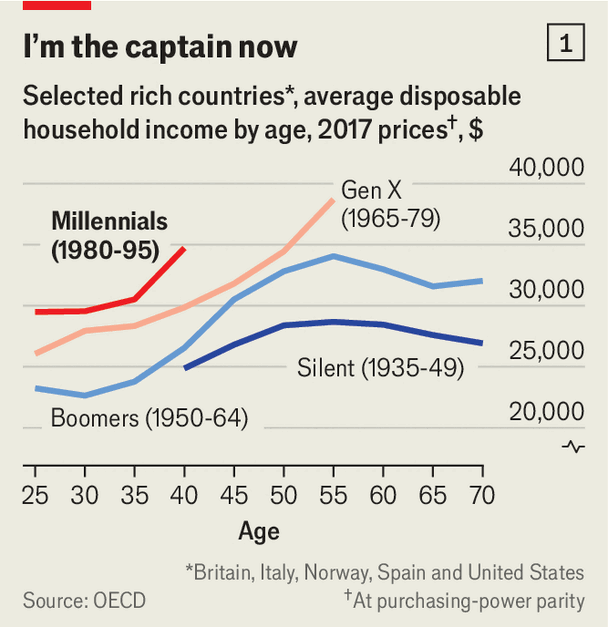
Although American millennials—now in their early 30s to mid-40s—still spent an estimated $1.5bn on avocados last year, they are no longer struggling as they did in the 2010s, when Greek youth unemployment exceeded 50%, British youth wages stagnated, and 40% of young Germans lived with their parents. Across 32 rich countries analysed by The Economist, millennials have lower inflation-adjusted incomes than previous generations at the same age in only three outliers: Italy (where 30-year-olds earned 10% less than Gen-Xers born between 1965 and 1979), Greece (still trailing pre-2009 levels), and Japan (where 35-year-olds in 2019 earned less than peers in 1994). In the remaining 29 nations, millennials earn higher real incomes than past cohorts. They are also reaching the top: American millennials match Gen X’s managerial rates, account for nearly a tenth of American billionaires (over double Gen X’s share in 2011), run AI giants Anthropic, OpenAI, and Meta, lead governments in Hungary, the Netherlands, Saudi Arabia, and New York City—with a 45-year-old millennial favoured to beat Brazil’s 80-year-old incumbent on October 25th—hold 14% of seats in America’s Congress, and have roughly 50% odds in betting markets of supplying the next American president.
A booming labour market and favourable demographics drive this reversal. Having suffered disproportionately during the 2007-09 financial crisis, millennials now enjoy record employment, with nearly 80% of 35- to 44-year-old Greeks in work. Meanwhile, whereas baby-boomers (born 1946-64) initially delayed retirement after the financial crisis, the covid-19 pandemic produced 3m “excess retirees” in America by late 2022, and working-age populations are shrinking in ten of the 38 OECD countries, creating labour scarcity that benefits millennials.
Millennials are also catching up in housing and wealth. Although only 40% of American millennials owned homes at 30, those now in their 40s match Gen X’s ownership rate, while Institute for Fiscal Studies (IFS) data show British millennials halved their 20-percentage-point ownership deficit between ages 30 and 40. Alongside relaxed mortgages and paid-off student debt, delayed buying reflects longer schooling and later marriage—the median first-marriage age for American men rose from 27 in the 1990s to 31—helping explain why young Americans earning over $200,000 have much lower ownership rates than past peers. Now building wealth faster than previous generations, millennials are insulated as managers from AI disruption that threatens Gen-Zers (born 1997-2012) and stand to reap an inheritance boom worth roughly 10% of rich-world GDP annually, with the IFS projecting median real bequests in England to jump from £66,000 for 1960s-born cohorts to £136,000 ($180,000) for those born in the 1980s.
Source: Don’t feel sorry for millennials. They are living it up now
Subtitle: It is easy to exaggerate their economic woes
Dateline: Oct 15th 2026\n