中国的节俭民众正变得更加节俭,今年大部分时间里家庭贷款一直在萎缩。9月份短期消费贷款同比下降8.3%,创下历史最大跌幅;8月份消费贷款存量更降至中国严苛的“动态清零”封控以来的最低点。在10月初的公共假期期间,普通消费者的支出比2025年同期减少了2%。中国的零售商和自疫情以来一直试图刺激家庭打开钱包的政府都感到失望。家庭借款减少的部分原因是长期的房地产崩盘导致房屋销售暴跌、抵押贷款申请减少以及许多购房者提前还贷。这终结了持续数十年的家庭负债率上升趋势:中国家庭债务占GDP的比例在2020年达到60%并保持持平,直到去年略有下降,而富裕国家整体的这一比例略低于70%。
然而,房地产低迷并不能完全解释消费信贷的下滑,这更多源于银行因借款人违约风险上升而变得更加惜贷。尽管财政部去年开始向银行发放补贴以降低新车和家居装修等大额消费贷款的利率,但咨询公司龙洲经讯(Gavekal)计算显示,去年可能有超过10%的成年人存在未偿债务,高于前一年的不到8%。当普通民众无力偿还贷款时,消费信贷利率本应上升以抵消风险;但由于在中国拒绝政府补贴并不明智,银行最终对账面贷款风险定价过低,只能通过筛选剔除更多边缘借款人来控制风险。
银行风险厌恶情绪升温的另一个原因是难以剥离不良消费债务。银行通常将不良资产以面值的一小部分折价出售给高风险承受能力的投资者。2021年初,银行出售逾期消费贷款的平均价格约为面值的30%,但到2026年初,这一比例已暴跌至5%,表明借款人一旦违约就几乎无意偿还。这可能是政府整顿黑恶势力的催收机构所带来的意外后果。此前催收公司常采用“软暴力”手段,如每天拨打数百次电话的“呼死你”、向亲友或雇主泄露征信记录、发送合成淫秽图片甚至半夜上门,导致负债者自杀事件频发。今年当局出台全国性规定,自8月起限制催收人员每天向债务人拨打电话不得超过6次,禁止联系其亲友或凌晨上门,并要求对所有互动进行录音。这虽然保护了借款人免受骚扰,却也导致银行从一开始就减少放贷。
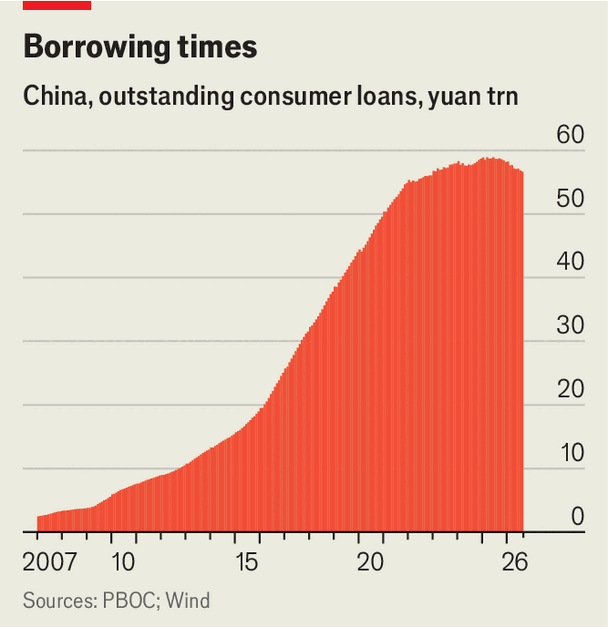
China’s frugal citizens are borrowing and spending less, with household lending shrinking for most of the year. Short-term consumer loans dropped by a record 8.3% year-on-year in September, while the stock of consumer loans in August fell to its lowest level since the harsh “zero-covid” lockdowns. During an early October public holiday, typical consumer spending declined by 2% compared with the same period in 2025, disappointing both retailers and a government striving to boost consumption. Part of this borrowing decline stems from the prolonged property crash, which has reduced mortgage applications and prompted early repayments. Consequently, a decades-long rise in household indebtedness has ended: China’s household debt-to-GDP ratio hit 60% in 2020 and remained flat until edging down last year, compared with just under 70% across rich countries.
However, the property slump does not fully explain falling consumer credit, which owes more to banks growing reluctant to lend as borrowers become riskier. Although the finance ministry began subsidising banks last year to lower interest rates on loans for big-ticket items like new cars and home renovations, consultancy Gavekal calculates that over 10% of adults had unpaid debts last year, up from under 8% the year before. Normally, rising repayment struggles would push consumer credit rates higher to offset bank risk. Because refusing government subsidies is unwise in China, banks end up underpricing loan-book risks and compensate by screening out more borderline borrowers.
Banks’ heightened risk aversion is further driven by the difficulty of offloading bad consumer debts to high-risk investors. In early 2021, banks could sell overdue consumer loans for an average of around 30% of face value, but by early 2026 that price had collapsed to just 5%, indicating that delinquent borrowers increasingly have no intention of paying back. This trend may be an unintended consequence of a government crackdown on gang-like debt-collection agencies that used “soft violence”—such as calling debtors and their contacts hundreds of times daily, leaking credit histories to employers, sending obscene images, and making midnight home visits—which frequently drove debtors to suicide. New national rules effective in August cap collection calls at six per day, bar contacting family and friends or making late-night visits, and mandate recording all interactions, protecting borrowers from harassment but ultimately leaving fewer borrowers able to obtain loans.
Source: Another warning sign for China’s economy: falling consumer credit
Subtitle: A crackdown on aggressive debt collectors is good news and bad news
Dateline: Oct 15th 2026\n