研究团队运用大型语言模型及词典情感分析法,比对分析师在欧洲央行管理委员会决策前后发布的「前瞻」与「回顾」报告,借此量化分析师观点的转变。透过文本分析将经济与通膨预期分离后,剩余的残差即反映分析师对委员会鹰派或鸽派立场理解的变化,这项被称为「政策解读冲击」的指标若出现一个标准差的变动,能显著预测实质GDP、就业率、GDP平减指数以及主要短期利率市场的后续走向。
论文进一步证实,分析师并非被动汇整资讯,而是具影响力的政策解读者;其「政策解读冲击」与传统高频利率冲击指标仅呈微弱至中度的正相关,显示报告包含了资产价格即时重定价未能完全反映的独立讯号。虽然这项研究并未确立发布报告对金融价格的直接因果关系,但结果表明分析师的政策解读具有实质经济意义,因此决策者应高度重视其政策沟通在分析师群体中的接收与解读情况。
Although market participants widely regard sell-side analysts at major investment banks as mere conduits of information or sources of entertainment lacking material influence in liquid markets like short-term euro interest rates, a recent European Central Bank (ECB) working paper reveals that reports from major institutions—specifically BNP Paribas, Deutsche Bank, Goldman Sachs, JPMorgan, Morgan Stanley, and SocGen—provide unique insights into how market intermediaries interpret monetary policy decisions, proving far more important than commonly assumed.
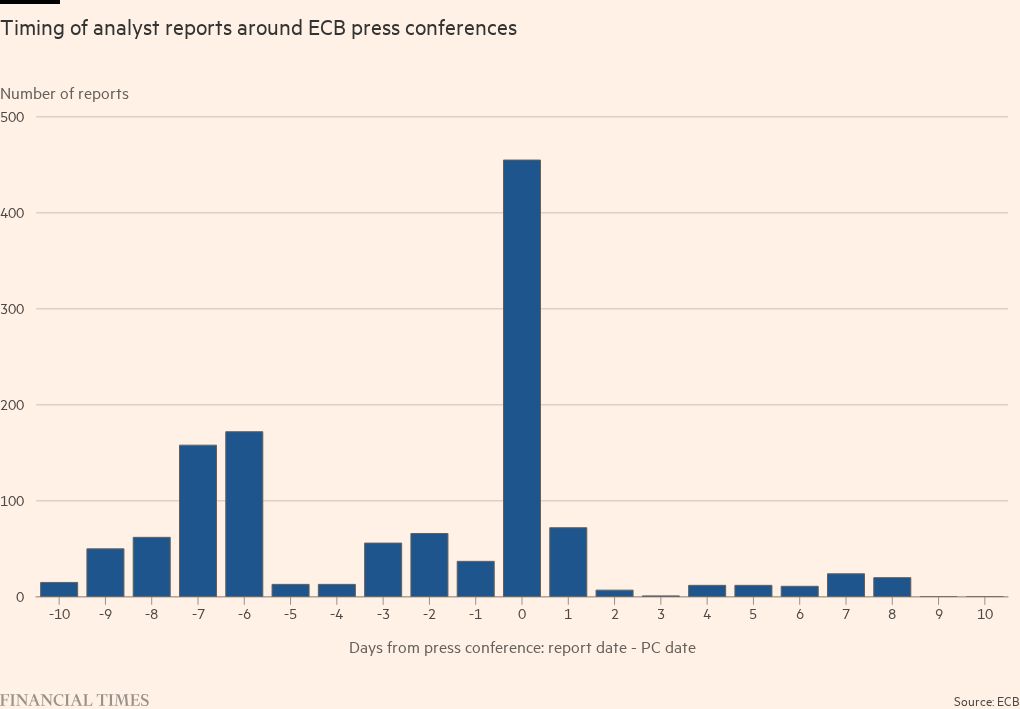
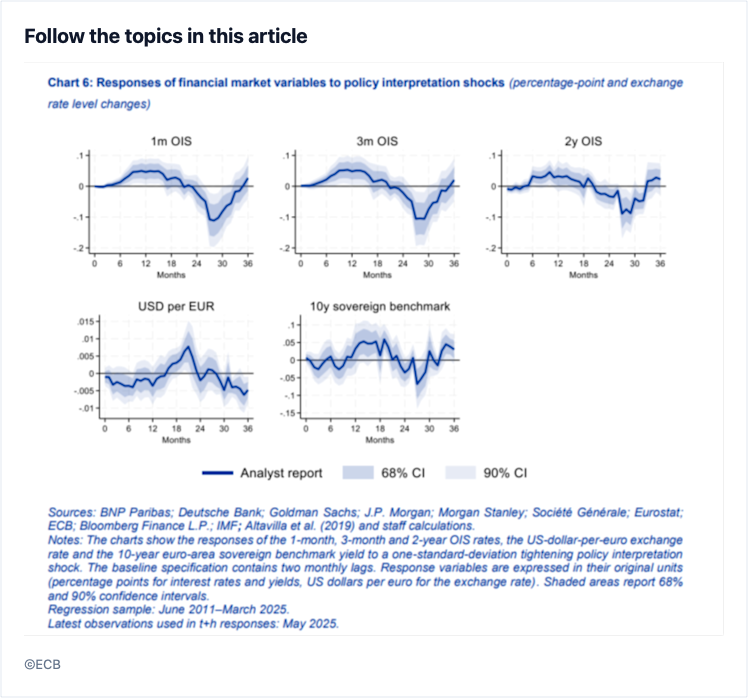
The authors used large language models and dictionary-based sentiment analysis to compare 'preview' and 'recap' notes published by analyst teams before and after ECB Governing Council decisions, thereby quantifying shifts in their views. By using text analysis to strip out components related to economic and inflation outlooks, the remaining residual captures changes in the analysts' perception of the Council's hawkish or dovish balance; a one-standard-deviation shift in this 'policy interpretation shock' measure significantly predicts movements in real GDP, employment, the GDP deflator, and key short-term interest rate markets.
The paper further demonstrates that analysts act as influential interpreters rather than passive information aggregators, as their 'policy interpretation shocks' show only weak to moderate positive correlations with standard high-frequency rate shock measures, indicating an interpretive signal not fully captured by immediate asset repricing. While the approach does not establish a direct causal effect of publishing reports on financial prices, the findings show that these interpretations contain economically relevant information followed by macroeconomic and financial shifts, suggesting policymakers should pay close attention to how their communications are received by analysts.