在发达经济体,政府债券收益率飙升与庞大财政赤字及债务存量相互交织,引发了严重的债务可持续性危机。9月14日,美国十年期国债收益率突破5%,创二十年新高,富裕国家十年期国债收益率中位数升至4%以上,达到过去15年来的最高水平,约为2015至2021年平均水平的五倍。与2007年收益率处于类似水平时政府仅需出售占GDP约11%的债务不同,今年各国因巨额赤字和低息旧债置换,发债规模翻倍至GDP的两倍以上。发达国家公共债务占GDP的比重已从2000年代初的70%攀升至近110%,其中美英两国债务比重分别翻倍和近两倍。同时,美国今年财政赤字预计将达GDP的6%,法国则超过5%;经合组织(OECD)成员国利息支出占GDP的比重已超3%,美国更逼近5%,预计到本年代末美国年利息支出可能增至2.7万亿美元。
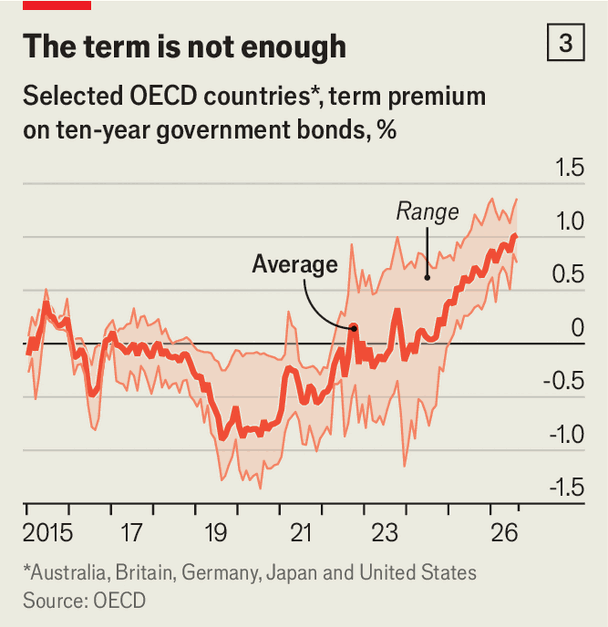
期限溢价的系统性抬升和传统买家的撤退进一步加剧了主权融资压力。OECD估算,截至2025年底衡量长期贷款额外回报的期限溢价较疫情前上升逾1个百分点并在今年继续攀升,使美国期限溢价创十余年来新高;麻省理工学院与斯坦福大学学者的研究表明,美债曾经享有的“便利溢价”到今年7月已基本消失。人工智能基础设施的数万亿美元投资热潮正在争夺资本,而退出量化宽松的央行以及转向高收益股票资产的养老基金使市场由价格敏感型边际买家主导,迫使各国在2025年为其十年期国债支付较旧债高出约2个百分点的成本。为规避期限溢价,各国大幅缩短借贷期限,十年期以上新债份额降至2009年以来最低,而一年期以内的短期国库券自2023年起占据主导,其中短期国债已占美国未偿债务近四分之一,将美债平均到期年限压缩至不足六年。
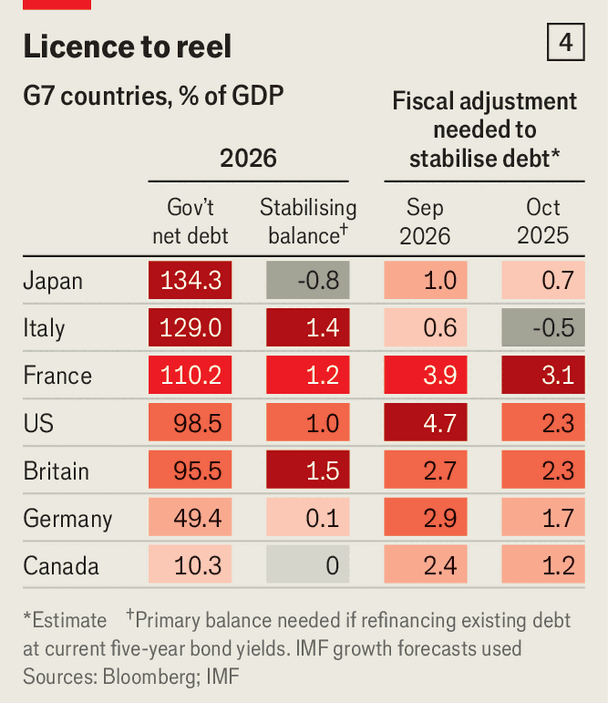
然而,缩短存续期只是推迟了痛苦并埋下再融资陷阱:经合组织国家三分之一的固定利率债务将在2028年到期,近半数在2030年到期,而由于油价重返百元以上推高通胀预期,欧央行与美联储均维持加息前景。经测算,若以当前五年期收益率完全置换存量债务,英国需要实现相当于GDP 1.5%的基本财政盈余才能维持债务稳定,意大利、法国和美国分别需要1.4%、1.2%和1.0%的盈余。现实中,美国正面临近4%的基本赤字(需收紧近5个百分点),法国赤字近3%(需收紧约4个百分点且政府收入已超GDP 50%无增税空间)。若利率长期处于高位且各国拖延财政整顿,旧债展期推高利息账单将使赤字进一步扩张并逼高收益率,导致恶性循环并在未来引爆更严峻的偿债危机。
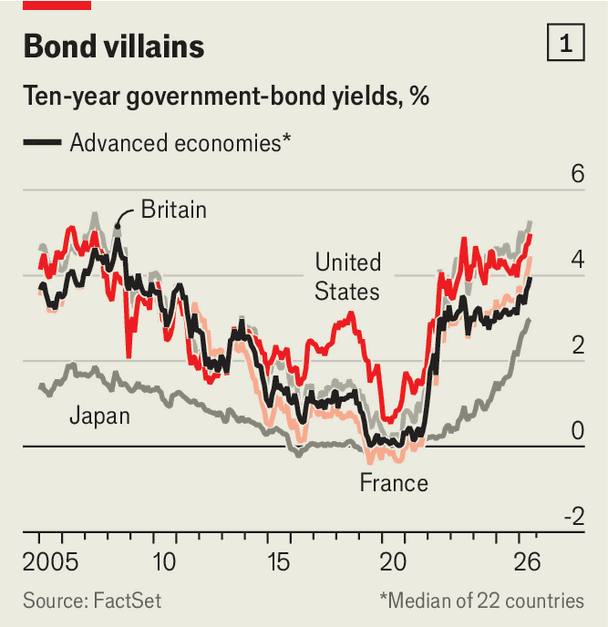
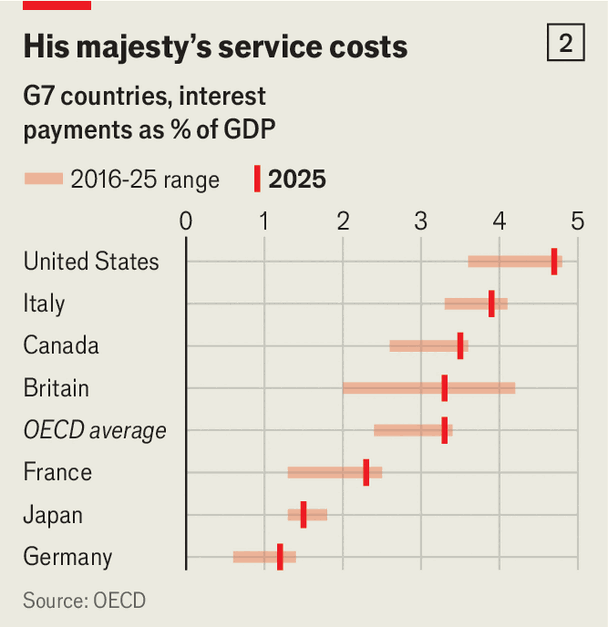
Across the rich world, surging bond yields are colliding with record public debts and expanding deficits to threaten fiscal sustainability. On September 14th the yield on ten-year American Treasuries topped 5%, reaching a two-decade high, while the median rich-world ten-year yield rose above 4%, roughly five times its 2015-21 average. Advanced-economy gross public debt stands near 110% of GDP, having doubled in America and nearly tripled in Britain since the early 2000s. Unlike in 2007, when borrowing requirements equalled around 11% of GDP at similar yield levels, governments this year must sell more than twice as much to fund deficits—projected at 6% of GDP in America and over 5% in France—and refinance maturing paper. Across the OECD interest payments exceed 3% of GDP, and in America they near 5%, with annual federal interest bills potentially tripling to .7trn by 2030.
Structural shifts have further inflated borrowing costs by eroding the term premium and altering the buyer base. The OECD estimates that by late 2025 the average term premium had climbed over one percentage point above pre-pandemic levels, while research confirms that Treasuries’ traditional convenience yield over top-rated corporate debt had vanished by July. With central banks unwinding bond portfolios and pension funds shifting from defined-benefit debt holdings to equity investments, price-sensitive marginal buyers demanded two percentage points more on ten-year debt issued in 2025 compared to retiring notes. To evade surging long-term yields, governments have pivoted sharply to short-term paper; bills now comprise nearly a quarter of outstanding American federal debt, compressing its average maturity to under six years and leaving more than ten-year debt issuance at its lowest level since 2009.
This borrowing shortcut introduces severe rollover vulnerabilities as a third of OECD fixed-rate debt matures by 2028 and nearly half by 2030, even as stubborn inflation and elevated oil prices keep central-bank policy restrictive. If governments were forced to refinance entire debt stocks at prevailing five-year yields, Britain, Italy, France, and America would require primary budget surpluses of 1.5%, 1.4%, 1.2%, and 1.0% of GDP, respectively, just to stabilise debt-to-GDP ratios. Instead, America and France currently run primary deficits of nearly 4% and 3% of GDP, demanding painful fiscal consolidations of up to five percentage points. Because high tax burdens limit additional revenue extraction in European states like France, where tax takes already exceed 50% of GDP, delaying budgetary adjustments will inevitably trigger a self-reinforcing spiral of higher interest payments, wider deficits, and even steeper yields.
Source: Soaring bond yields, gaping deficits and towering debts: what could go wrong?
Subtitle: The rich world is flirting with fiscal disaster
Dateline: Sep 17th 2026\n