日圆持续走软的主要驱动力来自「利差交易」(carry trade)。由于美国政府债券殖利率居高不下,而日本利率依然偏低,投资人借由借入廉价的日圆,转而投资高收益的美国资产或科技股。此外,日本散户投资者也开始恢复针对高收益货币的日圆空头部位。
虽然目前利差交易无序平仓的风险较低,但若真的发生,将对全球金融资产造成广泛冲击。归根究底,只要美国高殖利率持续且日本央行坚持谨慎升息,在这些根本因素改变之前,日圆仍将是具有吸引力的做空标的,政策干预的长期效果将十分有限。
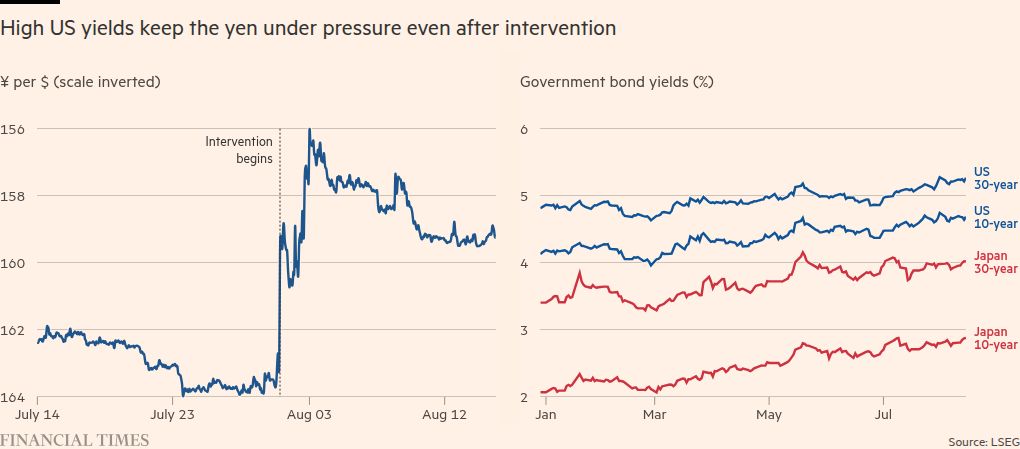
Despite a historic joint US-Japanese intervention two weeks ago that temporarily pulled the dollar down to ¥156, the exchange rate has rebounded to ¥159. Markets remain defiant, with investors consistently and heavily selling the yen every day since the intervention, signaling a strong willingness to fight against policymakers' efforts to support the currency.
The persistent weakness of the yen is largely driven by the carry trade phenomenon. With US government bond yields remaining exceptionally high and Japanese interest rates staying low, investors borrow cheap yen to fund higher-yielding investments in US assets and tech stocks. Additionally, Japanese retail traders are rebuilding short yen positions against high-yielding currencies.
While the risk of a disorderly unwind of these carry trades is currently considered low, such an event could broadly impact global financial assets. Ultimately, as long as high US yields persist and the Bank of Japan maintains a cautious approach to rate hikes, the yen will remain an attractive sell. Interventions are unlikely to have a lasting impact until these underlying fundamental factors shift.