在新潟县村上市,72岁的寡妇须贝千惠子靠每月11万日圆的年金独自生活,光是煤油费就占去预算的三分之一以上。2024年数据显示,65至74岁独居老人每月支出超过可支配收入21%。村上市通过请愿书,要求政府依通膨幅度提高年金。然而2026年年金仅调升约2%,低于前一年3.2%的通膨率,退休族群的生活持续恶化。
为对抗通膨侵蚀购买力,日本政府积极鼓励国民投资股市。2024年扩大的NISA个人储蓄帐户计划允许终身投资上限达1,800万日圆且免税,至2025年底投资总额已达71兆日圆,提前超越目标。东京投资博览会上人潮涌动,反映出民众风险偏好的转变。但在村上市等高龄化乡村地区,老年居民依赖行动餐车购买日用品,消费日益节俭,繁荣的投资热潮与他们的困境形成鲜明对比。
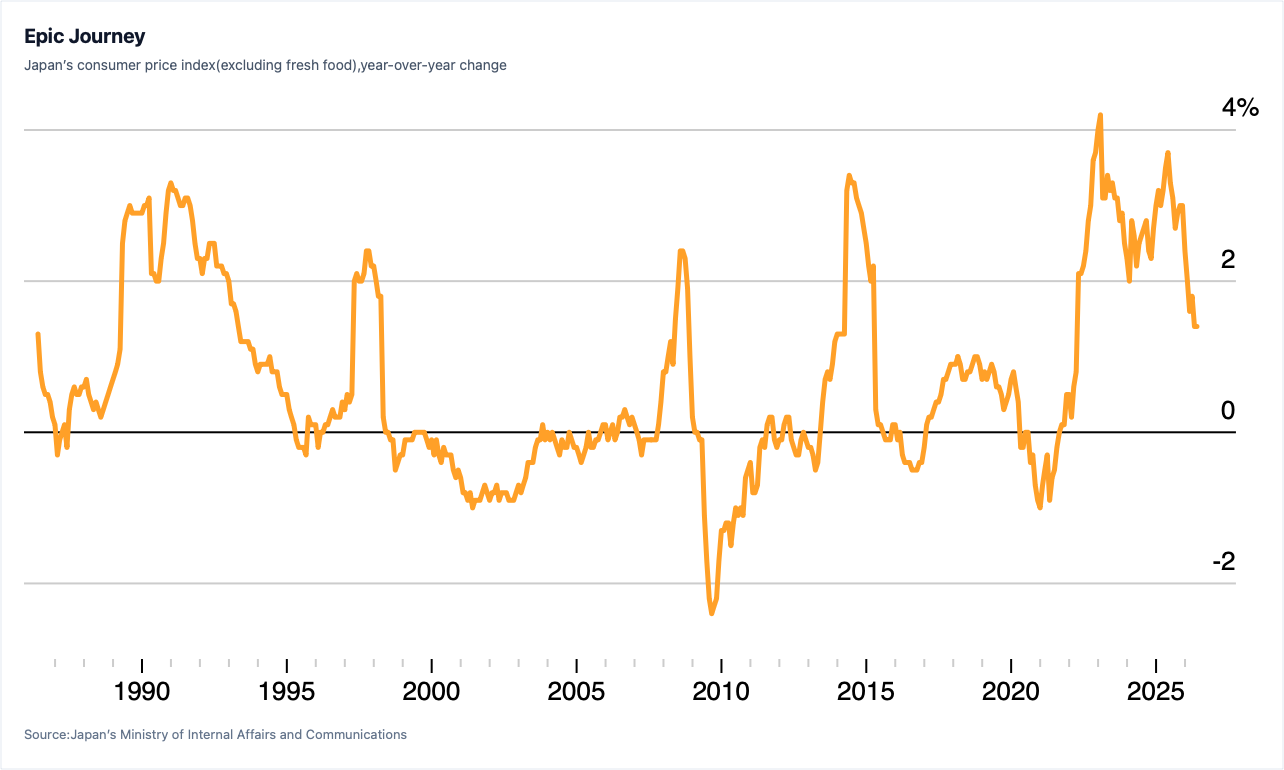
Japan is experiencing an inflation paradox after three decades of deflation. While corporate profits are growing, wages are rising at their strongest pace in decades, and the Nikkei 225 has more than doubled since April 2025, the return of inflation is creating stark winners and losers. Prime Minister Sanae Takaichi has celebrated Japan's economic revival, but opinion polls show that rising prices remain the public's top concern, and her government faces the challenge of sustaining growth without deepening the nation's already enormous debt burden. (Key numbers: 2020, 2)
In the rural coastal city of Murakami, 72-year-old widow Chieko Sugai exemplifies the struggles of Japan's pensioners. Living alone on a monthly pension of 110,000 yen, she has seen kerosene costs consume over a third of her budget. Government data shows that elderly citizens living alone spent on average 21% more than their disposable income in 2024. Although the city petitioned the prime minister to raise pensions in line with inflation, the 2026 pension increase of roughly 2% still fell short of the previous year's 3.2% inflation rate, leaving retirees falling further behind.
To help citizens outpace inflation, the government expanded its tax-free Nippon Individual Savings Account program in 2024, and total investments reached 71 trillion yen by the end of 2025, surpassing the 2027 target two years early. A booming investment expo in Tokyo showcased a new appetite for risk among Japanese households. Yet in aging rural communities like Murakami, where over 40% of residents are 65 or older, the reality is starkly different. Elderly residents rely on mobile grocery trucks and carefully ration their purchases, highlighting the growing divide between Japan's urban investment boom and the deepening hardship in its countryside.