这股庞大的地下需求不仅带来严重的公共卫生风险,还引发了暴力犯罪浪潮。走私者将巴拉圭生产的Tirzec等未获巴西卫生监管机构(Anvisa)批准的药品藏于衣物、童书或雕像中过境,并透过WhatsApp与社群媒体贩售、利用Uber快递送货。这些药品缺乏冷链运输保障与医疗监督,且部分调配药局因缺乏品质控制与无菌处理遭到查封,导致2018至2026年间通报了近3,000起不良反应事件(包含死亡案例)。同时,由于减肥笔价值极高,圣保罗等地频传针对药局保险箱的武装抢劫甚至杀人案件,迫使药局聘请武装保全、将冰箱上锁并减少店内库存。
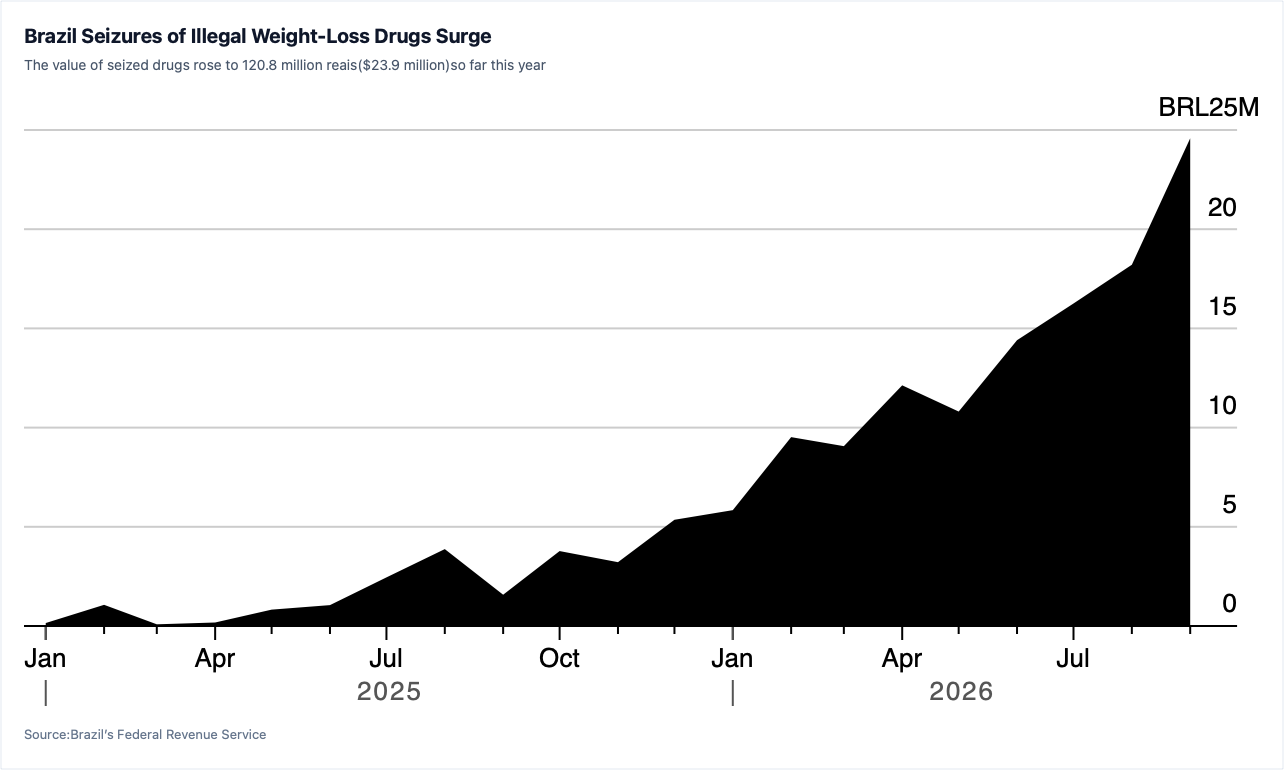
面对日益猖獗的非法交易,巴西联邦警察与卫生监管机构已加强边境查缉与网路扫荡,今年迄今查获的非法减肥药价值已飙升至1.208亿雷亚尔。在合法市场方面,诺和诺德(Novo Nordisk)旗下Ozempic主成分semaglutide的巴西专利已于今年稍早到期,获批上市的学名药预计可将价格大幅压低最多70%。然而,礼来(Eli Lilly)旗下Mounjaro的主成分tirzepatide在巴西仍有十年专利期,在缺乏合法廉价替代品的情况下,许多渴望快速减重的消费者仍持续冒险从巴拉圭黑市购买未经监管的药品。
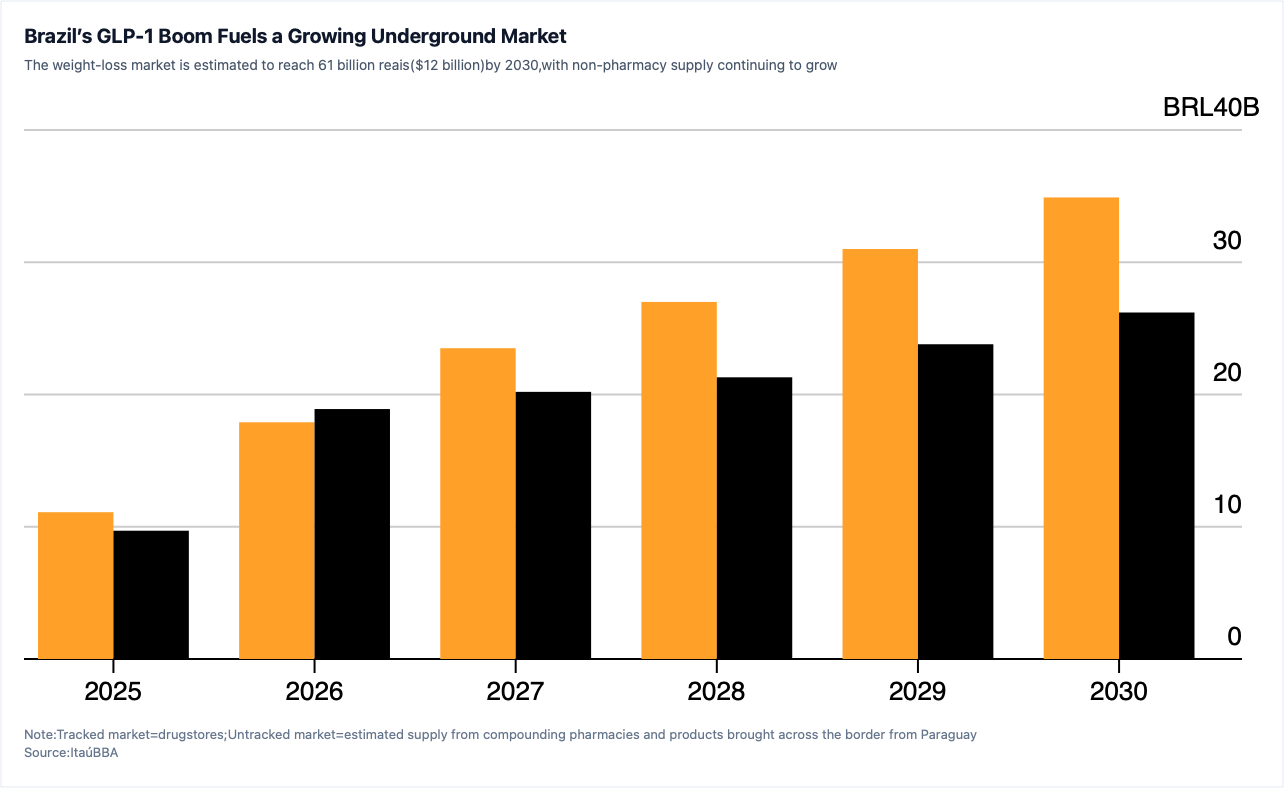
Brazil has become the world's second-largest market for GLP-1 weight-loss drugs, where steep pharmacy prices and strict prescription requirements have fueled a massive and openly accepted underground market. Because a one-month supply of Mounjaro at a pharmacy costs roughly the equivalent of a month's minimum wage, many Brazilians who cannot afford the medications or do not meet clinical criteria turn to alternative channels. According to estimates from Itaú BBA, non-pharmacy sales of weight-loss drugs in Brazil are expected to reach nearly 19 billion reais this year, with about 6.5 billion reais coming from products illegally smuggled from Paraguay and the remainder largely supplied by compounding pharmacies; by 2030, these untracked sources could still account for 43% of a 61-billion-real market.
This booming illicit trade poses severe public health risks and has ignited a wave of violent crime. Smugglers conceal unapproved Paraguayan drugs like Tirzec inside clothing, children's books, and religious statuettes to cross the border, advertising them via WhatsApp and social media and delivering them through Uber couriers. Buyers face unknown manufacturing quality, improper temperature storage in Brazil's hot climate, and zero medical supervision, while several compounding pharmacies have been shut down by Brazil's health regulator, Anvisa, for poor quality control and sterilization—factors contributing to nearly 3,000 reported adverse events, including deaths, between 2018 and 2026. Furthermore, the high street value of injectable pens has triggered deadly armed robberies targeting pharmacy safes in Sao Paulo, forcing drugstores to hire armed guards, lock refrigerators, and reduce on-site inventory.
In response to the illicit surge, Brazil's Federal Police and Anvisa have intensified border seizures and online crackdowns, confiscating 120.8 million reais worth of illegal weight-loss drugs so far this year. On the legal market front, the Brazilian patent for semaglutide—the active ingredient in Novo Nordisk's Ozempic—expired earlier this year, ushering in regulated generic versions that could slash prices by up to 70%. However, Eli Lilly holds another decade of patent protection in Brazil for Mounjaro's active ingredient, tirzepatide, meaning many consumers remain unwilling to give up cheap, unregulated Paraguayan supplies until affordable legal alternatives become available.