全球生育率下降正加速推进,学界研究甚至预测全球人口可能提早在2056年左右达到约90亿的峰值。造成少子化的关键因素在于21世纪现代化社会的结构性转变,包含都市化、女性教育与职场机会提升、育儿及房价成本飙升,以及育儿观念与性别分工未能适应现代社会,使得生养孩子逐渐成为一种昂贵的「奢侈品」。
少子化与高龄化对各国的退休金制度、医疗保健和国家安全带来深远挑战,新加坡也因此调整消费税以因应高龄社会支出。虽然全面逆转人口趋势极具难度,但南韩、魁北克与德国等地的政策经验显示,透过全方位的托育服务、现金补贴和优惠贷款,仍能在一定程度上减缓生育率下滑的冲击。
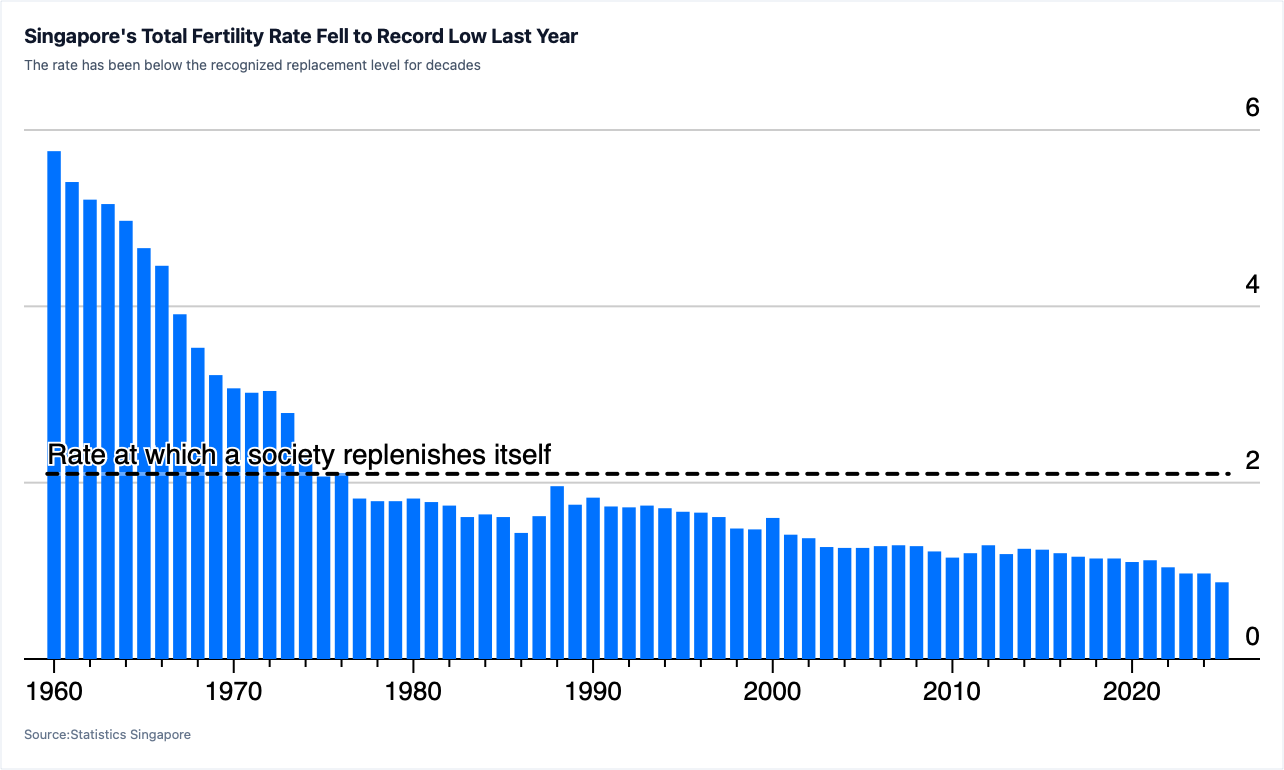
Singapore's total fertility rate dropped to a historic low of 0.87 last year, prompting the government to adopt a comprehensive new strategy. Prime Minister Lawrence Wong announced that the state will now support childhood through age 17 with nearly S$70,000 in direct aid per child, alongside expanded parental leave, reduced childcare fees, and eased public housing income ceilings, while acknowledging that these measures cannot fully restore fertility to replacement levels.
The global fertility decline is accelerating, with recent academic projections suggesting world population could peak as early as around 2056 at roughly 9 billion. This structural downturn is deeply tied to 21st-century modern societal shifts, including urbanization, rising educational and career aspirations for women, surging housing and education costs, and unadapted domestic gender roles, turning children into what researchers describe as expensive luxury goods.
Shrinking birth rates and rapidly aging populations present severe long-term challenges for national pensions, healthcare systems, and security, prompting fiscal adjustments like Singapore's consumption tax hikes. While completely reversing the demographic trend remains exceptionally difficult, targeted policies in places like South Korea, Quebec, and Germany demonstrate that substantial childcare support, cash subsidies, and mortgage assistance can still deliver modest positive impacts.