最近的调查显示,美国人的金融素养正在下降,尤其是Z世代的得分最低。尽管学校的金融教育有所普及,但许多课程内容过于基础或已经过时,且年轻人往往过度依赖人工智慧或网红提供的潜在不良建议。
如果市场持续走高,这些问题可能会被掩盖,但这是一场巨大的赌博。改善金融教育势在必行,应涵盖关于风险管理的严格课程,并让大众了解糟糕的投资与储蓄不足在经济衰退时可能带来的严重后果。
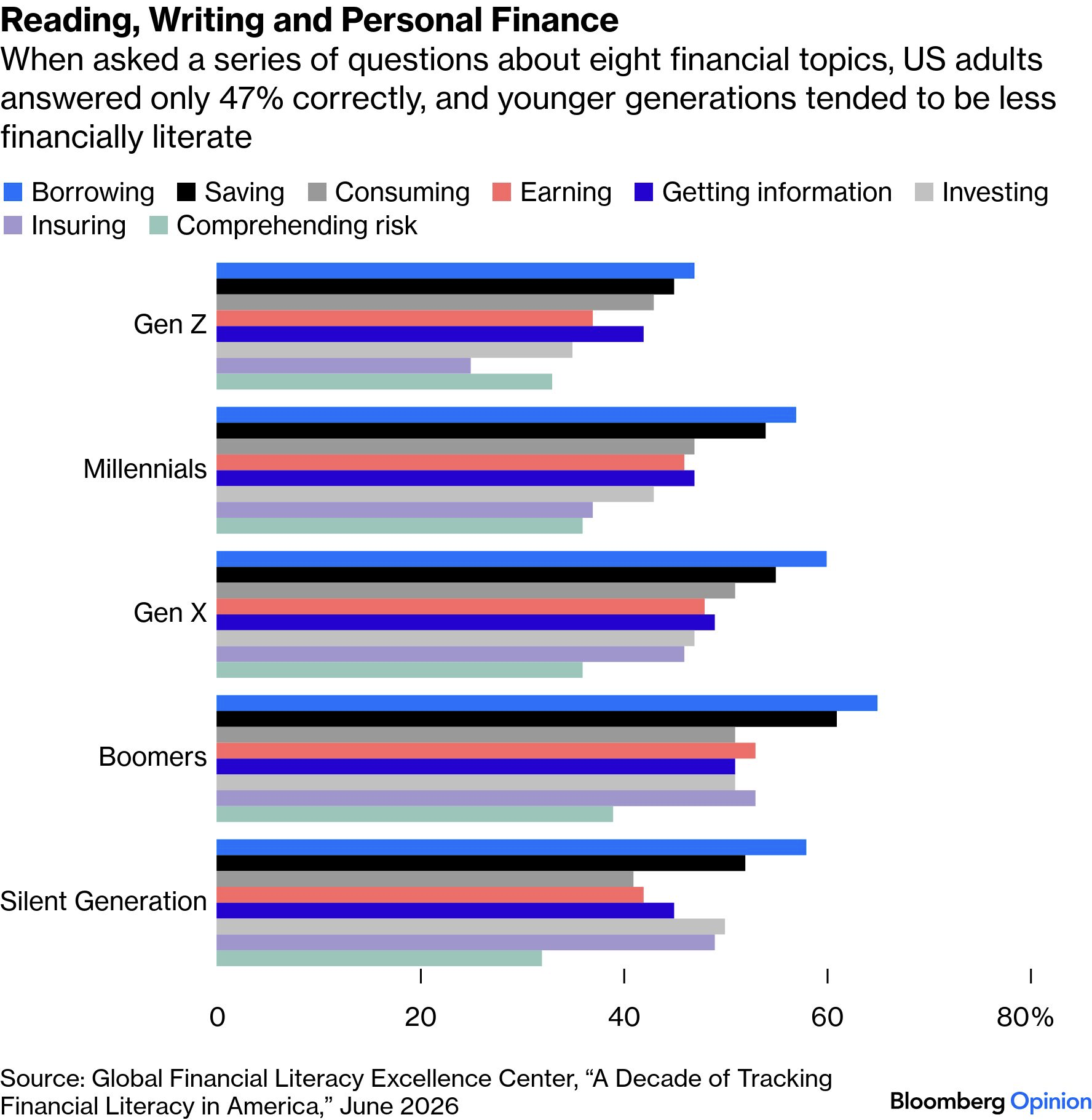
Many Americans across various generations and income levels lack basic knowledge when it comes to managing their personal finances. As the financial landscape becomes increasingly complex and apps offer greater convenience, people are more prone to making poor financial decisions and accumulating unprecedented debt.
Recent surveys indicate a decline in financial literacy among Americans, with Generation Z scoring the lowest. Although financial education in schools has expanded, many programs are too basic or outdated, and younger individuals often rely on potentially flawed advice from artificial intelligence or social media influencers.
These financial vulnerabilities might be masked if the market continues its upward trend, but relying on this is a significant gamble. Improved financial education is crucial and must include rigorous lessons on risk management while exposing the severe consequences of poor investments and inadequate savings during an economic downturn.