巴西中央银行于2020年推出的即时支付系统Pix引发了与唐纳德·特朗普政府的贸易摩擦。7月15日,美方依据第301条对巴西商品加征25%的关税,其中将Pix归类为“不合理”且具有保护主义色彩的贸易壁垒。然而数据显示,Pix在巴西广受欢迎,覆盖了约1.7亿用户(占总人口的80%),并占全脑电子支付交易量的一半以上。巴西规定拥有超过50万账户的本土及外国银行均必须提供Pix,但对Visa和Mastercard等支付处理商并无强制要求,美方的保护主义指控缺乏事实依据。
美方关于Pix损害美国支付巨头利益的断言同样站不住脚。Pix的建立初衷在于降低金融门槛,自推出以来已将至少7000万原本缺乏银行服务的民众纳入正式金融体系。Pix并未蚕食其他电子支付市场,而是大幅替代了现金与支票;数据显示,自Pix上线以来,巴西每季度的现金提现次数大幅下降了46%。虽然商家在信用卡交易中需支付约2%的手续费,而Pix接近免费,这对Visa和Mastercard的利润率构成了压低费率的竞争压力,但这属于市场竞争而非针对外资的歧视。
在政治层面,特朗普对Pix的加征关税攻击反而为巴西总统路易斯·伊纳西奥·卢拉·达席尔瓦在10月大选前提供了强大的政治助力。由于右翼对手弗拉维奥·博尔索纳罗受家族与特朗普的盟友关系牵制,难以有效反驳美方的关税立场,博尔索纳罗在7月2日提出的将Pix与中俄系统隔绝的折中建议更被卢拉指责为“向外国利益出卖本土创新”。美方的贸易打击不仅未能打压Pix,反而强化了卢拉作为国家主权捍卫者的形象,使Pix获得了更广泛的民众支持。
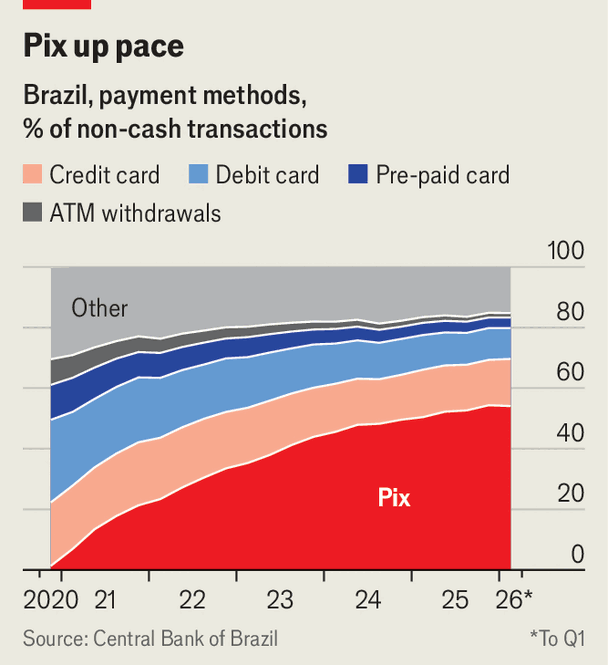
Brazil's central bank introduced Pix in 2020, sparking trade friction with Donald Trump's administration. On July 15th, the US imposed a 25% tariff on Brazilian imports under Section 301, citing Pix as an "unreasonable" trade barrier. However, Pix accounts for over half of all electronic transactions in Brazil, serving 170 million users (80% of the population). While all licensed banks with over 500,000 accounts must offer Pix, payment processors like Visa and Mastercard participate voluntarily, disproving claims of protectionist discrimination.
Allegations that Pix harms American payment processors ignore its core purpose of financial inclusion. The central bank estimates Pix brought 70 million individuals into the formal financial system. Rather than diminishing card volume, Pix replaced cash and cheques, causing quarterly cash withdrawals to plunge 46% since launch. Although credit-card processors face pressure over standard 2% merchant fees compared to Pix's negligible costs, this represents market competition driving lower rates rather than foreign discrimination.
Politically, the US tariff assault bolstered President Luiz Inácio Lula da Silva ahead of October elections. Rival Flávio Bolsonaro struggled to navigate his family's alliance with Mr. Trump, facing backlash after proposing on July 2nd to block Pix from Chinese or Russian networks. Lula capitalized on the incident, presenting himself as a defender of national sovereignty while framing opponents as yielding to foreign pressure, ultimately cementing public affection for the digital payment system.
Source: But his tariff assault on Pix just makes Brazilians love it—and Lula—more
Subtitle: [[IMAGE]]
Dateline: Jul 23rd 2026