记忆体晶片产业素以高度周期性闻名,而此次暴跌除了源自市场对人工智慧支出的普遍怀疑外,更受到中国长鑫存储宣布在尖端动态随机存取记忆体技术取得重大突破、有望压低成本的竞争影响。本周SK海力士股价重挫约五分之一,就连长鑫存储自身股价也随之下跌,反映出市场普遍担忧整体记忆体晶片价格已经触顶,但也有分析师认为这种「先卖再说」的恐慌反应可能过度,毕竟美国政府限制与实际采用情况仍充满未知数。
区分晶片制造商表现优劣的关键在于估值与业务多元化程度,例如博通高达42倍的本益比便高于辉达的27倍,且其执行长将人工智慧投资比喻为「赌场」的言论也加剧了负面影响。与此同时,具备地域与业务线多元化优势的美国记忆体大厂美光表现则优于部分同业,这显示当前投资人工智慧必须采取更为审慎的态度,并具备辨别真正产业威胁与短期新闻炒作的能力。
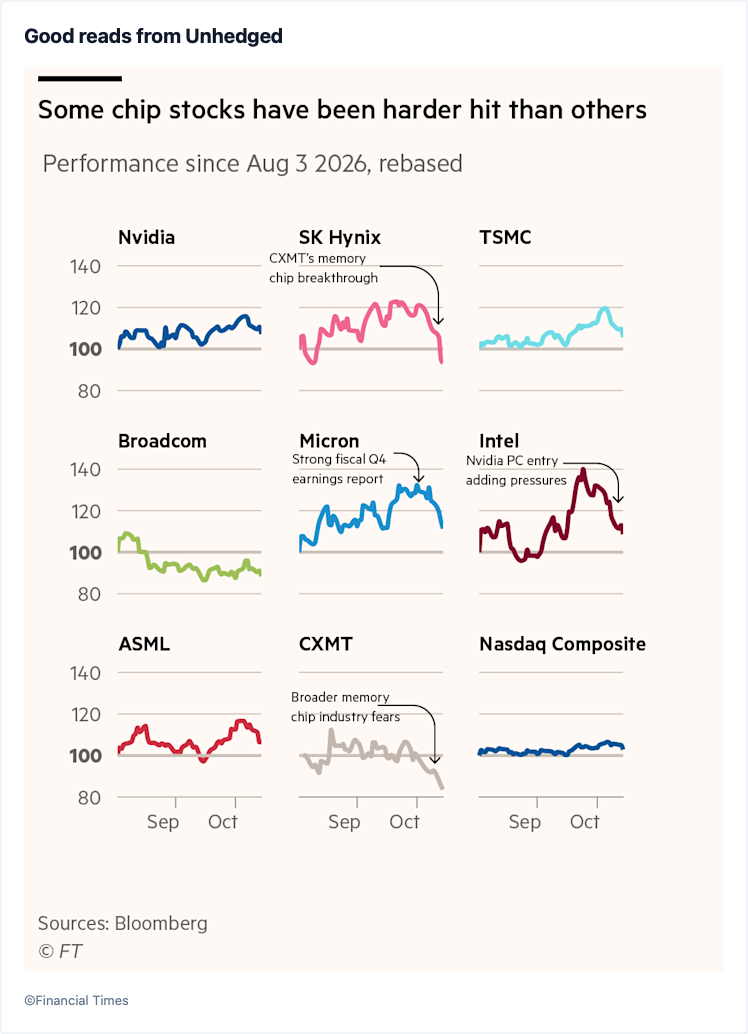
The artificial intelligence trade has recently taken a heavy hit, and semiconductor stocks have not been spared, yet investors are becoming more selective rather than abandoning the sector altogether. During this market correction, industry leaders Nvidia and TSMC have held up relatively well, whereas memory-chip manufacturers such as SK Hynix and CXMT have suffered much steeper declines.
While the memory chip sector is notoriously cyclical, the latest sharp downturn is driven not only by broader skepticism over AI spending but also by new competition from China-based CXMT, which recently announced a cost-lowering breakthrough in cutting-edge DRAM manufacturing. Consequently, SK Hynix shares dropped roughly a fifth this week and CXMT's own stock also fell amid fears that overall memory prices have peaked, though analysts suggest this 'sell now, ask questions later' reaction may be overdone given the uncertainties surrounding US government restrictions and actual market adoption.
Key factors separating the better-performing chipmakers from the laggards include valuations and diversification, as seen with Broadcom's price-to-earnings ratio of 42 exceeding Nvidia's 27, alongside unhelpful remarks from Broadcom's CEO comparing AI investing to a 'casino.' Meanwhile, American memory maker Micron has fared better than some peers thanks to its geographic and business-line diversification, underscoring that investing in AI now requires a much more careful approach to distinguish between genuine threats and fleeting news cycles.