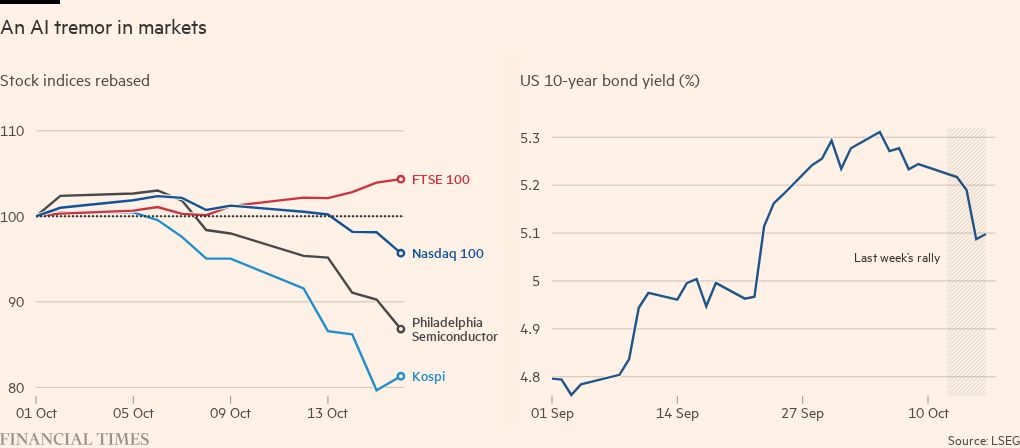
在这场市场波动中,依赖半导体热潮的南韩股市单日重挫百分之八,纯资料中心企业发行的债券遭受打击,部分发行人的信用违约交换利差更大幅飙升。与此同时,恐慌的资金开始转向防御型资产,带动英国富时百强指数等传统非科技类股表现优于大盘,美国公债也在通膨数据依然顽强的情况下逆势反弹,使十年期公债殖利率回落至百分之五附近。罕见的是,美元指数在此避险情绪下却出现显著走弱,显示若人工智慧泡沫真正破裂,可能会引发全球资金撤离美国市场与美元资产。(关键数字:100)
这波市场不安并非由单一事件触发,而是源自多项警讯的累积,包括博通执行长警告晶片投资人将市场当作赌场、企业试图向保险业寻求庞大资金,以及澳洲与亚洲多起资料中心上市案失败。这些迹象显示人工智慧交易最风光的时期已经过去,市场正开始对高度集中的风险提出更严格的检视。面对潜在的回调风险,殖利率处于数十年高点的已开发市场政府公债成为具吸引力的传统避风港,但由于这波热潮是由市场氛围所驱动,预测下一次情绪转折何时会将小幅动荡演变成全面崩盘,仍是投资人面临的最大难题。
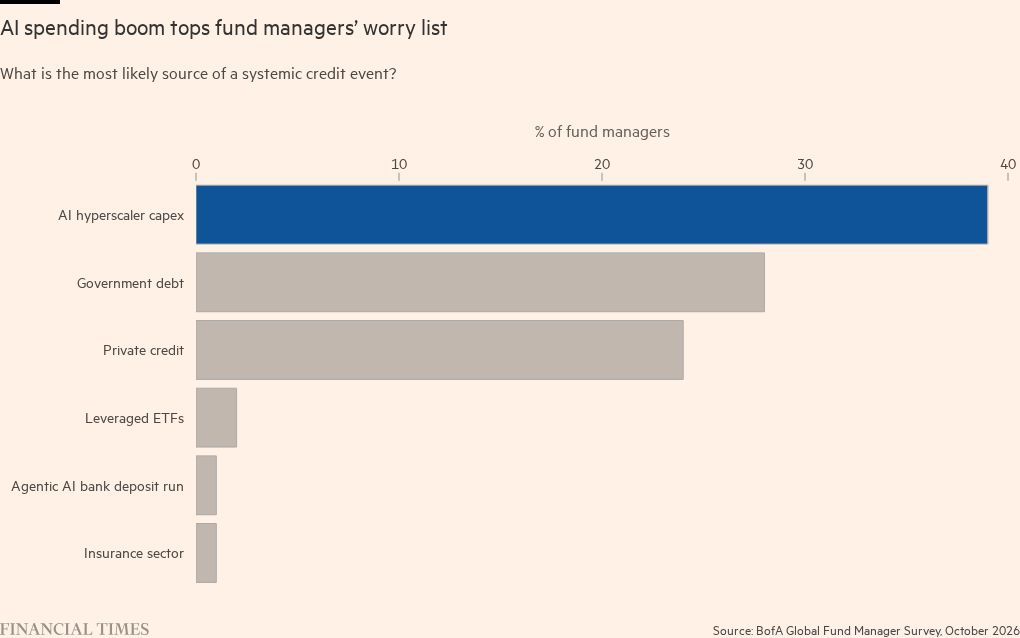
Global financial markets recently experienced a dress rehearsal illustrating what a bursting of the artificial intelligence bubble might look like. For some time, stock markets have been heavily concentrated on this single theme, fueled by massive borrowing, off-balance-sheet leverage, and lingering uncertainty over whether the technology will ever generate enough revenue to cover its debts. Although central banks, the International Monetary Fund, and the Bank for International Settlements have repeatedly warned of systemic shocks, the actual trigger for the recent turbulence was not hard economic data or a specific financial failure, but rather a sudden shift in market sentiment and vibes.
During this bout of market nerves, South Korea's semiconductor-heavy stock index plunged eight percent in a single day, bonds from pure-play data center companies suffered losses, and credit default swaps on certain issuers surged. At the same time, spooked investors rotated into safer assets, allowing traditional non-tech equities like the UK's FTSE 100 to outperform, while US government bonds rallied despite persistent inflation, pushing ten-year yields back toward five percent. Unusually, the US dollar weakened significantly alongside these moves, supporting the theory that an artificial intelligence implosion could prompt a broader global retreat from US markets and dollar-denominated assets.
Rather than stemming from one single catalyst, the market wobble was driven by an accumulation of warning signs, including the Broadcom chief executive comparing chip investors to casino gamblers, ambitious efforts by CoreWeave to tap insurers for funding, and failed stock market listings for data center firms in Australia and Asia. Together, these developments suggest the easy money in the artificial intelligence trade has already been made and that underpriced concentration risks are finally troubling investors. While discounted developed-market government debt with multi-decade high yields offers a reliable safe haven, predicting when shifting market vibes will turn a minor stumble into a full crash remains a major challenge.