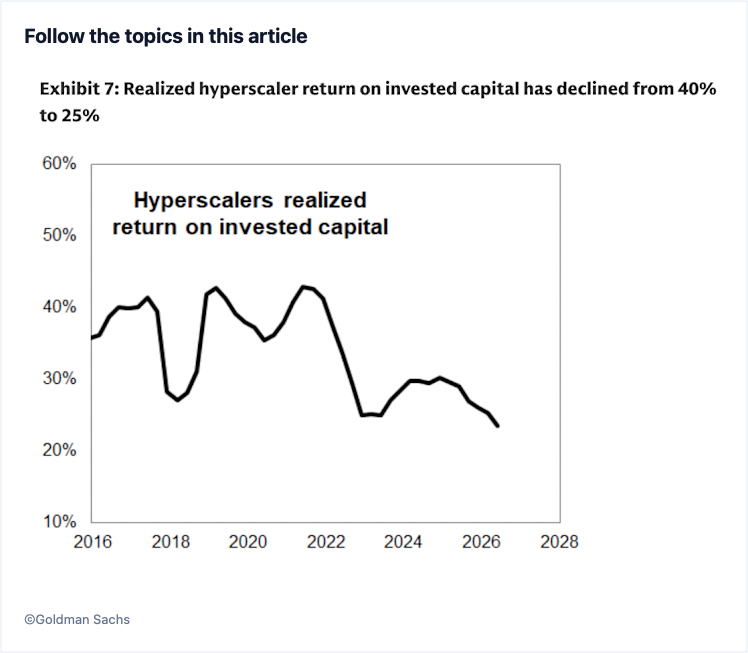
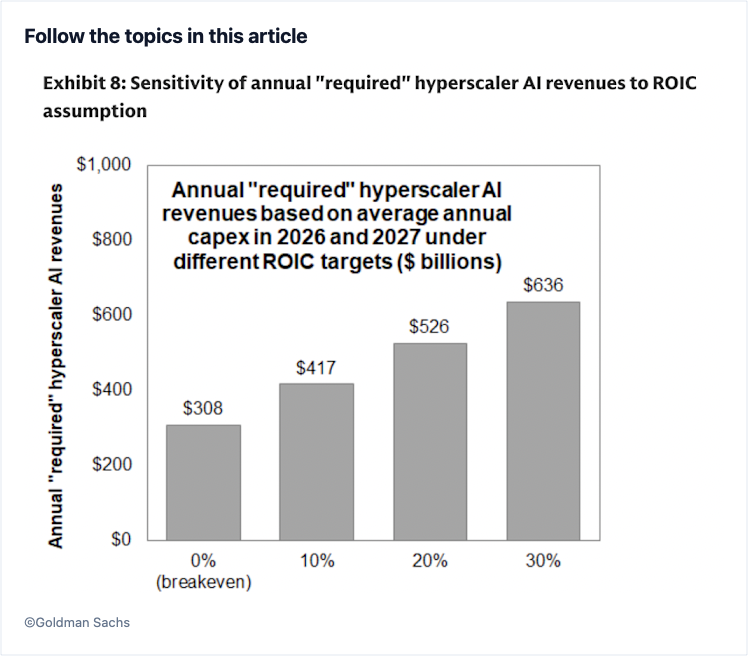
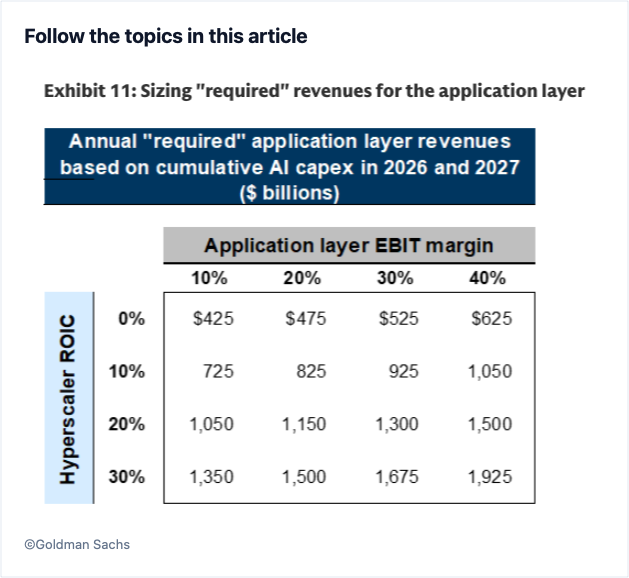
根据高盛的预估,超大规模云端服务商在2026年和2027年的资本支出预计将分别达到8000亿和1.1兆美元;若仅要达到损益平衡,每年的AI相关营收需达到约3000亿美元,而若要维持历史投资回报率标准,年营收更需达到6360亿美元。若进一步纳入上层AI软体应用生态系统,企业与消费者的整体支出可能需要暴增至近2兆美元,这对终端市场的付费意愿形成了严峻考验。
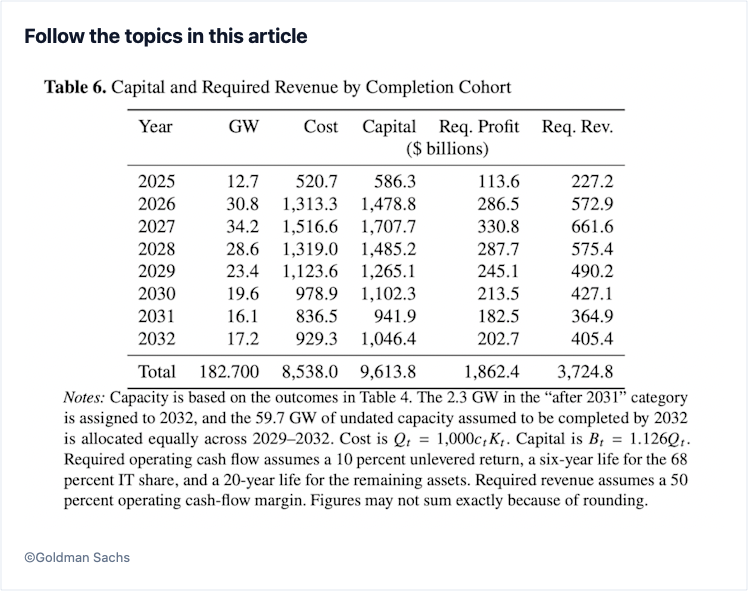
学界研究亦呈现类似的庞大资金缺口,哥伦比亚商学院估算至2032年累计建设成本将突破10兆美元,届时需达到年化3.7兆美元的营收规模才足以支撑投资。总体而言,即便目前AI云端营收展现出强劲增长动能,但未来几年AI整体产业营收仍必须呈现数倍甚至数十倍的跨越式暴增,才能使当前规模空前的资本扩张在经济效益上站得住脚。
As major tech hyperscalers pour immense capital into building AI data centres, this historic surge in debt issuance is reshaping debt markets and raising questions regarding the durability of the ongoing boom. While data centre leasing remains highly profitable under current market conditions, long-term viability hinges on future compute supply dynamics and the capacity of the broader AI ecosystem to monetize at scale.
Goldman Sachs estimates that capex across major hyperscalers will reach $800 billion in 2026 and $1.1 trillion in 2027, requiring roughly $300 billion in annual AI revenue just to break even, and approximately $636 billion to sustain historical returns on invested capital. When factoring in the broader application layer and required profit margins, total enterprise and consumer AI spending would need to surge toward $2 trillion, presenting a significant monetization hurdle.
Academic projections reflect similarly vast thresholds, with Columbia Business School estimating cumulative data centre costs exceeding $10 trillion by 2032, requiring annualized revenues of $3.7 trillion. Despite the current rapid acceleration in cloud computing revenue, the overarching consensus indicates that AI revenue must expand exponentially over the coming years for such unprecedented capital expenditure to be economically justified.