圣婴现象对各地的天气影响深浅不一,通常会导致澳洲、东南亚和北美等地高温干旱,同时为美洲南部及东非带来暴雨与洪水。此外,大西洋的飓风活动可能因风切增强而减少,太平洋的台风活动则可能因暖水提供能量而显著增加,为亚洲带来更大的风灾威胁。
极端气候对农业收成、渔业资源、航运以及能源供需构成严重冲击,可能推升通膨并损害全球经济成长。尽管气候变迁如何改变圣婴现象发生频率仍存有科学争议,但普遍共识认为全球暖化会使干旱与极端暴雨等冲击进一步加剧,进而加剧全球粮食安全危机。
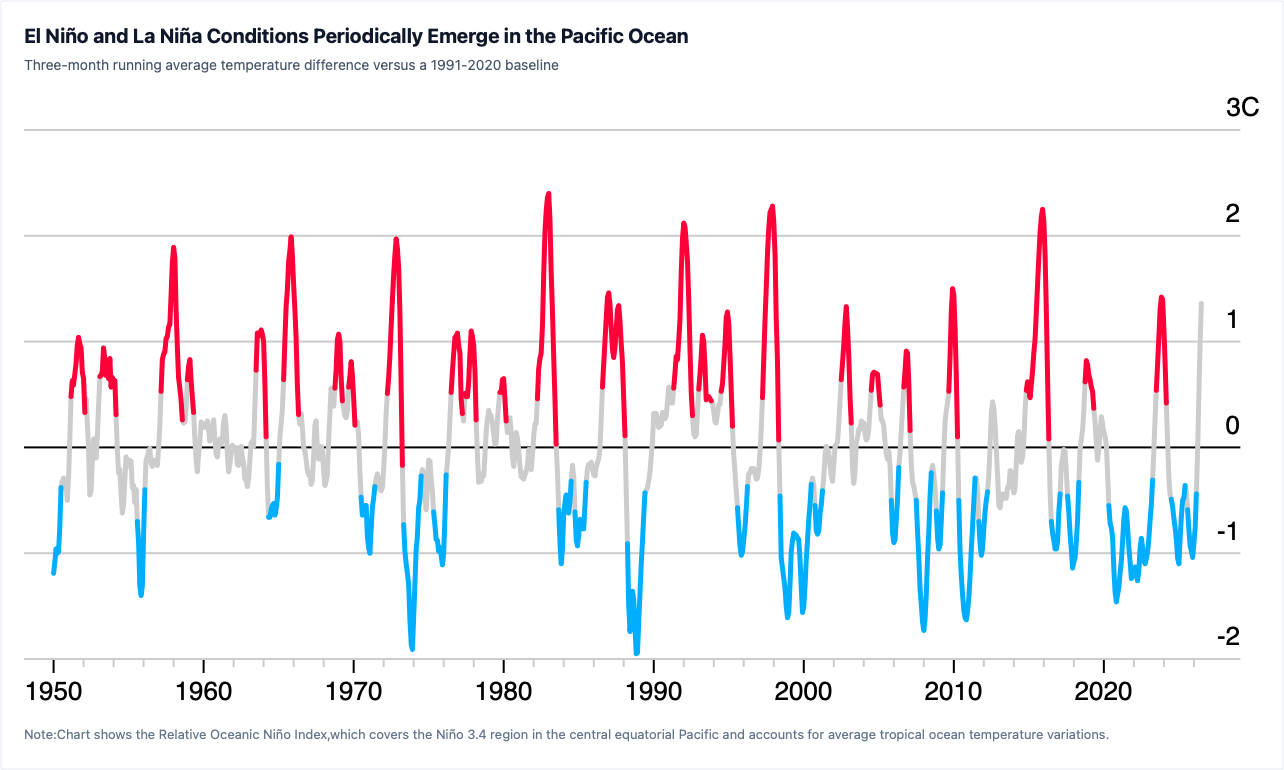
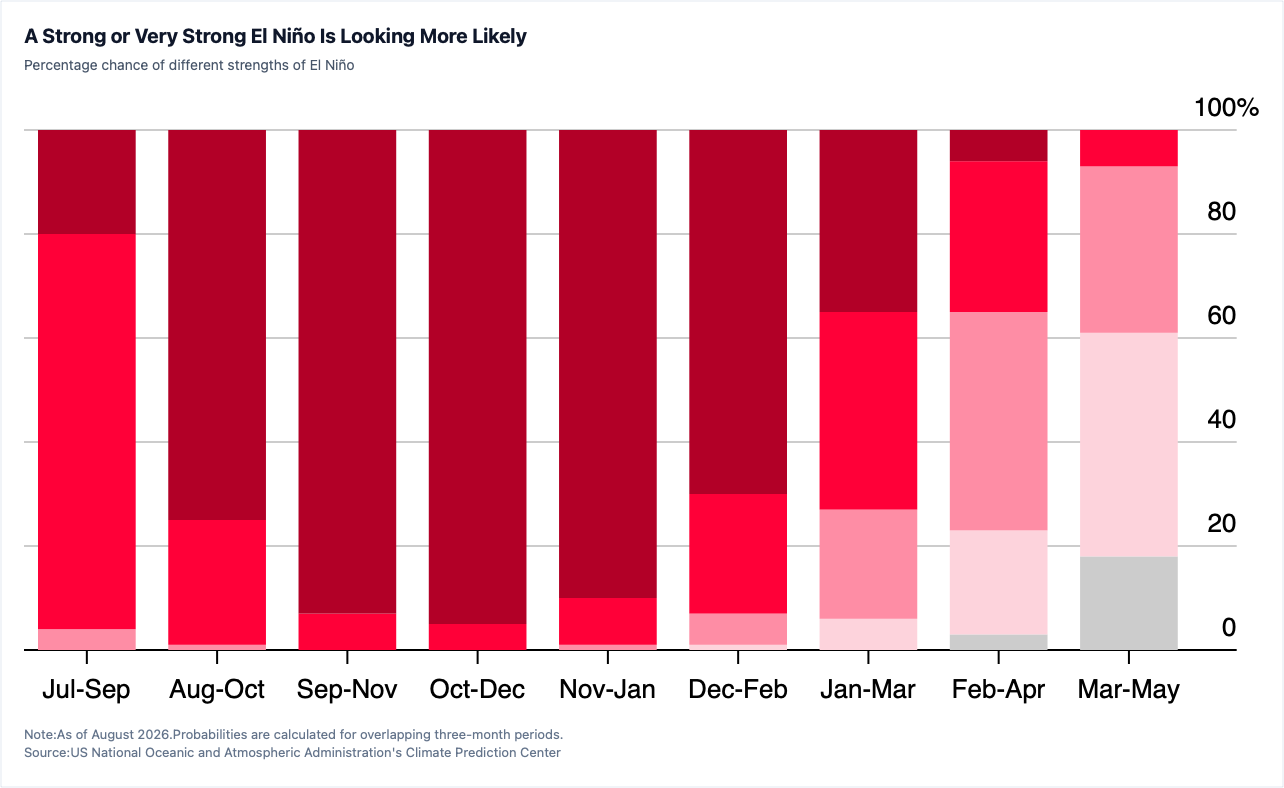
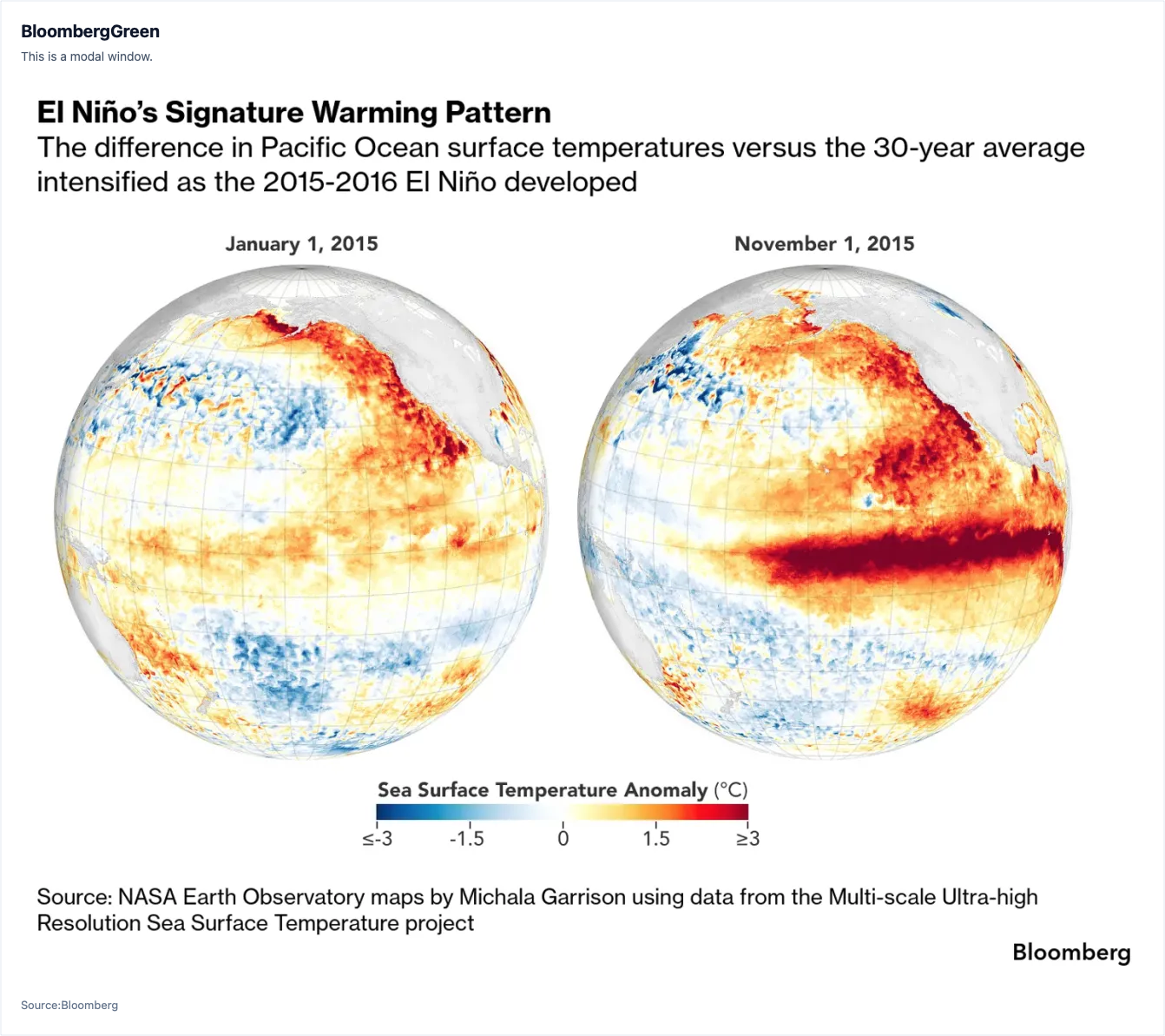
El Niño has returned and threatens to become one of the most powerful on record, with the US Climate Prediction Center and the World Meteorological Organization warning of an extreme or "Super El Niño" event persisting through early next year. This cyclical phenomenon begins when weakening trade winds allow warm water to spread across the equatorial Pacific, shifting atmospheric patterns and risking pushing global temperatures to unprecedented highs.
The weather impacts of El Niño vary globally, typically bringing heat and drought to Australia, Southeast Asia, and northern North America, while causing heavy rainfall and flood risks in the southern US and East Africa. Additionally, increased wind shear often suppresses Atlantic hurricanes, whereas warmer waters in the Pacific can fuel more severe typhoons and heighten storm risks across Asia.
These climate disruptions severely threaten crop yields, marine fisheries, shipping routes, and energy grids, risking higher inflation and global economic setbacks. While the exact influence of climate change on El Niño frequency remains under debate, there is strong agreement that a warmer planet intensifies its effects, amplifying severe droughts and torrential downpours that endanger global food security.