但这项基于晶格量子色动力学模拟的新理论方法,却与过去从电子和正子碰撞实验中推导出的数据驱动方法产生了冲突。这种差异让谜团从渺子本身的摆动,转移到为何旧有的数据驱动预测会与新计算结果截然不同。
为了厘清真相,物理学家正深入检视电子和正子碰撞的实验数据,例如西伯利亚的VEPP-2000对撞机近期发现粒子产生率出现了惊人的变化。研究人员必须确认这些矛盾的测量结果究竟是来自实验误差,还是新物理现象的征兆,才能真正解开这个谜题。
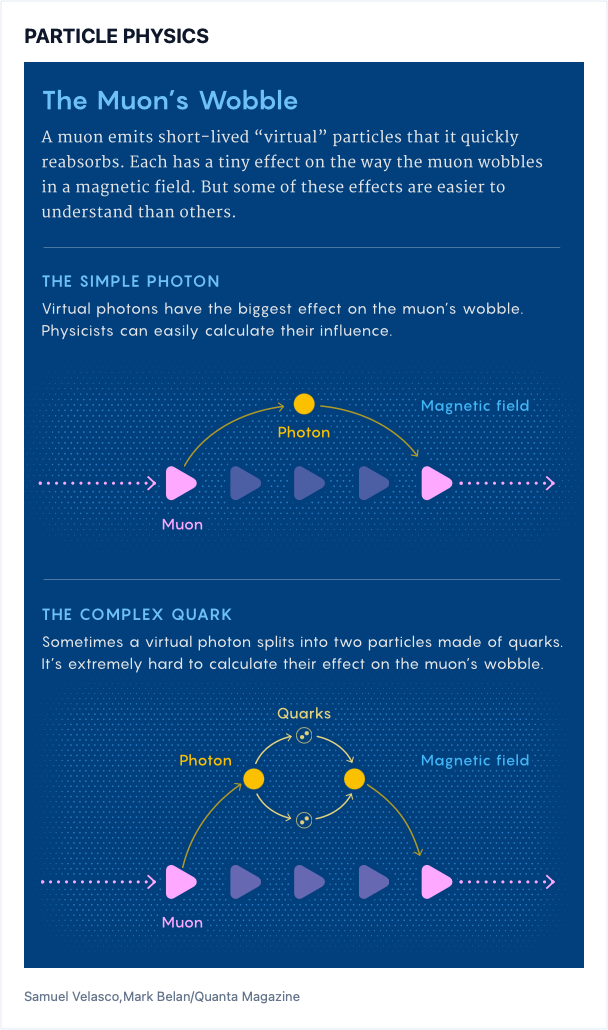
For twenty-five years, physicists were puzzled by a discrepancy between theoretical predictions and experimental measurements of the muon's magnetic wobble, which was seen as evidence of unknown particles. However, in 2021, a new theoretical calculation matched the experimental data precisely, appearing to solve the long-standing mystery.
But this new theoretical approach, based on lattice quantum chromodynamics simulations, conflicts with an older data-driven method derived from electron and positron collision experiments. This discrepancy shifted the mystery from the muon's wobble itself to why the older data-driven predictions differ so significantly from the newer calculations.
To resolve this, physicists are scrutinizing electron and positron collision data, such as results from the VEPP-2000 collider in Siberia, which recently reported a surprising shift in particle production rates. Researchers must determine if these conflicting measurements stem from experimental errors or are signs of new physics before the puzzle can be fully put to rest.