全球人均实际GDP增速的系统性放缓正波及越来越多国家,对全球生活水平与社会契约构成严峻挑战。在截至2024年的十年间,全球约有33亿人(占全球总人口五分之二以上)生活在人均GDP增速较前一个十年腰斩甚至更低的经济体中,这一规模较2014年的11亿人(不到全球人口六分之一)急剧扩张,更有超过7.3亿人正在经历人均生活水平的绝对下滑。陷入低速或停滞增长的经济体数量从2014年的68个上升至2024年的80个,不仅横跨富裕的加拿大到极贫困的刚果民主共和国,更直接打破了过去几十年里“下一代生活必将优于上一代”的核心社会预期。
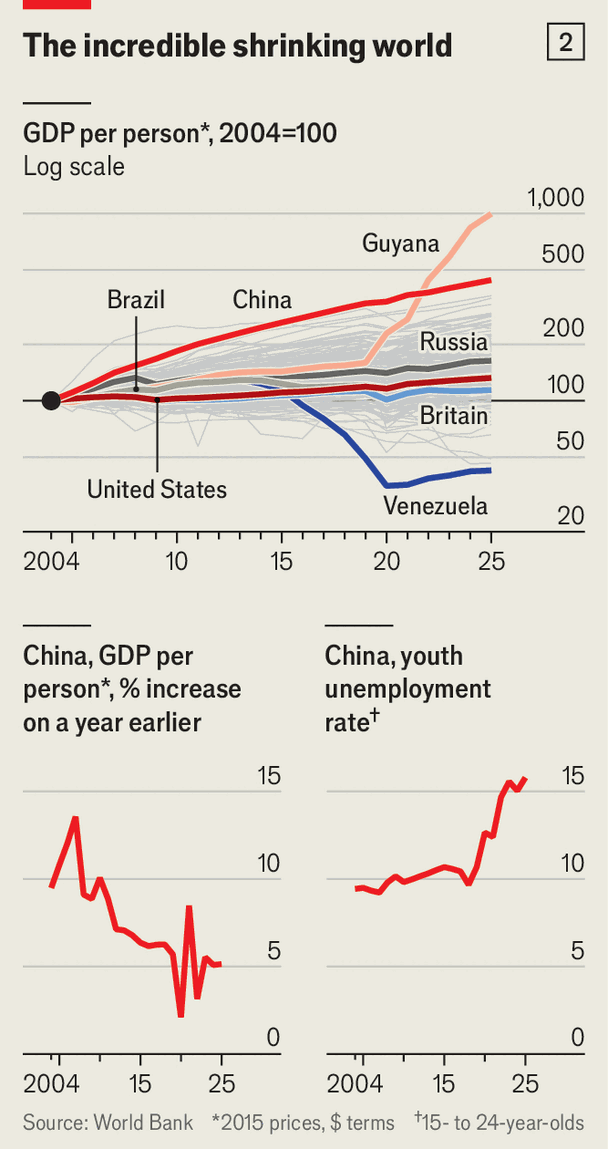
富裕国家与资源型新兴经济体增长失速的根源各有不同,但普遍带来了严峻的分配压力。在发达世界,长期疲弱的生产率增长叠加高额移民使得公共财政被深度稀释;德国在2014至2024年间生产率近乎零增长,人均实际收入年均仅增长0.6%(远低于此前十年的1.5%),而加拿大2024年失业率因人口增速超越GDP增长而攀升近1个百分点。在大宗商品繁荣于2014年落幕后,乌拉圭与智利等出口型经济体增长近乎停滞,整个撒哈拉以南非洲人均收入缩水3.4%,安哥拉人均GDP更大跌四分之一。在“金砖国家”中,唯有受惠于15亿人口与生育率下降的印度维持了强劲追赶,中国2014至2024年的人均GDP增速较此前十年腰斩,俄罗斯的人均增幅亦缩水过半。
经济放缓正在重塑公众尤其是年轻一代的心理预期与政治生态,加剧体制性冷漠与民粹主义激进化。调查显示,五分之二的欧洲人以及56%的中国“Z世代”对未来生活改善感到悲观,中国认为“勤奋总能获得回报”的比例从2014年的62%骤降至2023年的28%,7月城市青年失业率升至18%,且23至28岁失业群体中约五分之二拥有大学学历。在西方民主国家,深陷“怀旧性剥夺感”的选民将执政党更替视为泄愤渠道,支持民粹主义政党的概率比普通人群高出整整55个百分点;增长停滞引发的选民摇摆和政治动荡恐将进一步抑制经济增长,使更多地区陷入长期的恶性循环。
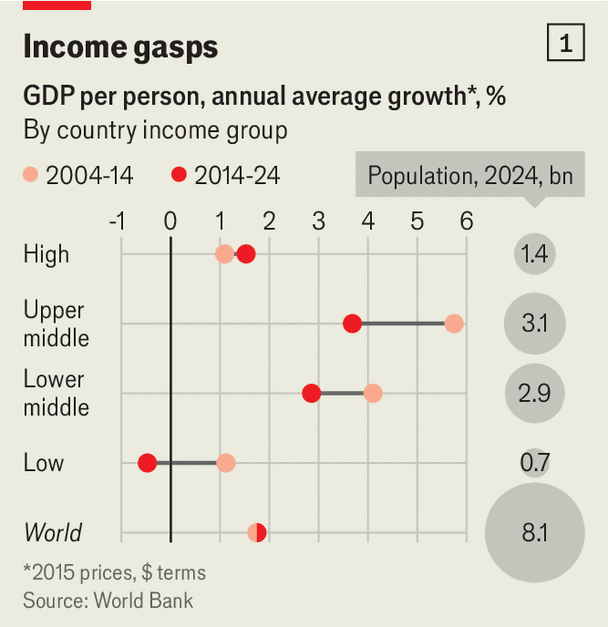
A severe slowdown in real GDP per person is engulfing an expanding share of the global economy, threatening long-term living standards and societal stability. Over the decade to 2024, approximately 3.3bn people—more than two in five humans—resided in jurisdictions where per capita GDP grew at half the rate or less of the preceding decade, up from 1.1bn (fewer than one in six) in 2014. Over 730m individuals experienced outright contractions in per capita output. The cohort of low- or zero-growth economies climbed from 68 to 80 over this period, encompassing jurisdictions as varied as Canada and the Democratic Republic of Congo, dismantling the foundational intergenerational assumption that living standards steadily improve over time.
Structural drivers vary across economic blocs, but stagnant productivity and demographic shifts remain prominent culprits. In the advanced world, weak productivity combined with sustained immigration has strained public balance sheets; Germany’s per capita real income rose by just 0.6% annually between 2014 and 2024 (down from 1.5% in the prior decade), while Canadian unemployment rose nearly a percentage point in 2024 as population growth outstripped output. Among emerging commodity exporters, the post-2014 resource bust halted income convergence; Sub-Saharan Africans became 3.4% poorer, and Angola’s per capita GDP contracted by 25%. Among original BRIC members, only India sustained rapid catch-up, whereas Chinese per capita growth halved over 2014-24 compared to 2004-14, and Russian improvements fell by more than half despite a shrinking population.
The socioeconomic fallout is eroding public morale and radicalising electoral landscapes, particularly among younger cohorts. Surveys reveal that two-fifths of Europeans and 56% of Chinese youth worry about future prosperity, with Chinese belief in meritocracy plunging from 62% in 2014 to 28% in 2023 amid an 18% urban youth unemployment rate in which college graduates comprise roughly 40% of jobless 23-to-28-year-olds. In democratic nations, economic malaise directly fuels political volatility; Western Europeans experiencing acute nostalgic deprivation are 55 percentage points more likely to back populist candidates than contented peers. As frustrated electorates oscillate between extremes to punish incumbents, resultant policy instability threatens to entrench self-reinforcing cycles of economic underperformance.
Source: The GDP-per-person slowdown threatens global living standards
Subtitle: Brazil, China, Germany and Russia have recently joined an unfortunate club
Dateline: Sep 17th 2026\n