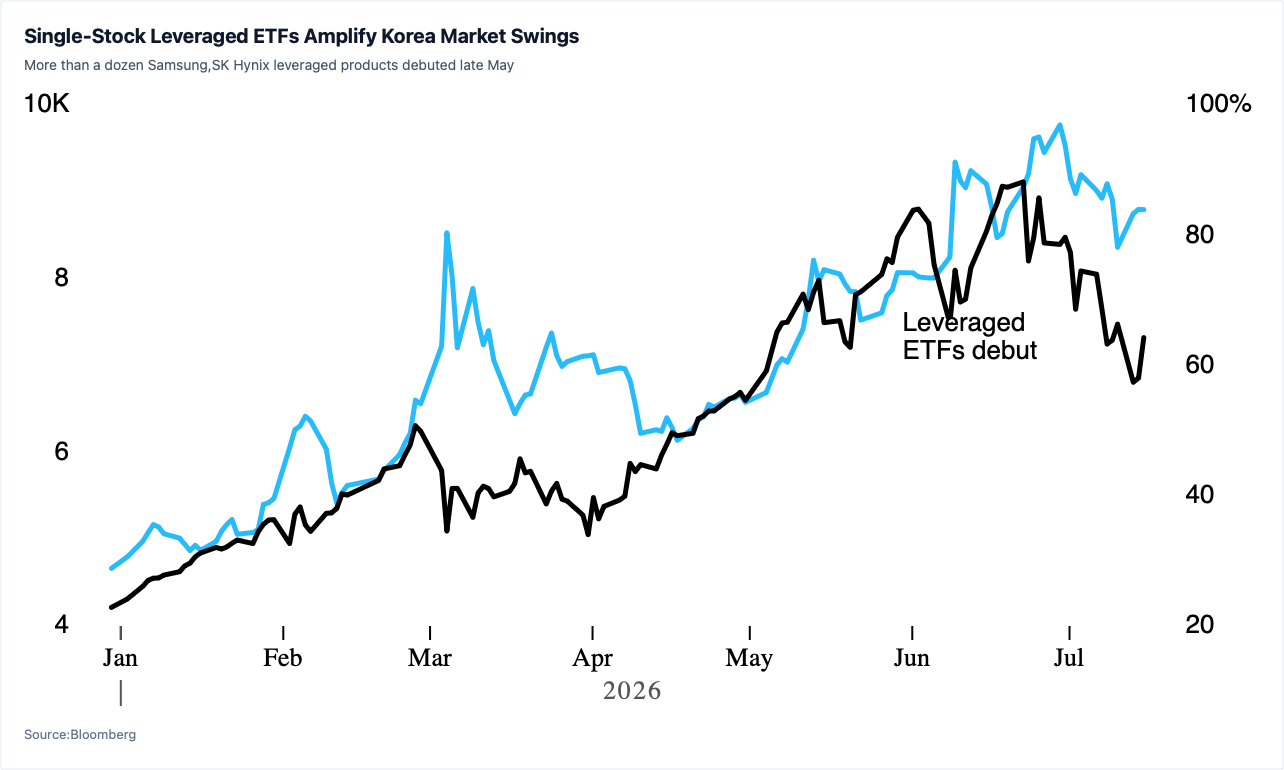
追踪SK海力士和三星电子的杠杆型ETF被批评为加剧市场波动的元凶。这些产品于五月底密集上市,每日为达成承诺报酬所需的大量再平衡交易,放大了股市的涨跌幅度。李在明总统敦促金融监督院和韩国交易所负责人迅速处理杠杆型ETF问题,并准备后续因应措施。市场参与者预期政府将推出相关措施,包括可能提高投资杠杆型ETF的最低保证金要求,以遏制这些高风险产品对市场的不稳定影响。
这场市场动荡也逐渐演变为政治争议焦点。最大在野党国民力量党指控李在明政府在推动雄心勃勃的股市目标的同时,忽视了杠杆风险不断累积的警讯,鼓励了过度冒险行为。该党党鞭郑点植表示,光是看著Kospi的走势就令人头晕目眩。尽管Kospi指数本月稍早跌入熊市,较高点回落达20%,但2026年以来仍累计上涨约75%。李在明将缩小所谓的「韩国折价」列为施政重点,其政府已推出打击股价操纵和强化股东权益等措施,以提振股市信心。
South Korean President Lee Jae Myung acknowledged on July 15, 2026, that the domestic stock market is "quite unstable" and would need time to stabilize following a "historically unprecedented massive surge." Korean stocks have experienced extreme volatility in recent weeks, with the Kospi swinging more than 8% upward on Wednesday after plunging nearly 9% on Monday. The $4 trillion market, propelled by a world-beating rally driven by chipmakers SK Hynix and Samsung Electronics, has become highly susceptible to shifts in AI trade sentiment.
Leveraged exchange-traded funds tracking SK Hynix and Samsung Electronics have been identified as a key driver of the amplified market swings. More than a dozen leveraged products debuted in late May, and the massive daily rebalancing trades required to deliver their promised returns have magnified volatility. President Lee urged the Financial Supervisory Service and the Korea Exchange to swiftly address the leveraged ETF issue and prepare follow-up measures. Market participants anticipate regulatory steps such as raising the minimum deposit requirements for investing in these high-risk products to curb their destabilizing effects.
The market turmoil has also become a political flashpoint. The main opposition People Power Party accused the Lee administration of encouraging excessive risk-taking by promoting ambitious stock market targets while ignoring repeated warnings about growing leverage beneath the market's headline gains. Despite the Kospi falling into bear-market territory earlier in July with a 20% decline from its peak, the index remains up approximately 75% for 2026. President Lee has made narrowing the so-called "Korea discount" a central policy objective, rolling out measures to curb stock-price manipulation and strengthen shareholder rights to bolster investor confidence.