数据显示中国经济内部呈现结构性失衡,上半年固定资产投资同比下降5.7%,创下历史性跌幅,其中房地产投资同比下降18%;然而,工业产出增长5.3%优于预期,消费也微幅回暖,零售额增长1%。尽管GDP平减指数在进口能源成本上升推动下自2023年初以来首次转正,但潜在的通缩压力和产能过剩问题依然存在。
经济增长放缓导致各大金融机构纷纷下调对中国2026年全年经济增长的预测至4.5%或4.6%。此外,就业形势日益严峻,尤其是在人工智慧普及和长期就业市场恶化的背景下,专家估计大量青年因长期找不到工作而退出劳动力市场,若将这部分人口纳入计算,广义失业率可能高达10.2%。
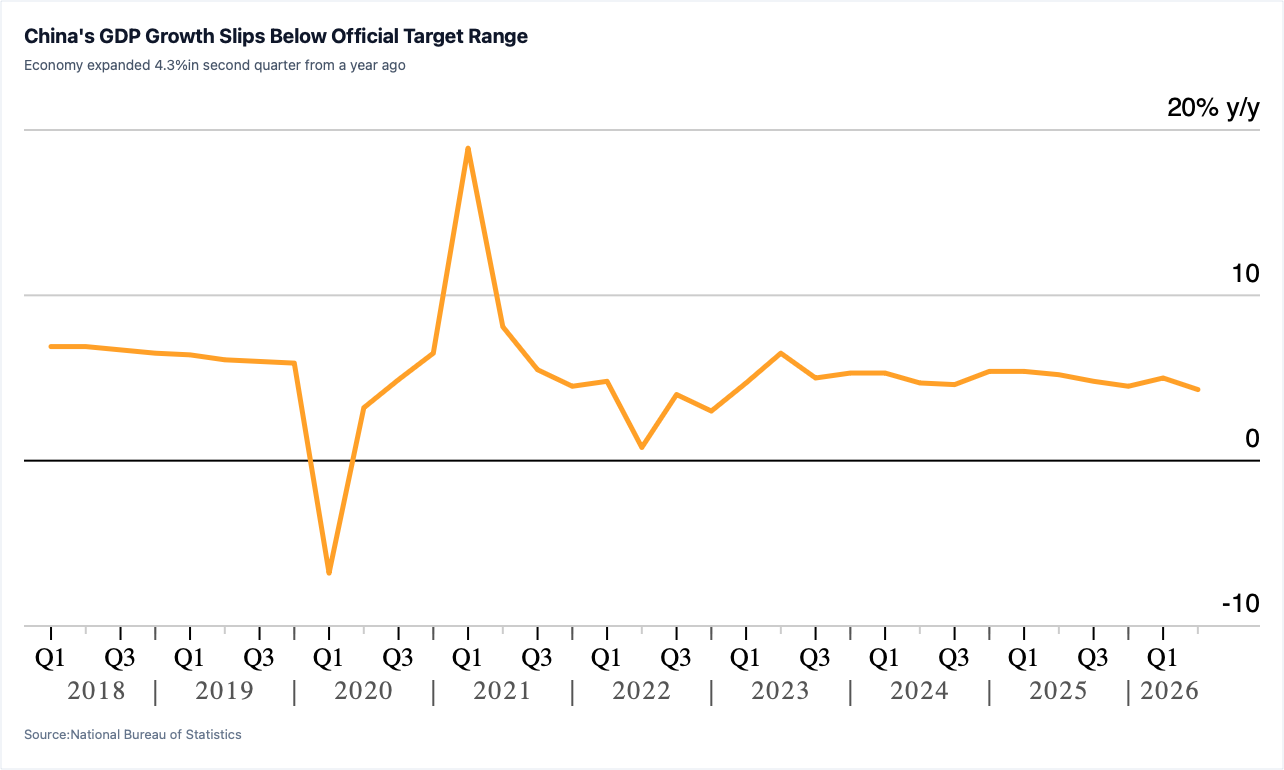
China's gross domestic product (GDP) grew by 4.3% year-on-year in the second quarter, falling below the lower bound of the official annual target range of 4.5% to 5% and marking the slowest expansion in over three years. This economic deceleration has intensified pressure on policymakers to accelerate fiscal spending and ramp up infrastructure investment, topics that are expected to dominate the agenda of the ruling Communist Party's Politburo meeting later this month.
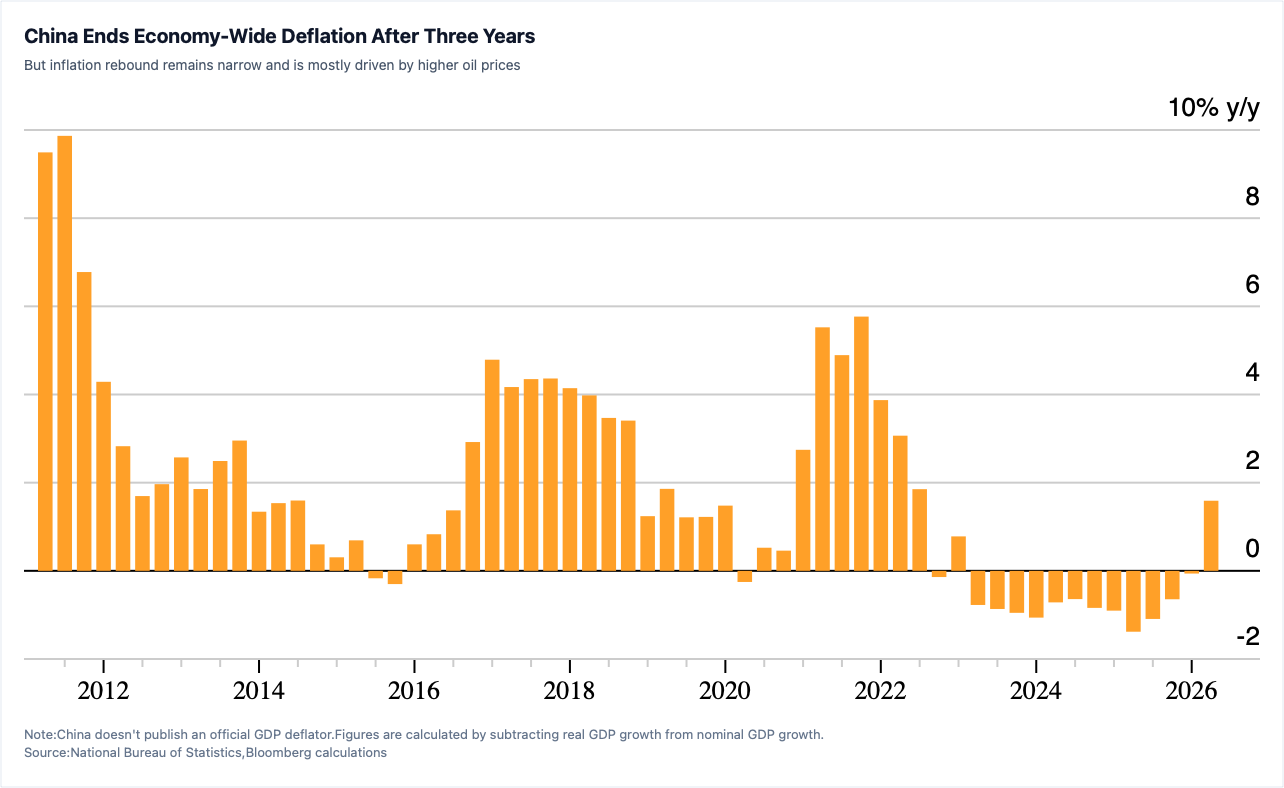
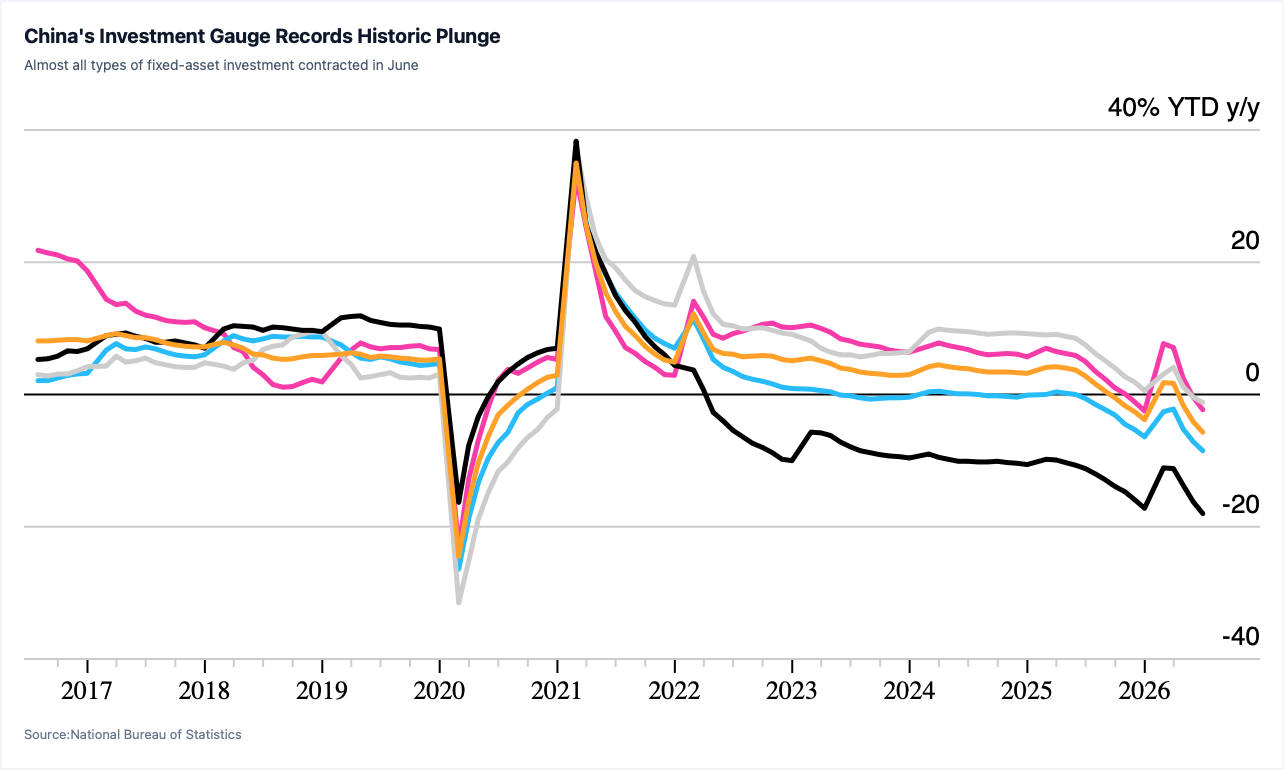
The latest data reveals significant structural imbalances within the Chinese economy, with fixed-asset investment plunging 5.7% year-on-year in the first half of the year, driven by an 18% decline in property investment. Conversely, industrial production beat expectations with a 5.3% increase, and retail sales saw a modest recovery of 1%. Although the GDP deflator turned positive for the first time since early 2023 due to rising import costs of energy, underlying deflationary pressures and overcapacity persist.
Following the disappointing data, major financial institutions have downgraded China's full-year growth forecasts for 2026 to 4.5% or 4.6%. Furthermore, the labor market faces growing strain, particularly due to the spread of artificial intelligence and deteriorating job conditions, with experts estimating that millions of youth have dropped out of the workforce due to prolonged unemployment, which could push the broader jobless rate to 10.2%.