为了在没有美国依赖的情况下应对潜在的俄罗斯威胁,欧洲北约成员国最近同意到2035年将国防开支提高到国内生产总值(GDP)的3.5%(外加1.5%的安全基础设施建设)。这一重整军备的繁荣提振了军工制造商,例如英国航天系统公司(BAE Systems)旗下的瑞典黑格隆德(Hagglunds)工厂,该工厂的员工人数增加了两倍达到2,600人,收入从2018年的2.11亿美元飙升至2025年的11亿美元。然而,这种支出的激增引发了公众抗议,包括意大利的50万示威者,突显了国防与社会福利之间艰难的财政权衡。尽管唐纳德·特朗普继续批评欧洲盟友搭便车,但欧洲大陆朝着3.5%目标迈进的实际进展却大相径庭。
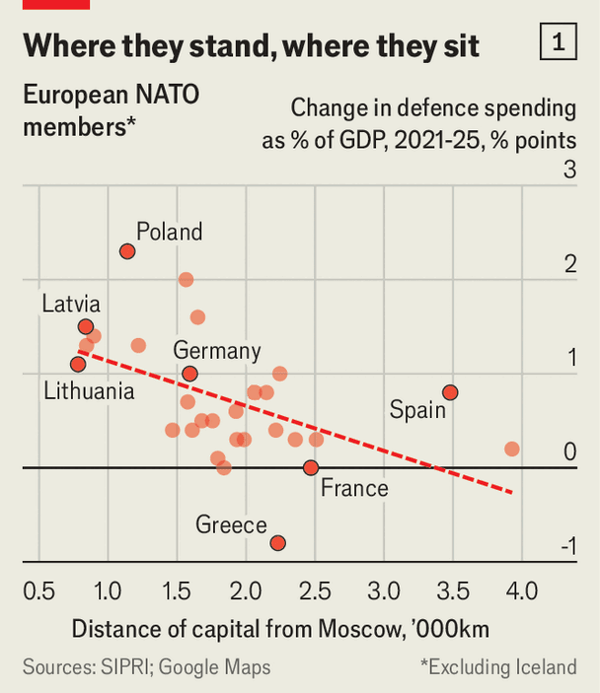
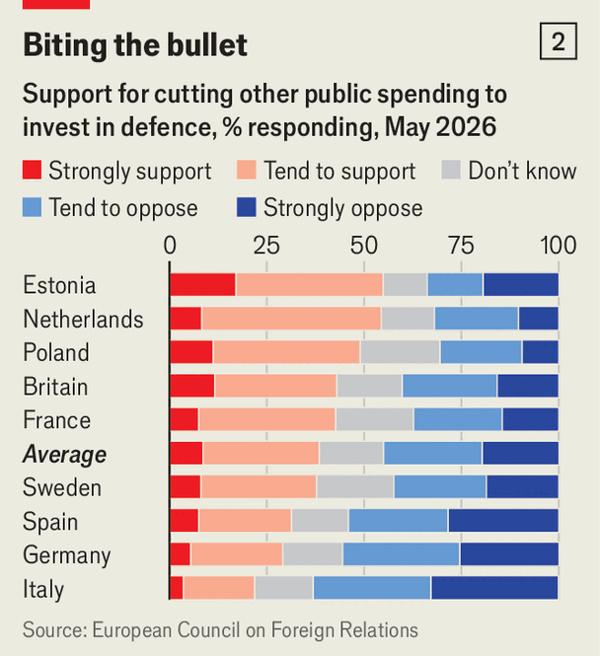
根据对重整军备的财政承诺,欧洲国家可以分为三类。像波兰、芬兰和波罗的海国家这样的前线国家正步入正轨,它们经常做出痛苦的选择,例如芬兰削减医疗开支,立陶宛提高税收。像德国(目标是到2030年达到3.7%)、瑞典和丹麦这样低债务的国家正在利用其借贷能力为国防提供资金。相反,“悲哀”组(包括拥有核武器的英国和法国)希望达到目标,但受到高负债以及公众对增税或削减福利支持度低的限制。在微增0.1%后,预计英国到2030年仅能达到GDP的2.7%,而法国计划仅为2.5%。最后,像西班牙和意大利这样“沾沾自喜且漠不关心”的国家则依靠支出上限或记账把戏来夸大其进展。
这种延迟且不均衡的支出带来了随着2035年临近国防预算出现“曲棍球棒”式激增的风险,这可能会推高装备价格并延长交付时间。此外,欧洲遭受着零碎采购的困扰,与美国各只有一种版本相比,欧洲运行着12种坦克并制造5种不同的榴弹炮。昂贵的项目取消加剧了采购效率低下的问题,例如德国在已经浪费23亿欧元之后取消了价值100亿欧元的护卫舰项目。为了建立公众信任并证明这些巨额支出的合理性,欧洲各国政府必须减少对原始支出目标的关注,而更多地关注于交付实际国防能力,同时提高问责制。
To counter a potential Russian threat without American reliance, European NATO members recently agreed to raise defense spending to 3.5% of GDP (plus 1.5% for security infrastructure) by 2035. This rearmament boom has boosted military manufacturers, such as BAE Systems’ Swedish Hagglunds factory, which saw its workforce triple to 2,600 and revenue surge from $211 million in 2018 to $1.1 billion in 2025. However, this spending surge has sparked public protests, including 500,000 demonstrators in Italy, highlighting the difficult fiscal trade-offs between defense and social welfare. While Donald Trump continues to criticize European allies as freeloaders, actual progress toward the 3.5% target varies widely across the continent.
European nations can be categorized into three groups based on their fiscal commitment to rearmament. Frontline states like Poland, Finland, and the Baltics are on track, often making painful choices such as Finland cutting healthcare and Lithuania raising taxes. Low-debt nations like Germany (targeting 3.7% by 2030), Sweden, and Denmark are using their borrowing capacity to fund defense. Conversely, the "sad" group, which includes nuclear-armed Britain and France, wants to meet targets but is constrained by high debt and low public support for tax hikes or welfare cuts. Britain is projected to reach only 2.7% of GDP by 2030 following a minor 0.1% increase, while France plans for just 2.5%. Finally, "smugly indifferent" states like Spain and Italy rely on spending caps or accounting tricks to inflate their progress.
This delayed and uneven spending creates a risk of a "hockey-stick" surge in defense budgets as 2035 approaches, which will likely drive up equipment prices and delivery times. Furthermore, Europe suffers from fragmented procurement, operating twelve types of tanks and five howitzers compared to America's single version of each. Procurement inefficiencies are compounded by costly project cancellations, such as Germany abandoning a €10 billion frigate program after already wasting €2.3 billion. To build public trust and justify these massive expenditures, European governments must focus less on raw spending targets and more on delivering actual defense capabilities while improving accountability.
Source: Europe has promised cash for defence. It’s failing to provide it
Subtitle: Most Europeans want stronger armed forces, but are unwilling to pay for them
Dateline: Jul 09, 2026 06:45 AM | Ornskoldsvik