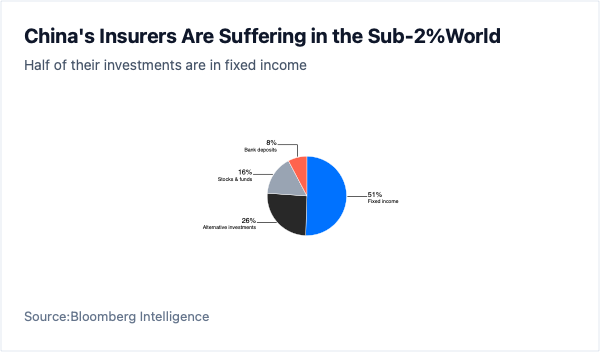
本次注资计划最令人意外之处在于超过20%的资金分配给了大型保险公司。中国保险业约半数资产配置于债券,然而境内主权债殖利率持续下行,使得需要配置长天期公债以匹配负债端的大型人寿保险机构,难以获取足以兑付保户承诺利率的投资回报。尽管保险业可借由增加股市投资以提升收益,但股票资产的高波动性与相对较高的资本计提要求,使获利与资本充足率承受显著压力。
中国对主要银行与保险机构的注资突显出历史性低殖利率所带来的金融后遗症。与美国等面临高融资成本压力的国家不同,中国决策者必须透过发债借款来支撑金融机构资产负债表。这证明债券市场不仅会对缺乏财政纪律的政府做出惩罚,同时也会反映出放任通缩压力蔓延的代价,即便公债价格走强并呈现超低殖利率,依然会对实体金融体系造成连带损害。
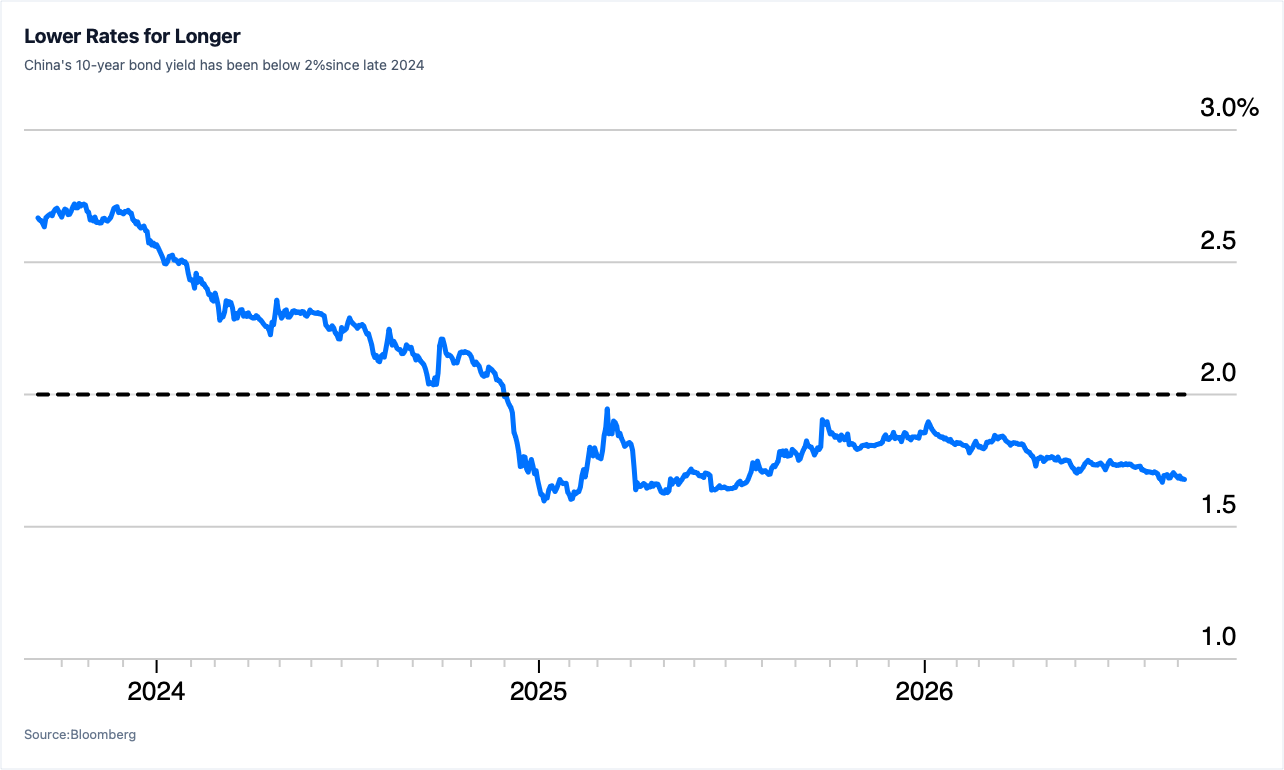
While a global selloff in government bonds has triggered concerns over rising borrowing and financing costs, China has diverged from this trend, with its 10-year sovereign bond yield staying below 2% since late 2024. In response to mounting strain on its financial institutions, Beijing is issuing special sovereign bonds to inject capital into major state banks and insurers, a plan intended to bolster bank capital buffers for property bad-debt recognition while signaling policymakers' acknowledgment that a low-rate regime is here to stay.
A key surprise in the capitalization plan is that more than 20% of the proceeds are earmarked for major insurance companies, which allocate roughly half of their portfolios to fixed income. With domestic sovereign yields sliding, life insurers that rely on long-dated government debt to match liability obligations are struggling to generate sufficient returns to meet credited rates, while shifting toward equity markets introduces market volatility and higher regulatory capital charges that squeeze profitability.
The targeted recapitalization of China's financial giants underscores the financial distress generated by persistently suppressed bond yields. Unlike counterparts in the United States who grapple with high borrowing costs, Chinese authorities are compelled to borrow funds to reinforce institutional balance sheets, illustrating how prolonged deflationary pressures and prolonged low bond yields can inflict substantial collateral damage across the broader financial system.