市场的核心担忧已从AI晶片的需求强弱,转向超大规模云端服务商(Hyperscalers)与新型云端业者(Neoclouds)是否能持续负担庞大的基础设施融资成本,以及投资回报是否足以支撑如此规模的资本支出。近期新型云端供应商CoreWeave债券跌至困境水准、股价单周暴跌25%,使AI热潮背后的融资风险成为焦点。多位基金经理人与业界高层(包括博通执行长陈福阳)警告,资金成本上升可能导致基础设施项目延迟,而Gartner更预测到2030年恐有超过3.5兆美元的AI基建支出面临减损风险,距离核心晶片越远的下游受益者将面临更大的时程延宕风险。
这场融资压力对亚洲股市影响深远,因为台积电、三星电子与SK海力士合计占MSCI亚洲(除日本外)指数近三分之一的权重,且今年MSCI亚太指数表现最佳的前十家公司中有八家是涨幅至少达236%的零组件制造商,一旦资本支出放缓或项目推迟,亚洲供应商的获利预期与估值将面临大幅修正。不过,目前尚无明确证据显示融资紧张已转化为订单疲软,部分投资机构如Federated Hermes仍对强劲的AI终端需求抱持信心,并维持对韩国股市的加码及台积电的持股。
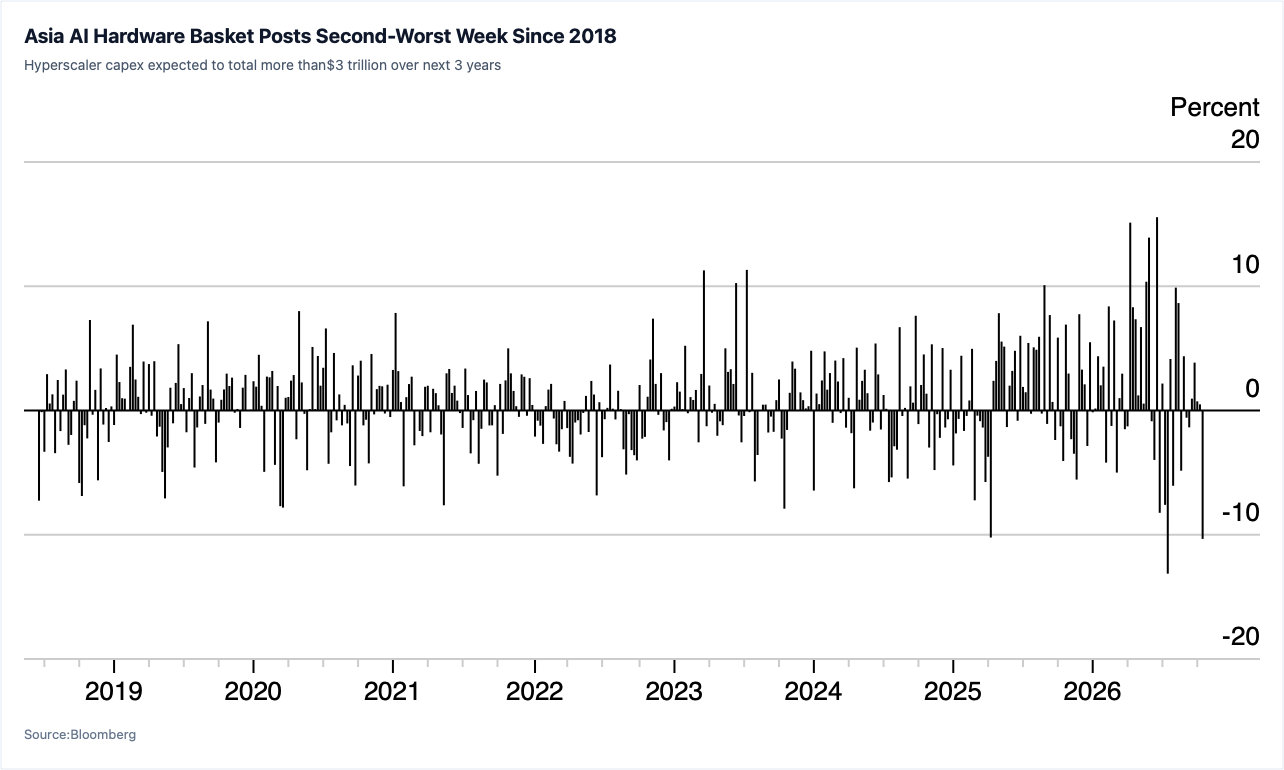
A deepening selloff in US technology stocks is exposing a new vulnerability in Asia's artificial intelligence supply chain. As oil surged to $110 a barrel—stoking inflation concerns—and investors scrutinized the trillions of dollars borrowed to build AI infrastructure, US semiconductor shares suffered their longest eight-session rout since 2008, wiping roughly 16% off the sector's benchmark. This pressure has spread across Asian hardware suppliers; despite an upbeat revenue outlook from Taiwan Semiconductor Manufacturing Co. (TSMC), a Goldman Sachs basket of regional AI hardware stocks tumbled 11% in a week, heavily impacting standout component makers like Nan Ya Plastics, Unimicron Technology, and Samsung Electro-Mechanics.
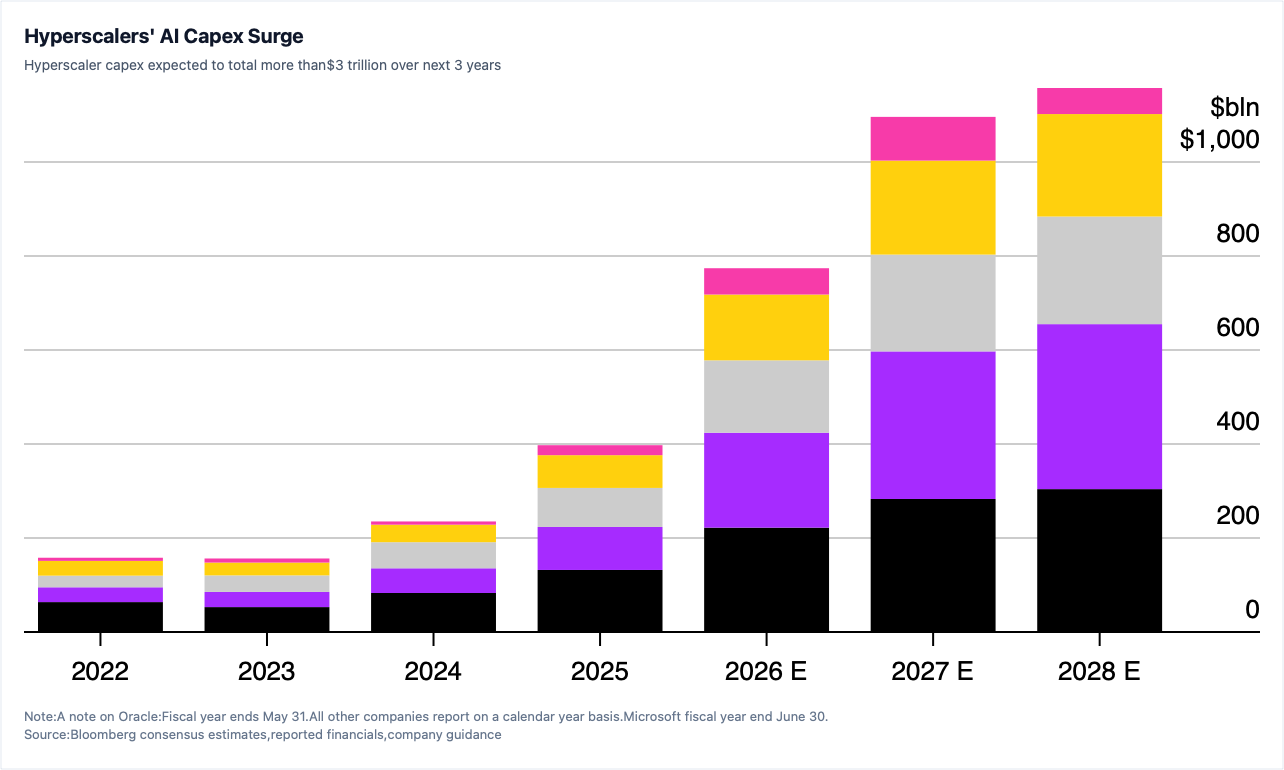
The core market concern has shifted from whether AI chip demand will hold up to whether hyperscalers and neocloud operators can continue financing massive infrastructure deployments and generate returns that justify the investment scale. Distress in the bonds of neocloud provider CoreWeave and a 25% weekly drop in its stock price brought these financing risks into sharp focus. Fund managers and industry executives, including Broadcom CEO Hock Tan, warn that rising borrowing costs and capital constraints could delay projects, while Gartner projects that over $3.5 trillion of AI infrastructure spending could face impairment by 2030, posing particularly acute timing risks for downstream hardware beneficiaries.
The stakes are exceptionally high for Asian equities, where TSMC, Samsung Electronics, and SK Hynix account for nearly a third of the MSCI Asia ex-Japan Index, and eight of the 10 best-performing stocks on the MSCI Asia-Pacific Index this year are component makers that have gained at least 236%. Any slowdown in capital expenditure or project delays could trigger a severe reset in earnings expectations and valuations across the region's supply chain. Nevertheless, there is little evidence so far that financing strains have led to weaker orders, and some investors, such as Federated Hermes, remain confident in robust underlying AI demand while maintaining overweight positions in Korean equities and TSMC.