几个世纪以来,旅行者获取灵感与行程的方式不断演变,从19世纪托马斯·库克的团队游到《孤独星球》指南,再到以猫途鹰(Tripadvisor)为代表的众包点评平台和社交网络。哥伦比亚商学院研究发现,欧盟2017年取消漫游费后,游客即时查阅猫途鹰使罗马旅游餐厅收入增长了5%,主要惠及高评分商家。如今,社交媒体的算法扩散和人工智能正在重塑旅游业。麦肯锡数据显示,去年夏天有55%的美国人使用ChatGPT等AI应用规划假期,高于前一年的38%;而传统指南销量锐减,猫途鹰的网络流量在过去一年中据估计下降了约五分之一。
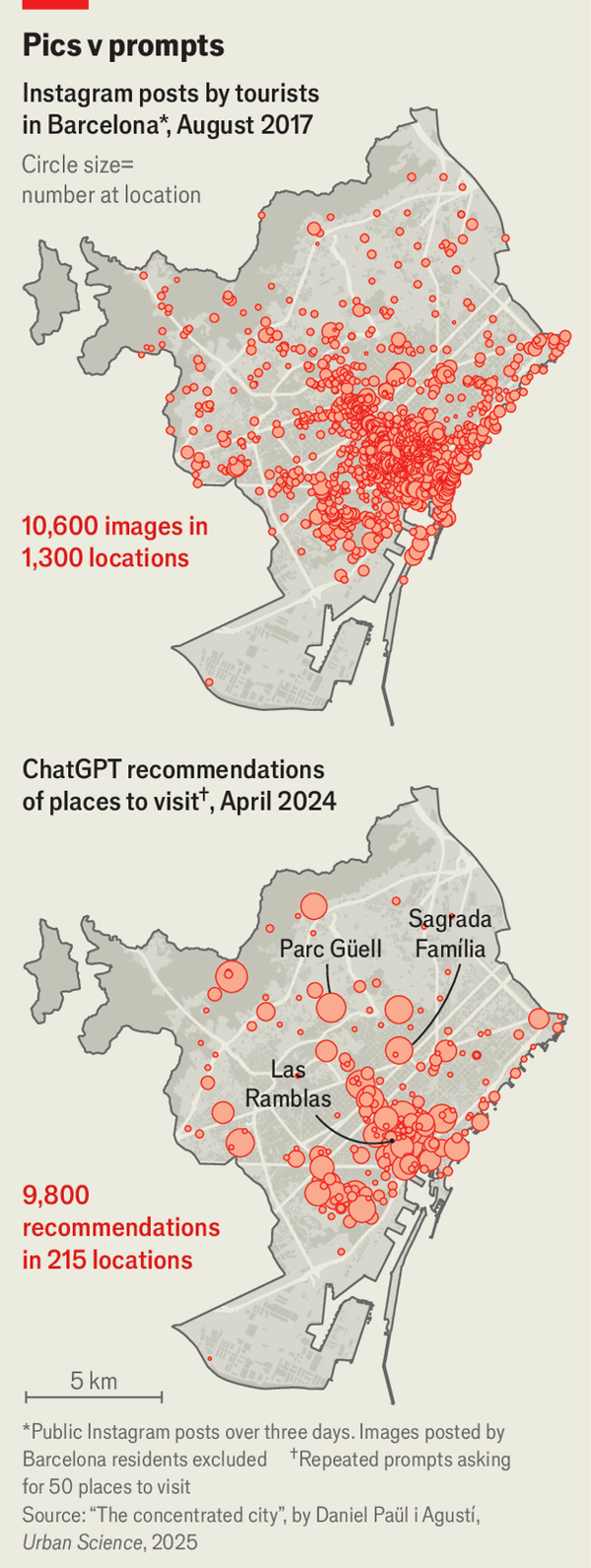
许多人担忧AI可能加剧旅游过度集中的问题。大语言模型倾向于输出最可能的常见答案,威斯敏斯特大学的研究指出ChatGPT对知名旅游枢纽表现出明显偏好。西班牙莱达大学的一项对比研究发现,在针对巴塞罗那景点的10,000次推荐中,ChatGPT仅覆盖了215个地点(并虚构了38个景点),而游客在Instagram上发布的同等规模照片则涵盖了约1,300个不同地点,凸显出AI初级推荐可能导致著名景点过度拥挤。
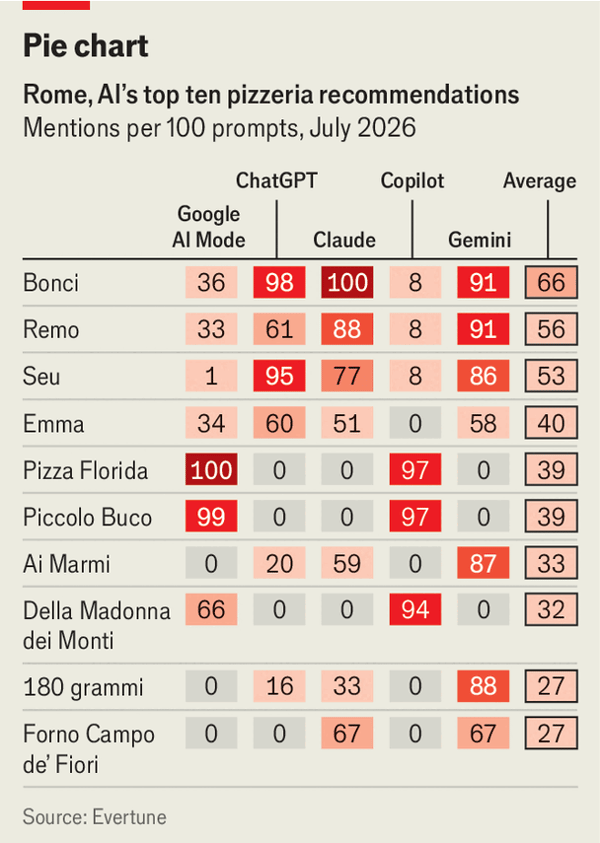
然而,AI也展现出分散客流和实现高度个性化的潜力。不同模型因训练数据和概率生成机制而输出多样化结果,例如Evertune分析显示Gemini针对罗马披萨推荐了多达24家不同餐厅的长尾选项,即使其最热门推荐的出现率也仅为91%。随着AI交互更加深入(用户平均提示词长约25个词),算法能够根据个人历史偏好(如纯素饮食或预算水平)定制专属行程。这种类似流媒体算法的分流机制有望帮助旅行者摆脱盲从,促进游客从拥挤的热门景点向多元化目的地重新分布。
Travel planning has evolved from Victorian guided excursions and print guidebooks to digital crowd-sourced platforms and algorithmic social feeds. Demonstrating the commercial influence of online reviews, Columbia Business School research found that the abolition of EU mobile roaming charges in 2017 boosted Rome's tourist restaurant revenues by 5%, disproportionately benefiting top-rated venues. Currently, artificial intelligence is driving a rapid transition: McKinsey reported that 55% of Americans utilized AI applications to plan holidays last summer, up from 38% the previous year, whereas print guidebook sales plummeted and Tripadvisor's web traffic dropped by an estimated 20% over the past year.
Concerns exist that foundational large language models might exacerbate overcrowding by defaulting to the most common tourist landmarks. Westminster University researchers noted ChatGPT's pronounced preference for established hubs, while a University of Lleida comparative study in Barcelona revealed that across 10,000 recommendations, ChatGPT suggested a narrow selection of only 215 unique locations (alongside 38 hallucinated attractions), compared to approximately 1,300 distinct locations captured across a similar sample of user photos on Instagram, highlighting potential concentration risks.
Conversely, AI models possess substantial capacity to disperse tourism through algorithmic diversity and hyper-personalized recommendations. Analytical testing by Evertune demonstrated that chatbots yield heterogeneous suggestions based on differing training sources and probabilistic mechanisms; for instance, Google Gemini recommended a long tail of 24 distinct Roman pizzerias, with its top selections appearing in 91% of responses. With user prompts averaging 25 words and models tailoring itineraries to individual historical preferences, AI promises to curate bespoke journeys that redistribute traveler flows away from over-saturated hotspots.
Source: Can AI save tourists from the TikTok herd?
Subtitle: Some fear that chatbots will lead everyone to the same places. In fact, they may do the opposite
Dateline: 8月 13, 2026 05:05 上午