在第一岛链沿线,中国针对美国亚洲盟友的军事压力显著升级。7月20日,中国海警在阿云金暗沙(仁爱礁)附近与菲律宾海军发生激烈冲突,造成两名菲律宾士兵受伤送医。此前,中国于3月在黄海对执行对朝制裁任务的澳大利亚直升机进行了危险拦截;7月初,中国从南海向南太平洋发射了一枚潜射弹道导弹;而在仁爱礁冲突前一天,中国军舰还在日本专属经济区举行了实弹演习。外交界普遍认为,中国正试图利用特朗普政府聚焦中东事务的空档,测试美菲共同防御条约及美国对区域盟友的安全承诺底线。
中国对美盟友的军事施压呈现出精心策划的系统性特征。在针对菲律宾的同时,中国也对澳大利亚和日本施加了精确计算的压力:弹道导弹试射恰逢澳大利亚与斐济签署共同防御协定当天,而日本专属经济区内的实弹演习前,中俄核轰炸机巡航刚好在日本周边展开。中国意在利用美国注意力被美伊冲突分散的机会,推行其“建设性战略稳定”框架,试图将美军逼出第一岛链,并向周边国家展示其改变区域安全现状的能力。
面对中方的军事动作,美军虽采取了一系列针对性的威慑部署,但政治意图的模糊削弱了实际威慑效果。美军在夏季向日本和菲律宾部署了先进导弹系统,并于7月21日公开了已部署在可攻击中国本土范围内的“暗鹰”(Dark Eagle)远程超音速导弹系统。虽然美军海警在7月20日冲突后协助救助了受伤的菲律宾士兵,但外界普遍怀疑特朗普总统是否愿意为了盟友的局部摩擦而破坏与中国的双边关系。这种政治决策的不确定性,使得中国得以持续推高第一岛链的安全风险。
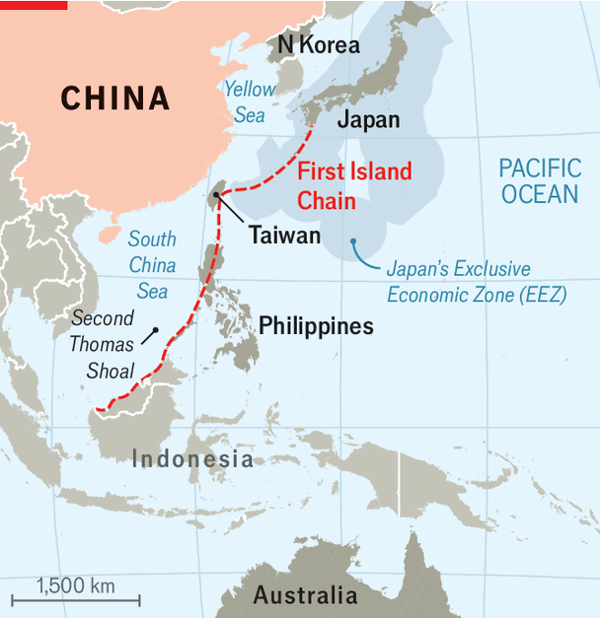
China has intensified coordinated military pressure against US allies along the first island chain. On July 20th, Chinese coastguards clashed with Philippine naval personnel near Second Thomas Shoal, injuring two sailors who required hospitalization. This incident follows a series of regional assertions: in March, Chinese fighter jets conducted a dangerous interception of an Australian helicopter over the Yellow Sea; in early July, China launched a submarine-based ballistic missile over the Philippines into the South Pacific; and a day before the Second Thomas Shoal brawl, Chinese vessels held live-fire drills in Japan's exclusive economic zone. Analysts reckon Beijing is deliberately testing whether Washington will honor its mutual defense obligations.
Beijing’s military pressure forms a calibrated strategy targeting multiple American allies simultaneously. The South Pacific missile test coincided directly with Australia signing a mutual defense pact with Fiji, while the naval drills off Japan followed joint Chinese-Russian nuclear-capable bomber flights around the Japanese archipelago. With US military resources diverted by conflict with Iran, Beijing seeks to operationalize the "constructive strategic stability" concept agreed upon at the May summit between Donald Trump and Xi Jinping. By normalizing aggressive operations around the Sierra Madre—beached in 1999—China aims to demonstrate the limits of US protection.
Despite significant US military deployments aimed at deterrence, political uncertainty continues to undercut Washington’s security posture. US Pacific Command has positioned advanced missile hardware in Japan and the Philippines, showcasing images on July 21st of the Dark Eagle long-range hypersonic missile system deployed within operational range of mainland China. While a US Coast Guard cutter assisted in evacuating injured Philippine sailors after the July 20th incident, regional analysts question whether President Trump has the appetite to risk broader conflict to defend allied reefs, effectively encouraging Beijing to push its strategic influence further.
Source: China bets that Donald Trump won’t mind it bullying American allies
Subtitle: It has stepped up its abuse of Australia, the Philippines and Japa
Dateline: 7月 30, 2026 05:36 上午 | Singapore and Tokyo