由于自七月下旬以来科技股等热门标的的个股隐含波动率有所收敛,加上即将到来的财报季通常会凸显个股自身特质而非整体宏观驱动,交易员正积极透过买入个股选择权并放空指数合约来捕捉个股与大盘之间的波动差。
尽管离散交易在科技与能源板块展现丰富契机,但部分机构投资者也警惕该策略正面临过度拥挤的风险,而在AI对各行业颠覆程度仍具极高不确定性、双向尾部风险皆被低估的背景下,也有专业人士建议采取精选个股并搭配指数卖权进行避险的简化策略。
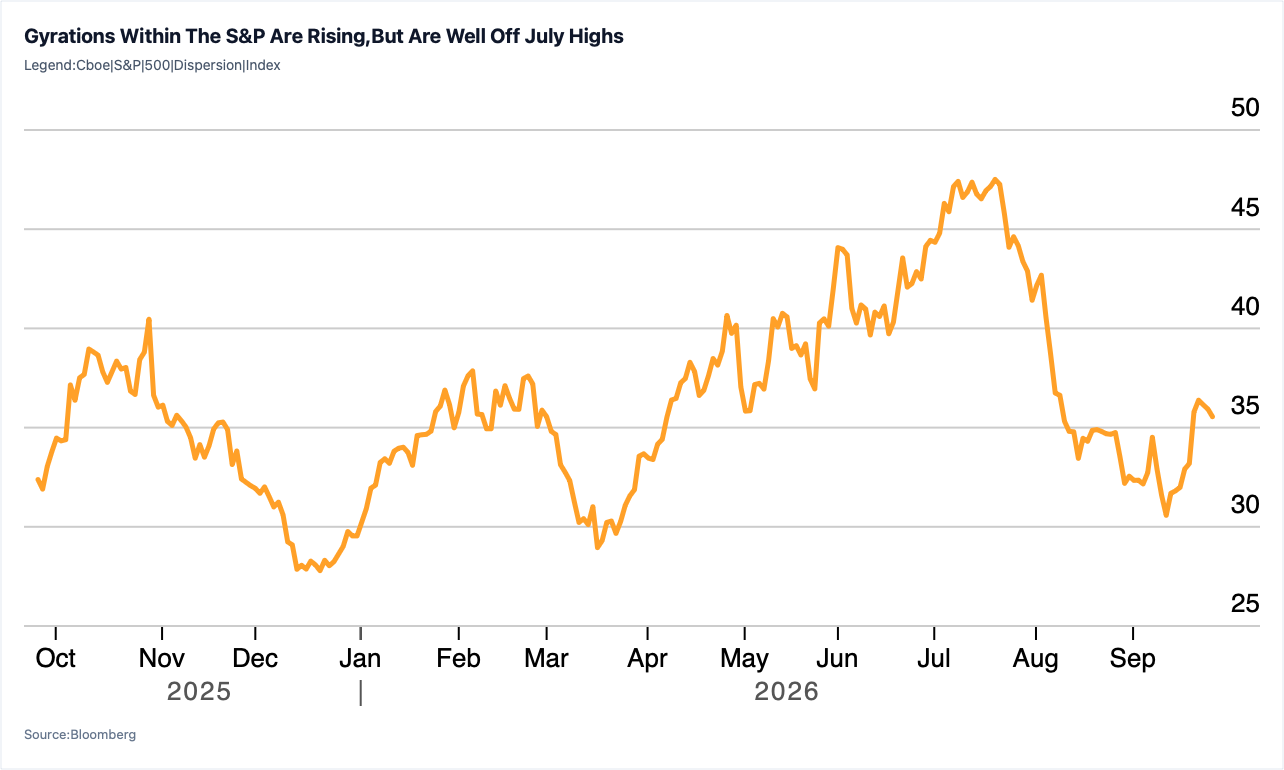
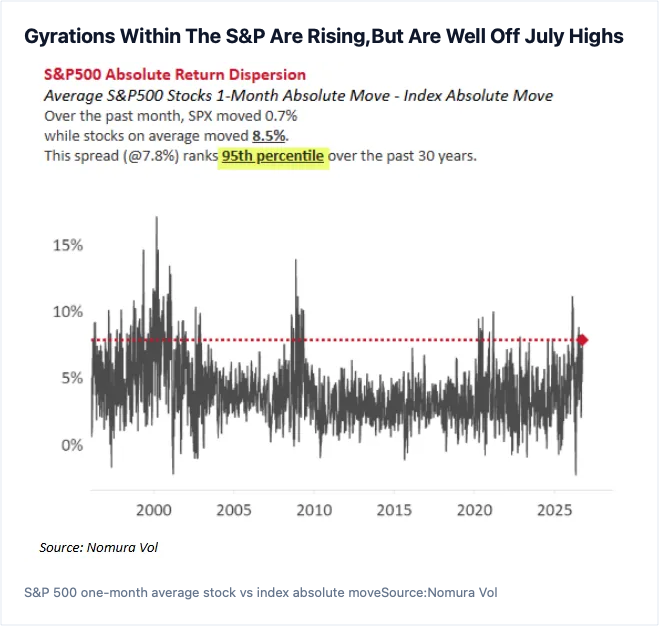
A potent mix of AI euphoria and disruption fears, bond market selloffs, and geopolitical turmoil has caused wild divergence across individual stocks, setting up an ideal backdrop for hedge funds to execute the long-favored dispersion trade as constituents within benchmark indices move in opposite directions.
With single-stock implied volatility contracting since late July and the upcoming earnings season expected to amplify company-specific idiosyncratic moves over macro-driven swings, traders are seizing attractive entry points by buying single-stock options and shorting index contracts to monetize widening volatility spreads.
While opportunities span across tech and energy, market participants caution that dispersion has become an increasingly crowded trade, prompting some managers to navigate the massive, underpriced two-sided tail risks of the AI revolution through straightforward strategies like stock picking coupled with index put hedges.