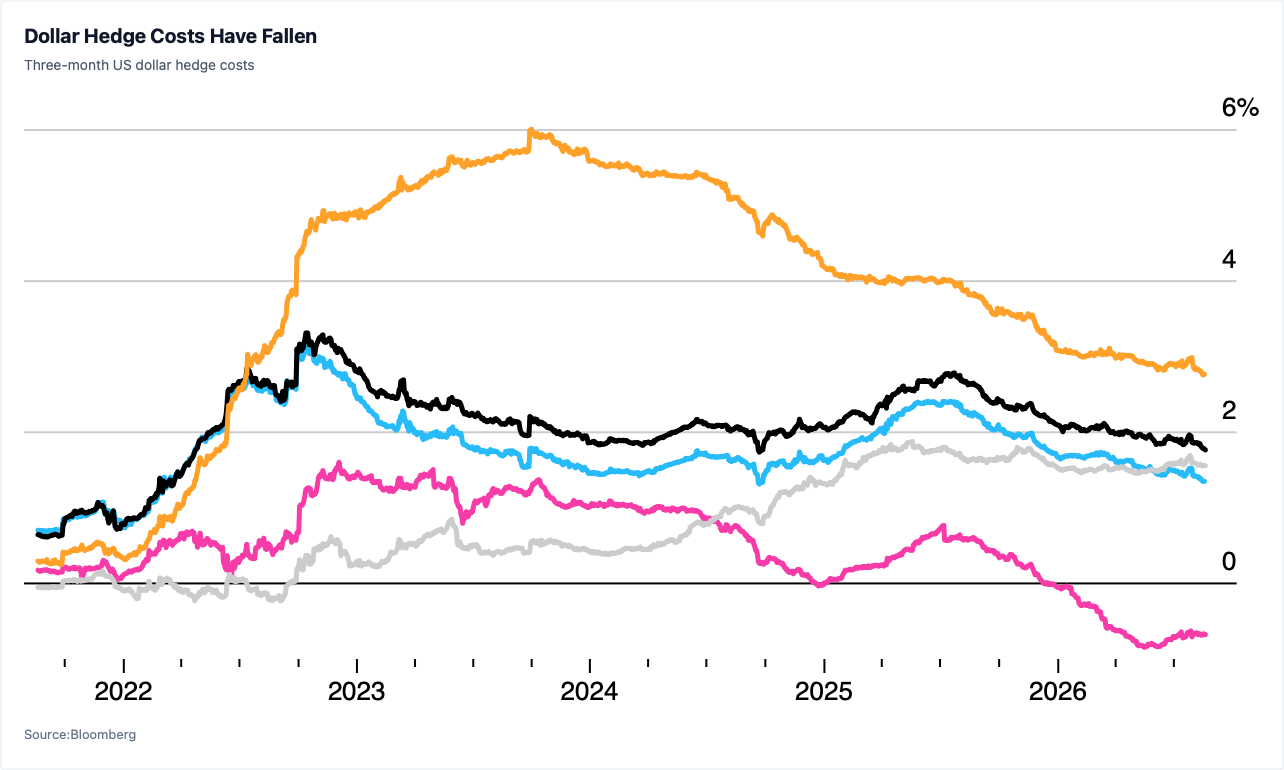
支撑过去低避险策略的两大基石正同时动摇:一是昂贵的避险成本,二是美元的避险避风港地位。随著全球央行因通膨压力趋向升息,美外利差缩小使避险成本大幅降低;同时,美国政策信誉与官员举措引发市场对美元贬值交易的担忧,削弱了投资人对美元在市场动荡时能发挥缓冲作用的信心。
尤其是日本等持有庞大美债的国家,其避险需求增加的潜力最为显著。分析师指出,海外投资人无需直接抛售美股或美债,仅需透过远期合约提高外汇避险比率,即使避险比例微幅上升5个百分点,也将牵动数千亿美元的交易规模,进而大幅加速美元未来的跌势。
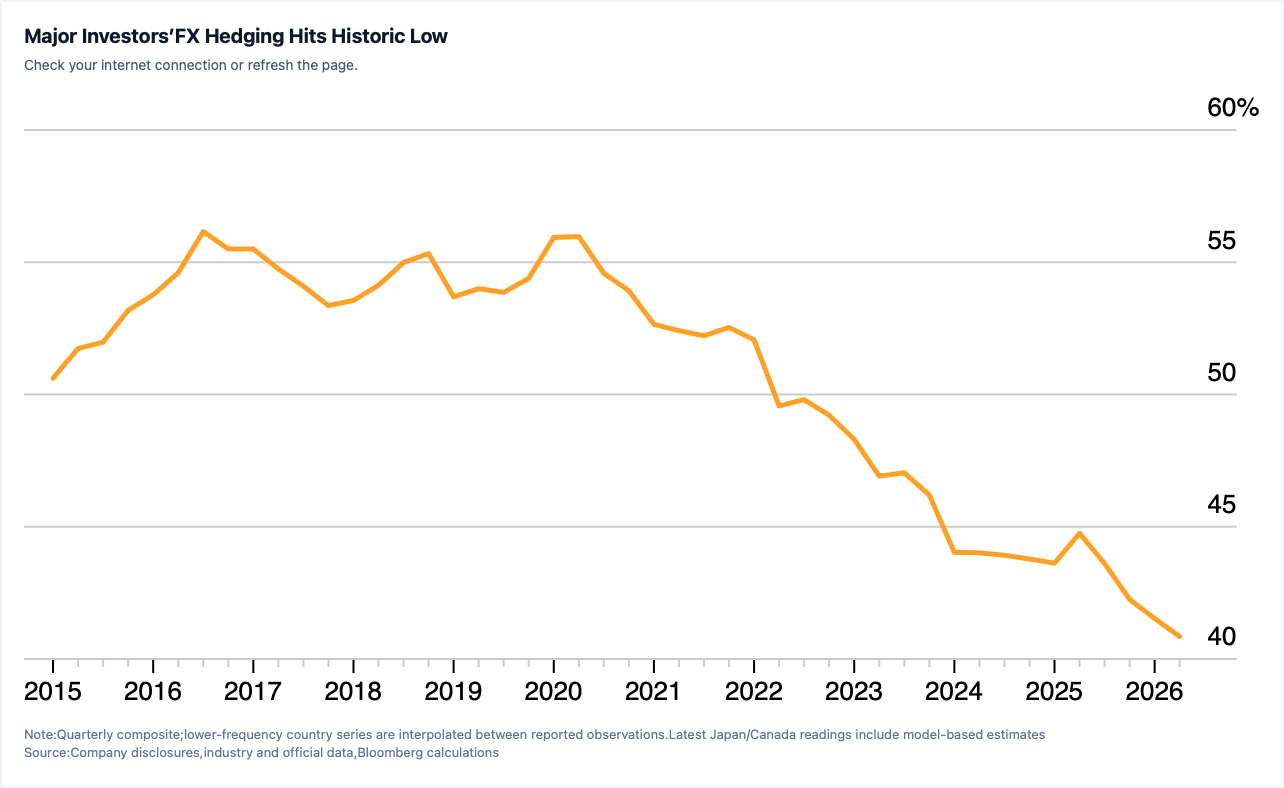
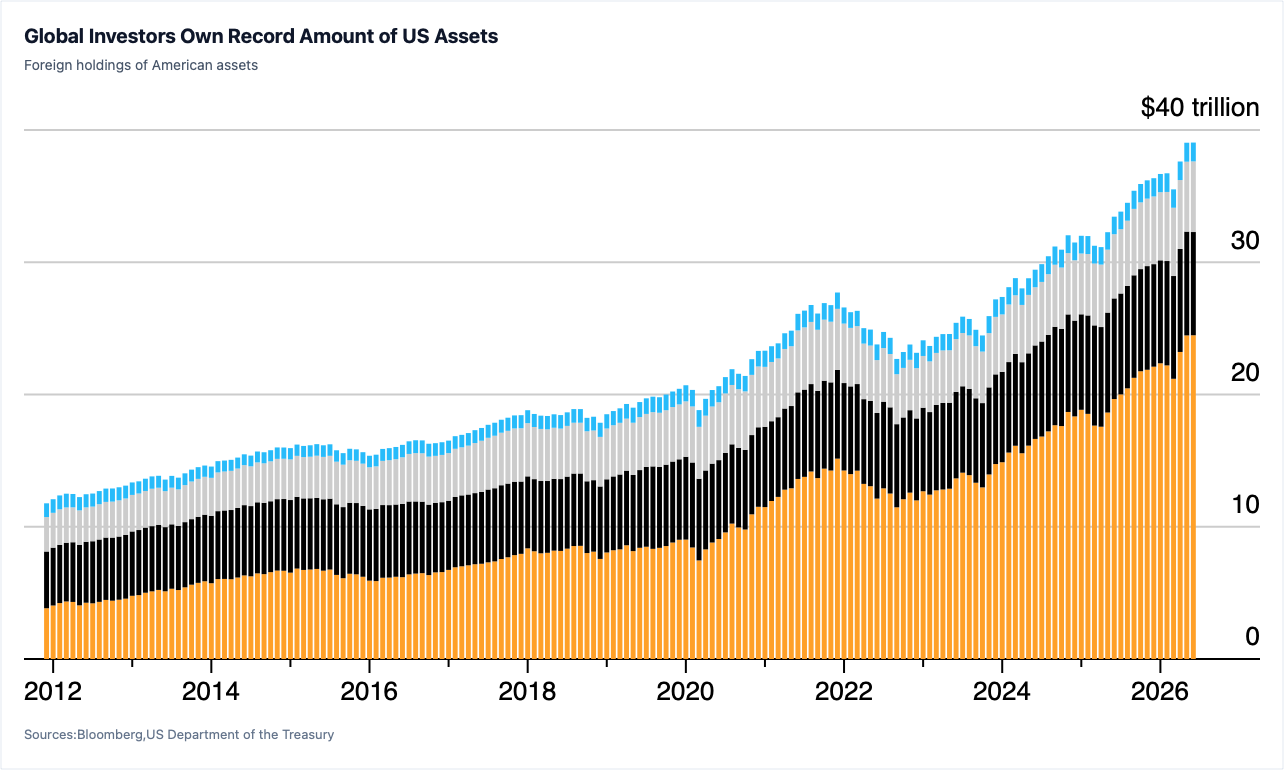
Major global institutional investors holding vast amounts of US assets have reduced their currency hedging against a weaker dollar to multi-year lows. Bloomberg data shows that investors across markets such as Japan, Canada, and Taiwan hedged only about 41% of their foreign-currency exposure as of late June, meaning any shift to increase hedging by selling dollars forward could unleash severe downward selling pressure on the greenback.
The two core pillars underpinning past low-hedging strategies—prohibitive hedging costs and the dollar's safe-haven status—are now being challenged simultaneously. As narrowing interest-rate differentials make hedging significantly cheaper and US policy actions fuel currency debasement concerns, confidence in the dollar's ability to act as a reliable defensive buffer during market volatility is rapidly eroding.
The potential for rebuilding currency hedges is particularly pronounced in key markets like Japan, the largest foreign holder of US Treasuries. Analysts emphasize that foreign investors do not need to liquidate their underlying US equities or bonds; simply raising their FX hedge ratios by a modest five percentage points through forward contracts could generate hundreds of billions of dollars in selling flows and accelerate the currency's decline. (Key numbers: 5)