天文学家利用位于夏威夷的双子星北座望远镜,拍摄到了Pa 30星云迄今最详细的影像。该星云是一处著名的超新星遗迹,其细部结构比过往影像清晰十倍。新观测揭示,原本看似如烟火或蒲公英般的连续丝状物质,实际上是由排列整齐、大小相对均匀且巨大的气体结构成,犹如串在线上的珍珠,每个气体结的直径约为四个光日。
这些巨大气体结异常规则的排列与均匀大小让研究人员感到惊讶,因为在剧烈的超新星爆发后,通常只会留下形状不规则的残留物质。此外,Pa 30星云中心的恒星并未完全毁灭,而是一颗罕见的「僵尸恒星」。这类热核超新星中恒星部分幸存的现象至今尚未完全被理解,而Pa 30独特的结构将有助于科学家深入模拟并重建这类爆炸机制与恒星演化过程。
Pa 30星云之所以备受关注,还因为它直接连结了现代天文观测与八百多年前的人类历史纪录。西元1181年,中国与日本的天文学家曾记录到天空中出现了一颗持续可见数月的客星,而数百年后的现代科学家证实,当年古人所见正是形成今日Pa 30星云的超新星爆炸事件,使这项新发现更具历史与科学价值。
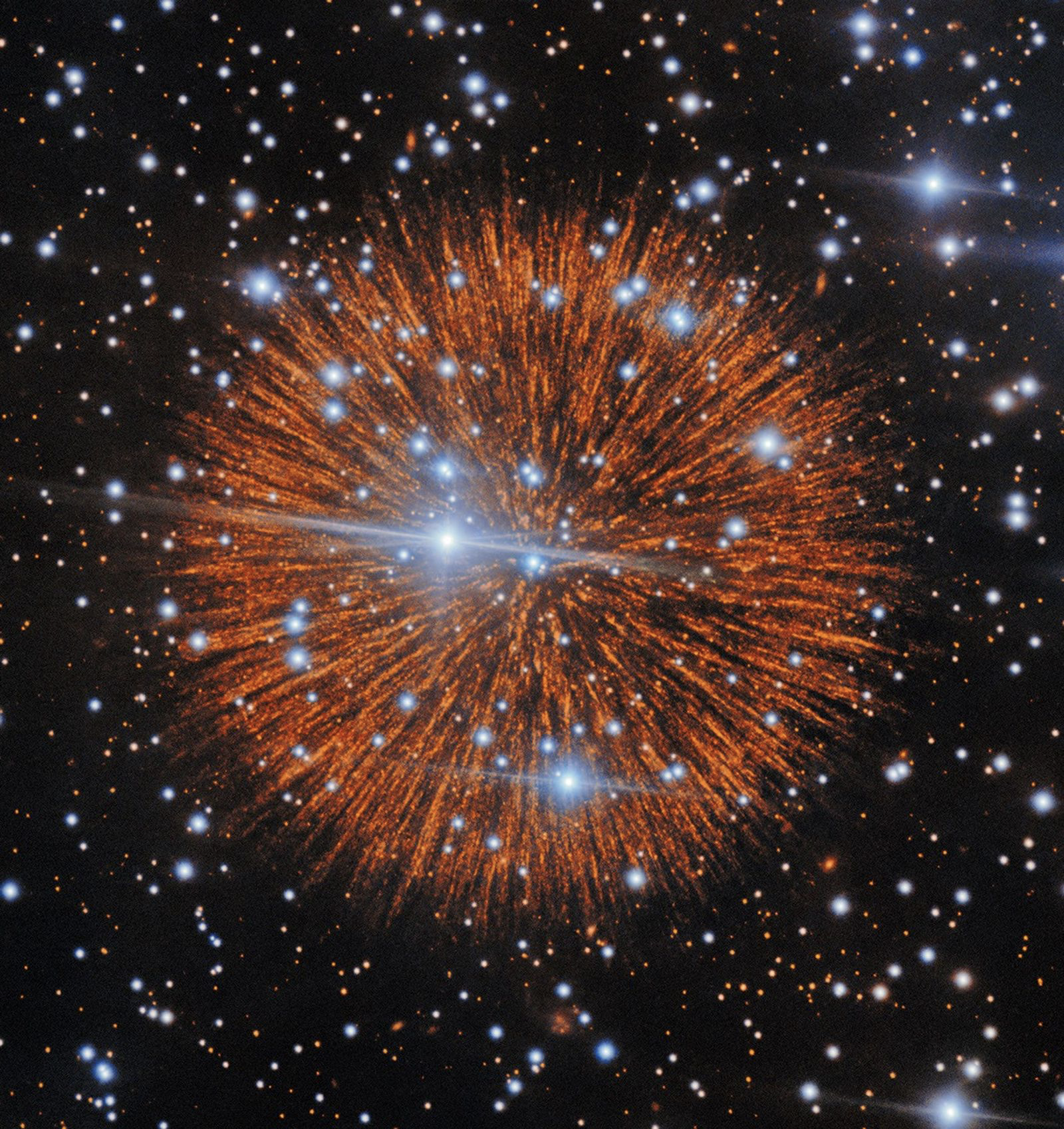
This image, obtained with the Gemini Multi-Object Spectrograph, shows that the ejecta from the remnant—with its unmistakable fireworks-like shape—form a cascading structure resembling a knot.
INTERNATIONAL GEMINI OBSERVATORY/NOIRLAB/NSF/AURA
Astronomers using the Gemini North telescope in Hawaii have captured the most detailed image to date of the Pa 30 nebula, revealing roughly ten times more structure than previous observations. The newly resolved view shows that the filamentary ejecta, previously resembling fireworks or a dandelion, are not continuous strands but rather chains of enormous, pearl-like gas knots with diameters of about four light-days each.
The surprising regularity and uniform size of these cosmic knots challenge typical expectations of chaotic debris left behind by supernovae. Furthermore, the central star of Pa 30 is a rare 'zombie star' that survived the thermonuclear blast rather than being completely destroyed, providing scientists with a unique opportunity to model unconventional stellar detonations and study how such remnants endure after an explosion.
The Pa 30 nebula holds particular significance because it bridges modern astronomical instruments with historical sky observations from over eight centuries ago. Records from Chinese and Japanese astronomers in 1181 described a 'guest star' visible for several months, which modern researchers have now confirmed as the ancient supernova explosion responsible for creating the Pa 30 remnant studied today.