除了能源成本优势外,中国在资料中心建设速度与建造成本上也大幅领先美国。透过模组化预制技术与集中施工,当地工程通常仅需12至18个月即可完工,成本低约两成。阿里巴巴、华为、字节跳动以及新兴AI团队纷纷进驻,带动了周边风电制造与液冷设备等完整产业生态链的发展,同时北京当局也透过税收与水电补贴政策,引导资料中心采用国产晶片。
尽管国内生成式AI与运算需求的爆发消除了算力过剩的疑虑,但资料中心的快速扩张也凸显出其核心困境:先进AI晶片的供应短缺。由于美中两国对辉达晶片的出口与采购限制,加上本土晶圆制造产能有限,未来这些快速建成的资料中心能否取得足够的先进晶片来发挥算力效能,成为中国AI基础设施发展的最主要挑战。
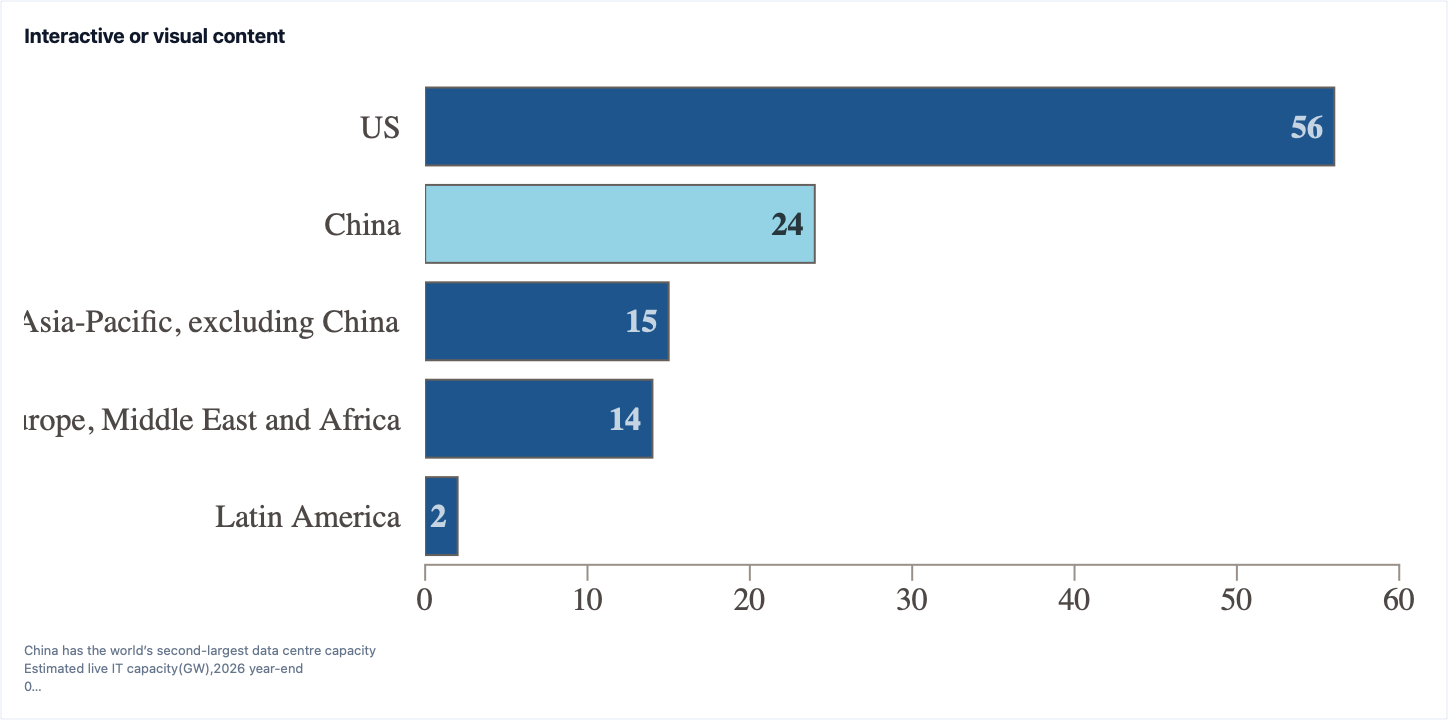
China is rapidly developing large-scale data centres in its energy-rich hinterland to leverage abundant electricity and inexpensive land, with Ulanqab in Inner Mongolia becoming Asia's fastest-growing computing hub with 89 planned or completed facilities. In contrast to the United States, where grid bottlenecks and power shortages constrain data centre growth, Ulanqab benefits from vast local electricity surpluses in wind and coal power, a cold climate that reduces cooling costs, and an independent grid allowing dedicated power supply.
Beyond energy advantages, China is constructing data centres faster and more cost-effectively than typical US facilities, completing projects in 12 to 18 months using prefabricated modular units at roughly 20 percent lower construction costs. Major tech giants including Alibaba, Huawei, and ByteDance, along with AI research labs, are driving demand in the region, which has spurred a local industrial ecosystem of wind turbine assembly and cooling suppliers, aided by government tax and utility incentives promoting domestic processors.
While surging enterprise demand for artificial intelligence computing dispels fears of overbuilding, the blistering pace of infrastructure construction brings China's central vulnerability into sharp focus: a severe shortage of advanced AI processors. US export controls and Chinese regulatory policies regarding Nvidia hardware, alongside constrained domestic semiconductor fabrication capacity, mean that securing enough high-end chips to equip these facilities remains the foremost bottleneck in China's AI ambitions.