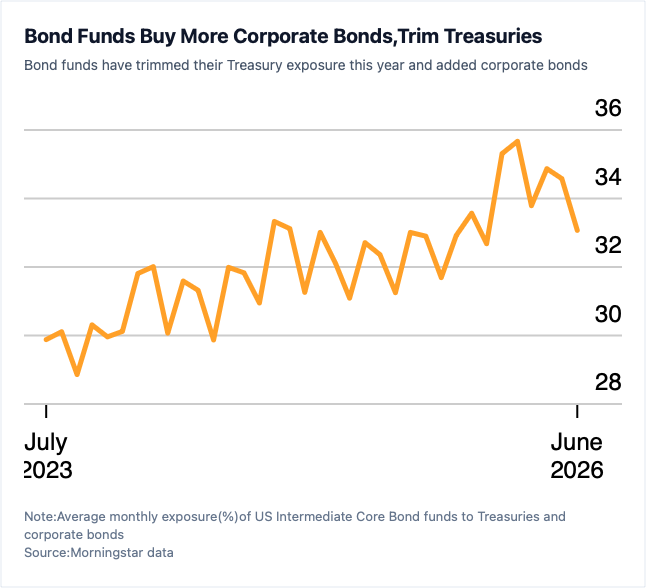
尽管美国政府维持著空前的高赤字与高借贷成本,但AI企业债券的激增正加速消耗市场吸收债务的能力。投资人为了追求更高的收益,纷纷抛售美国国债转而购买Alphabet或Meta等高利润公司的长期债券,这也使得债券基金对企业债的资产配置比例创下了三年来的新高。
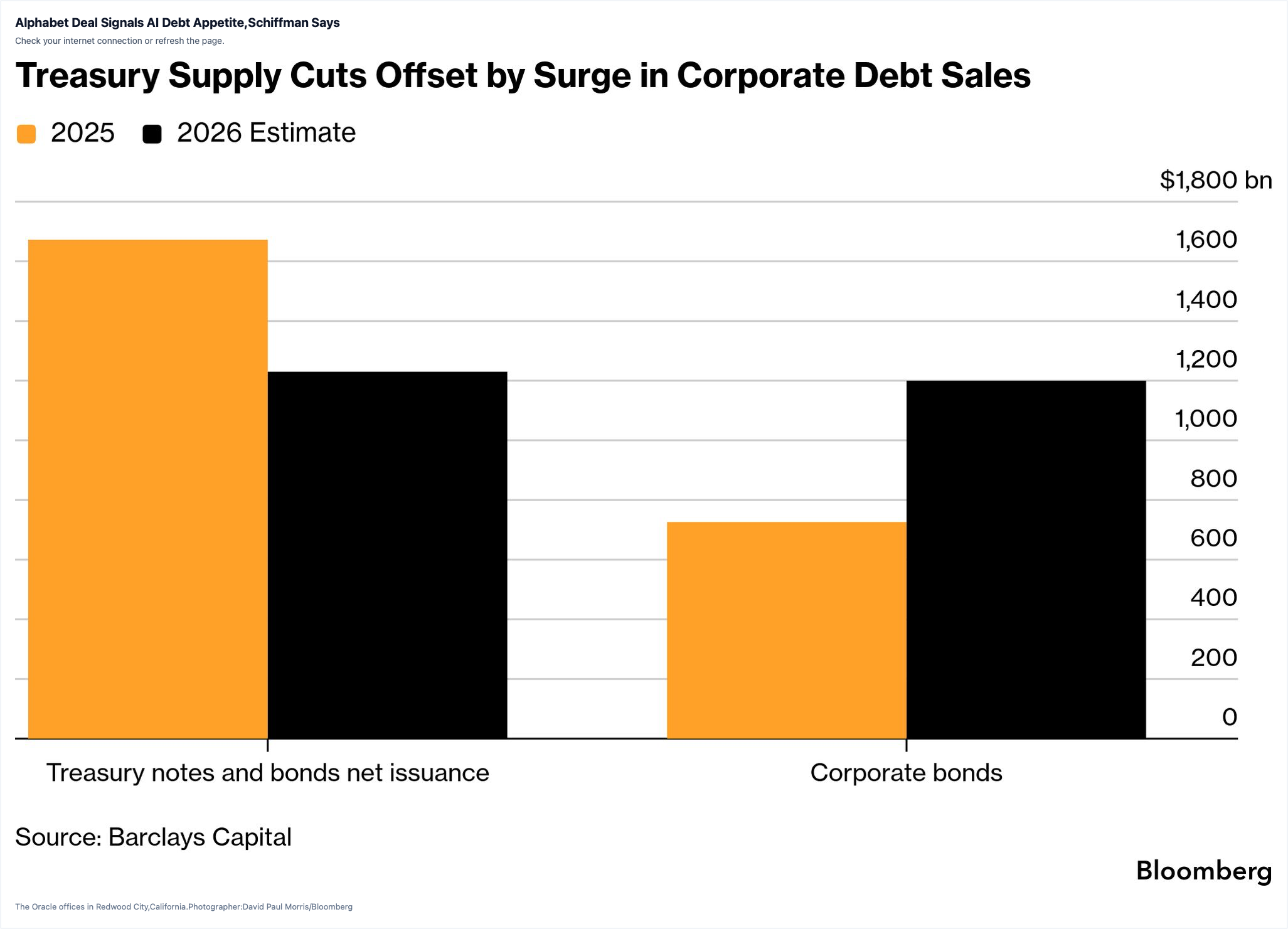
这种由AI投资热潮所引发的长期企业债供给激增,不仅填补了美国财政部为稳定市场而减少长期国债发行所留下的缺口,更进一步推升了长期公债的殖利率。随著市场预期到2030年AI基础设施支出将高达5.5兆美元,这波企业发债潮才刚揭开序幕,预料将会持续对长期利率施加向上的压力。
The "crowding out" theory traditionally suggests that excessive government borrowing restricts companies' ability to raise funds in financial markets, but the situation appears to be reversing as tech giants issue massive amounts of debt for artificial intelligence development. Investment-grade companies have sold nearly $1.5 trillion in bonds this year, with major tech firms' borrowing equating to roughly 25% of the US Treasury's net issuance to private investors.
Although the US government maintains unprecedented high deficits and borrowing costs, the surge in AI corporate bonds is increasingly testing the market's capacity to absorb debt. Chasing higher yields, investors have been selling US Treasuries to buy long-term debt from highly profitable companies like Alphabet or Meta, pushing bond funds' allocations to corporate bonds to a three-year high.
This massive influx of long-term corporate debt supply driven by the AI investment boom has largely filled the gap left by the US Treasury's efforts to stabilize the market through reduced long-dated bond sales, further driving up long-term bond yields. With AI infrastructure spending projected to reach $5.5 trillion by 2030, this wave of corporate borrowing has only just begun and is expected to maintain sustained upward pressure on long-term interest rates.