在内需疲软、国债收益率下行及通缩阴影笼罩的背景下,中国本应通过宽松财政政策刺激需求,却意外走向了财政紧缩。8月21日公布的官方数据显示,7月份全国税收收入同比大幅增长超过13%,创下三年多以来的最大单月增幅,广义财政赤字亦随之收窄。这一税收激增并非源于提高法定税率,而是来自于织密征管网络:北京和杭州近日要求居民对在香港购买的离岸保险产品收益缴纳个税,此前官方还针对香港及美股交易收益补发税单,并在7月出台新规将离岸信托纳入征税范围,充分借助了“共同申报准则”(CRS)的多边涉税信息共享机制。
不仅是对离岸资产的追缴,国内经济领域的税务稽查同样显著升级。美银数据显示,今年上半年至少有80家上市公司收到补税通知,数量几乎与2025年全年持平;即便是由财政部持股的农业国企北大荒(黑龙江农业),也在6月因不当申报租赁土地税收优惠而被追缴14亿元人民币(约2.08亿美元)欠税。此外,中国正逐步取消高能耗电池(明年起)、太阳能电池、工业玻璃、陶瓷和化工产品的增值税出口退税以出清过剩产能,同时将原仅涵盖15类商品的消费税扩容至锂电池和光伏组件,并考虑对含糖奶茶等饮品征税。
从微观经济角度看,拓宽税基、治理产能过剩及提升个税对国库的贡献具有合理性,但在房地产危机复苏期收紧财政时机极为不利。尽管经济学家普遍呼吁通过提高农村养老金等手段进行大胆的财政刺激,但中国政府对财政收入下滑深感担忧,并警惕人口老龄化带来的长期债务负担。决策层未选择扩大支出托底经济,而是倾向于依赖现代化的税收征管系统与基层群体的耐受力来平衡预算。
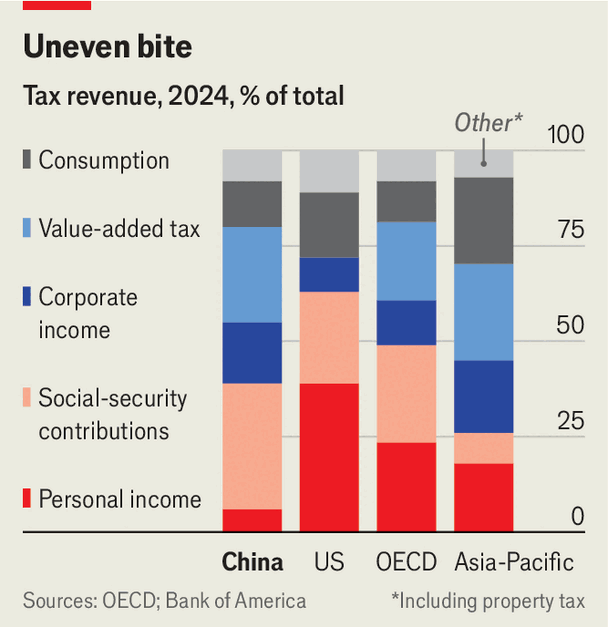
Amid weak domestic spending, declining government-bond yields, and looming deflationary risks that warrant fiscal stimulus, China is instead stumbling into budgetary austerity. Official data released on August 21st revealed that tax revenues surged by more than 13% year-on-year in July—the largest single-month increase in over three years—which narrowed the broad fiscal deficit. This revenue jump stemmed not from statutory rate hikes but from aggressive tax enforcement: municipal authorities in Beijing and Hangzhou began taxing mainlanders' earnings from offshore Hong Kong insurance policies, following earlier back-tax notices on offshore stock trading and new July regulations capturing offshore trusts via the multilateral Common Reporting Standard (CRS).
Tax enforcement has simultaneously intensified across the domestic economy, with Bank of America noting that at least 80 listed companies received demands for back taxes in the first half of this year, nearly matching the total for all of 2025. Even state-owned giants have been targeted; in June, Heilongjiang Agriculture (Beidahuang), a state firm partly owned by the Ministry of Finance, was ordered to pay 1.4bn yuan ($208m) in back taxes over misclaimed land breaks. Additionally, the government is terminating VAT export rebates on high-energy batteries next year—having already stripped them from solar cells, ceramics, and chemicals in April—while expanding its narrow 15-item consumption tax to lithium-ion batteries and solar cells, with levies on sugary drinks also under consideration.
While microeconomically sensible for broadening the tax base and curbing industrial overcapacity, this fiscal retrenchment comes at an unfortunate juncture for an economy navigating a severe property downturn. Economists have urged decisive fiscal measures, such as boosting rural pensions to support consumer demand, but Beijing remains wary of revenue erosion and long-term entitlement burdens in an aging society. Consequently, the government is choosing tax enforcement and fiscal discipline over expansionary spending to balance its public finances.
Source: China should be loosening budgetary policy. It’s doing the opposite
Subtitle: Its belt-tightening is good micro, but bad macro
Dateline: Aug 27th 2026