8月5日,俄罗斯财政部宣布将每日购买外汇和黄金的规模提高约20%,从7月份的54亿卢布(当时约合6900万美元)增至65亿卢布。受此主动干预影响,卢布对美元汇率从8月初的约80比1滑落至月中旬的85比1,创下自3月以来的最低水平。尽管本币贬值通常会推高进口物价并加剧通胀,但近期卢布汇率过强却对俄罗斯联邦财政预算构成了严峻挑战。
在今年上半年,卢布对美元平均汇率为77比1,远强于预算预设的92比1。由于占财政预算总收入20%的油气出口以美元结算,强势卢布导致油气税收在换算为卢布后大幅缩水。尽管海湾冲突与霍尔木兹海峡受阻将政府计税平均油价推升至每桶68美元(高于预算假设的59美元),上半年油气收入仍同比骤降23%至3.7万亿卢布。这导致上半年财政赤字高达5.7万亿卢布(占年度GDP的2.5%),已超出全年3.8万亿卢布(占GDP 1.6%)的赤字预算上限。
为填补巨额财政赤字,俄罗斯当局除引导卢布贬值外,还通过议会授权财政部突破法定借款上限。此外,自3月份总统普京就暴利税召开会议以来,政府要求商界对联邦财政及对乌战费提供“自愿”捐款,今年初以来企业界已累计缴纳3840亿卢布。然而,本币走弱在短期缓解财政压力的同时,将进一步推高通胀(受乌军袭击炼油设施导致汽油短缺等因素影响,6月份通胀率已攀升至6%),并侵蚀俄罗斯民众的实际家庭收入。
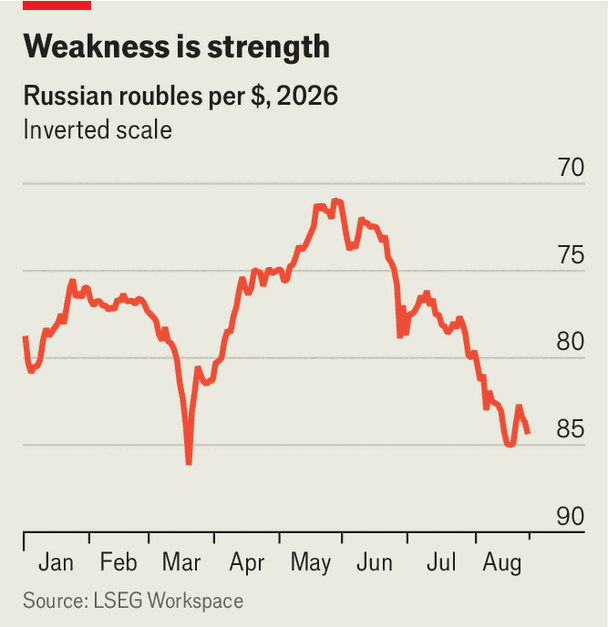
On August 5th, the Russian Ministry of Finance announced a roughly 20% increase in its daily purchases of foreign currencies and gold, boosting daily allocations from 5.4bn roubles ($69m) in July to 6.5bn roubles. Consequently, the rouble depreciated from roughly 80 per dollar in early August to 85 by mid-month, touching its weakest level since March. While currency depreciation typically triggers imported inflation, an overly strong rouble had severely compressed federal fiscal revenues.
During the first half of the year, the exchange rate averaged 77 roubles per dollar against a budgetary assumption of 92 per dollar. Because oil and gas exports account for 20% of federal budget revenues and are priced in foreign currency, the strong rouble severely eroded conversion revenues. Despite Gulf conflict disruptions pushing actual oil tax benchmark prices to $68 per barrel (surpassing the budgeted $59), first-half oil and gas receipts plummeted 23% year-on-year to 3.7trn roubles. This generated a massive first-half fiscal deficit of 5.7trn roubles (2.5% of GDP), already exceeding the targeted full-year deficit of 3.8trn roubles (1.6% of GDP).
To bridge this fiscal shortfall, the Russian government authorized the finance ministry to borrow beyond statutory caps and extracted "voluntary" corporate windfall contributions following a March presidential meeting, yielding 384bn roubles in business donations year-to-date. While deliberate currency depreciation provides immediate budgetary relief by maximizing converted rouble export revenues, it risks accelerating domestic inflation—which reached 6% in June amid refinery fuel shortages caused by Ukrainian strikes—and eroding real household purchasing power.
Source: Why is Russia deliberately weakening its currency?
Subtitle: A strong rouble was hurting the budget
Dateline: Aug 27th 2026