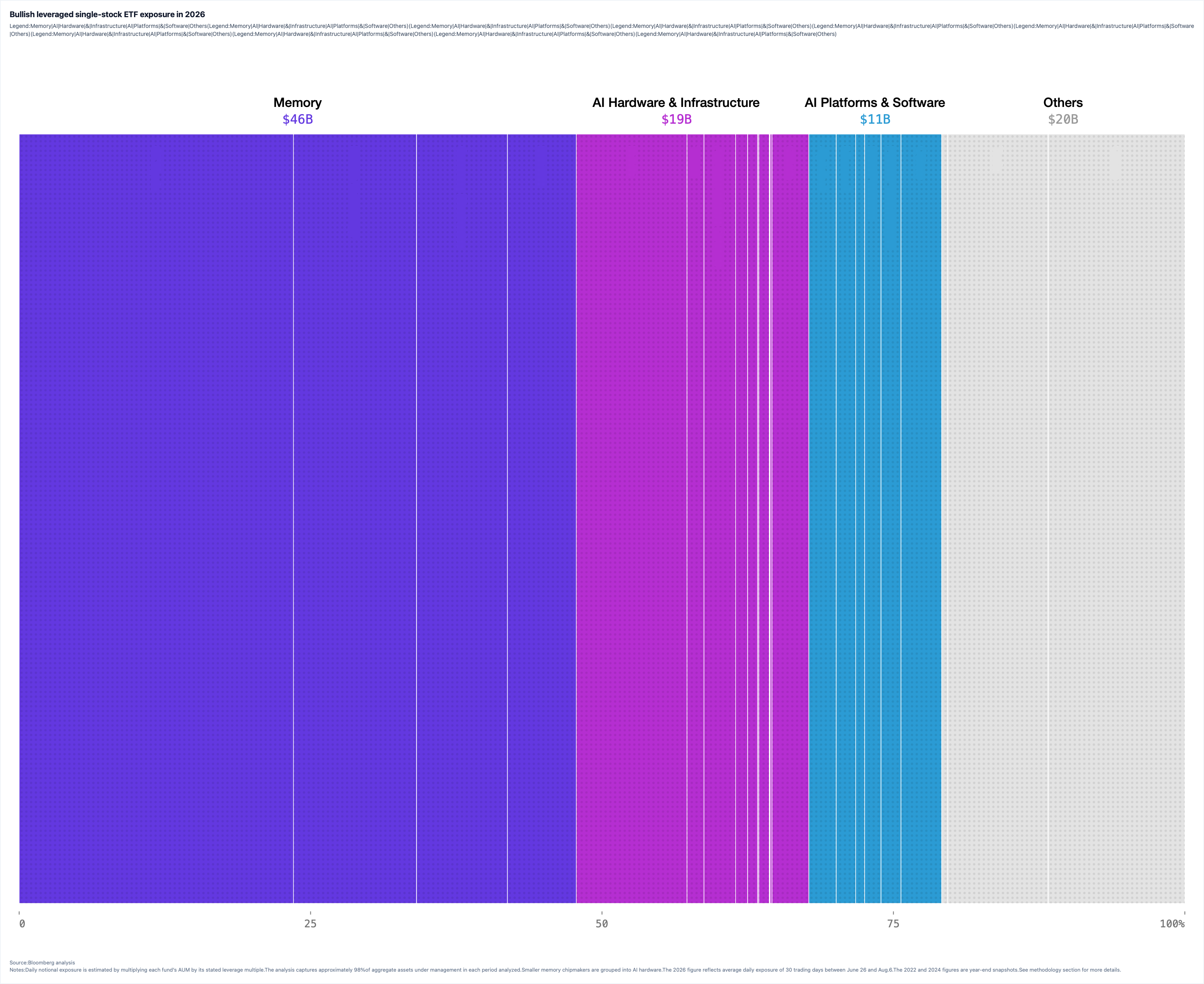
尽管杠杆型 ETF 的整体资产规模相较于全球股市仍然较小,但其在每日交易量中所占的比例却远高于其资产比重,显示出不成比例的影响力。由于这类基金旨在放大单日报酬,频繁的交易与重新平衡操作集中在收盘前进行,当市场出现剧烈波动时,极易引发连锁反应。分析指出,目前高达 58% 的看涨杠杆型 ETF 曝险集中于少数 AI 相关企业,进一步放大了市场的脆弱性。
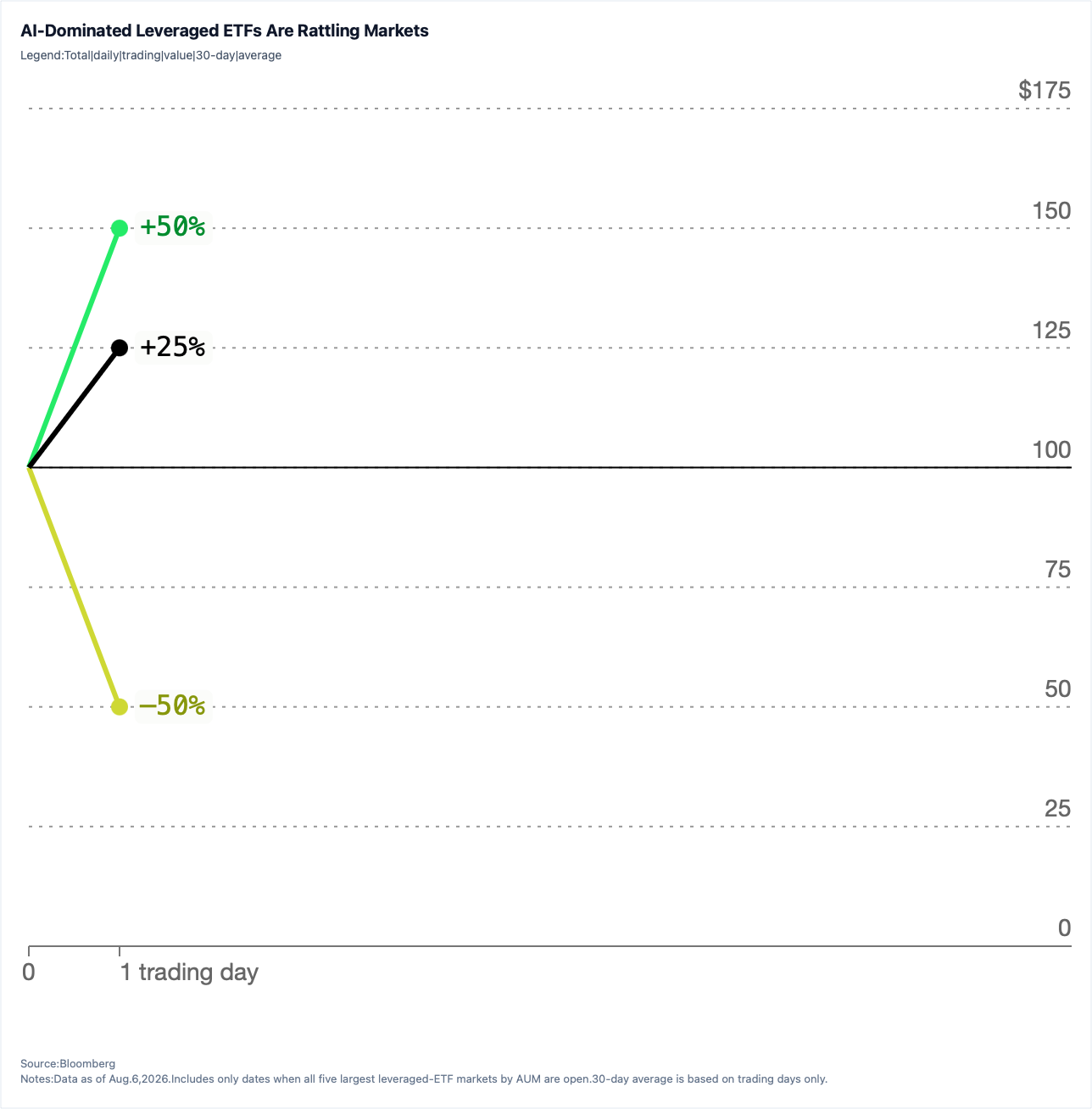
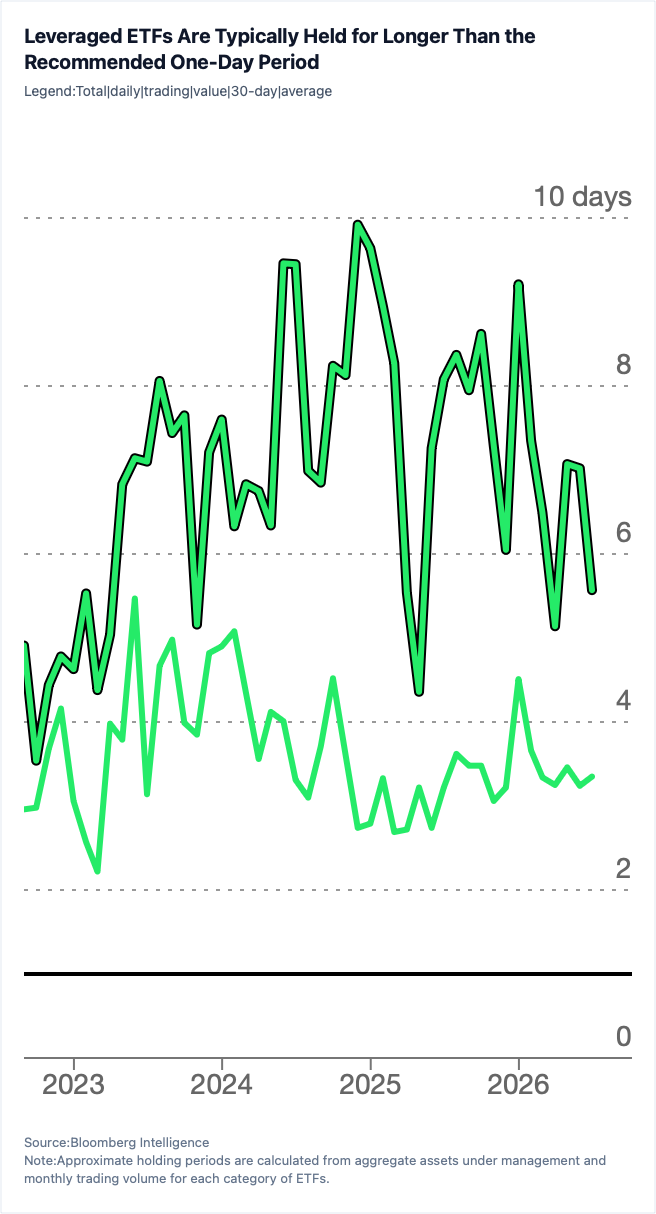
除了对整体市场潜在的系统性影响外,杠杆型 ETF 对于投资者本身也存在显著风险。这类产品原本设计为短期战术工具,长期持有会面临管理费用与波动性耗损的问题,即使每日达到预期倍数,长期报酬仍可能远低于预期甚至亏损。然而,数据显示许多投资者的持有时间远超过建议的单日,这在市场趋势反转时,将使投资者面临迅速且巨大的资本损失风险。
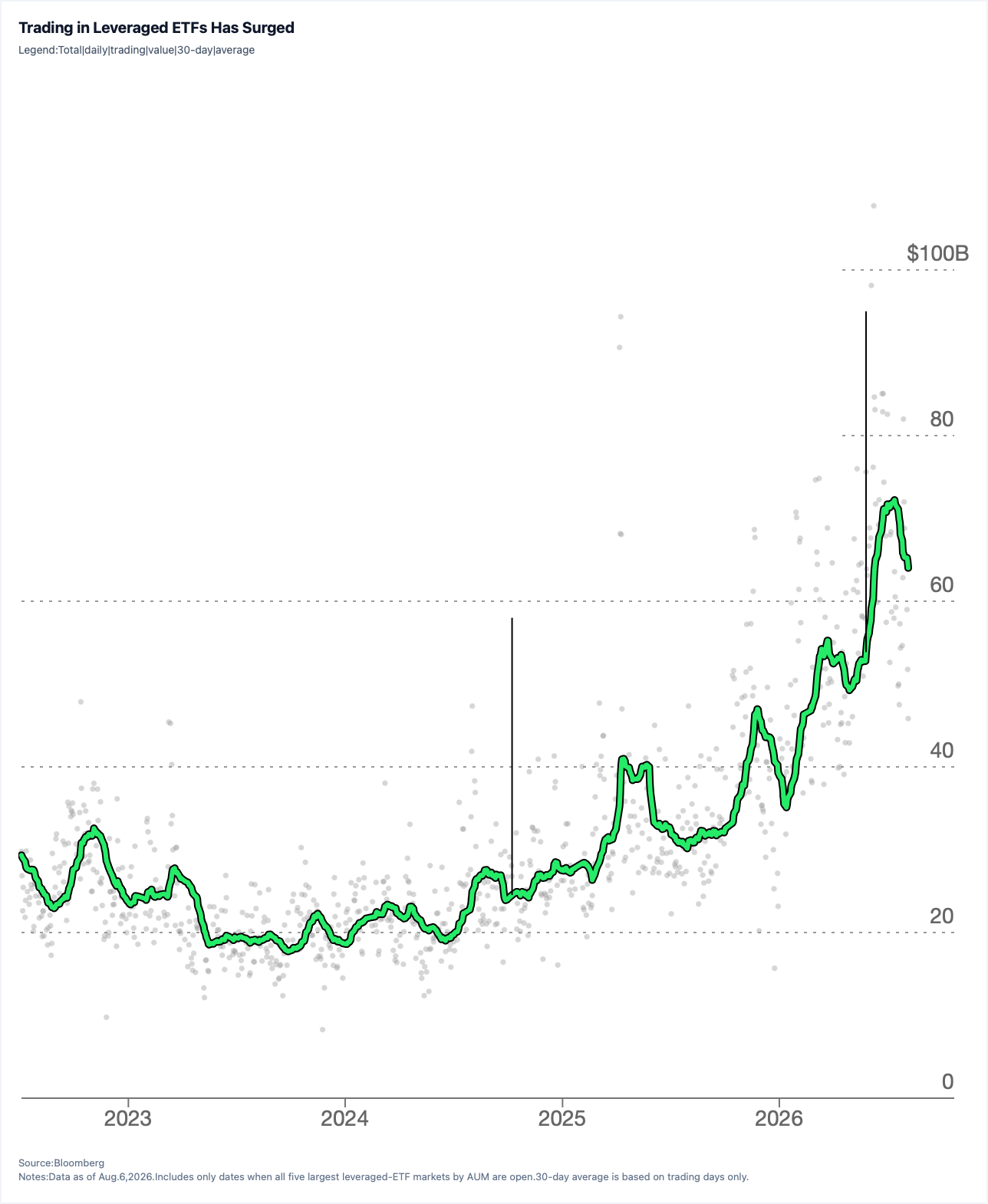
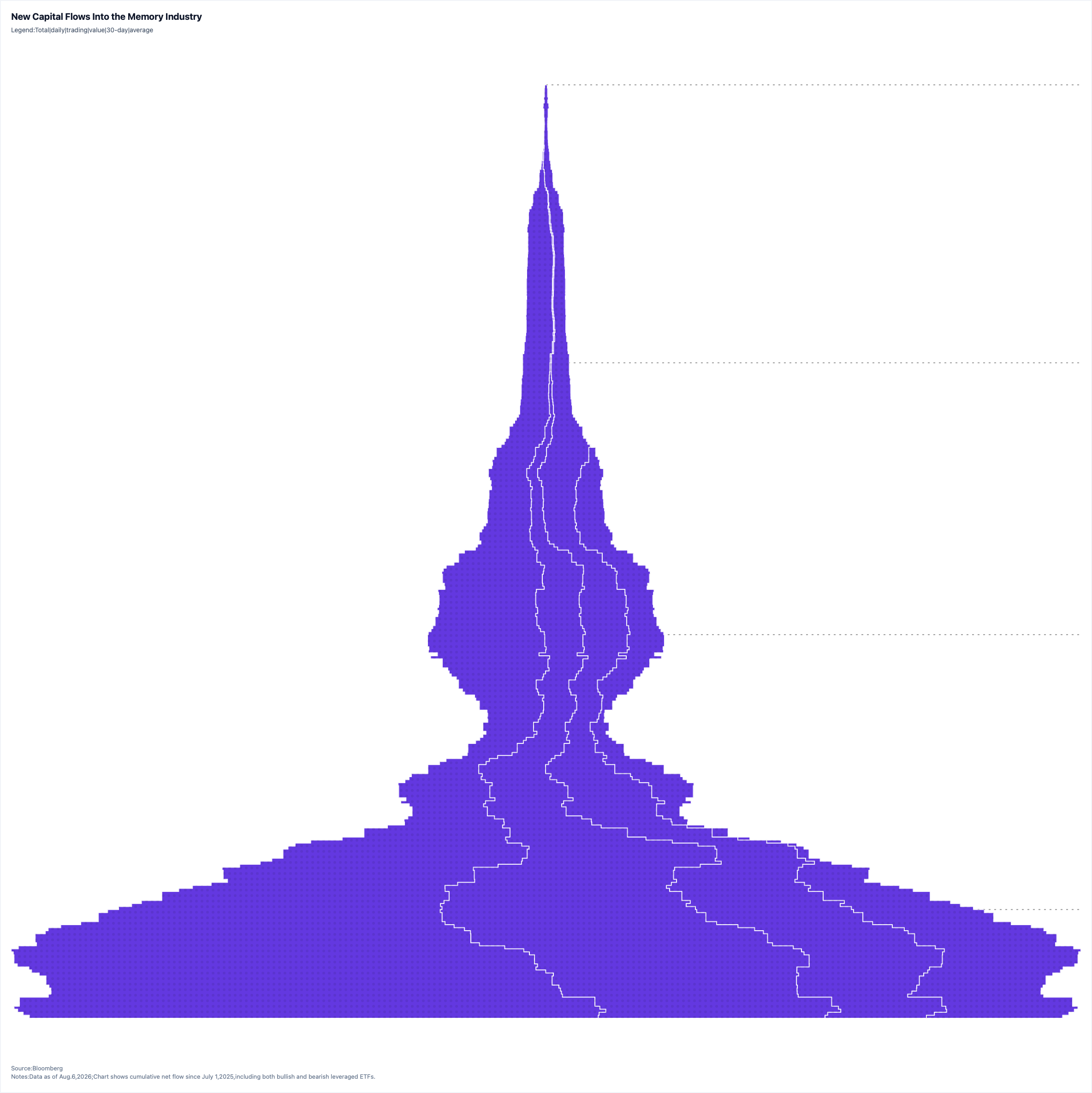
The issuance and usage of leveraged exchange-traded funds (ETFs) have expanded dramatically over the past few years, extending their risks beyond just their own investors. Leveraged ETFs tied to artificial intelligence (AI) stocks, in particular, have attracted massive inflows. In South Korea, for example, funds tracking SK Hynix and Samsung Electronics surged, initially fueling an AI-driven market rally but later accelerating declines when sentiment shifted, making the Kospi Index more volatile than Bitcoin.
Although the total assets of leveraged ETFs remain relatively small compared to the global equity market, their share of daily trading volume far exceeds their asset weight, indicating a disproportionate influence. Because these funds aim to amplify daily returns, frequent trading and end-of-day rebalancing can trigger feedback loops during severe market fluctuations. Analysis shows that up to 58% of bullish leveraged ETF exposure is concentrated in a handful of AI-related companies, further magnifying market vulnerability.
Beyond the potential systemic impact on the broader market, leveraged ETFs pose significant risks to individual investors. Designed as short-term tactical instruments, holding these products long-term exposes investors to fee drag and volatility decay, meaning long-term returns can fall far short of expectations or even result in losses despite hitting daily targets. However, data indicates many investors hold these funds well beyond the recommended single day, leaving them vulnerable to rapid and massive capital losses when market trends reverse.