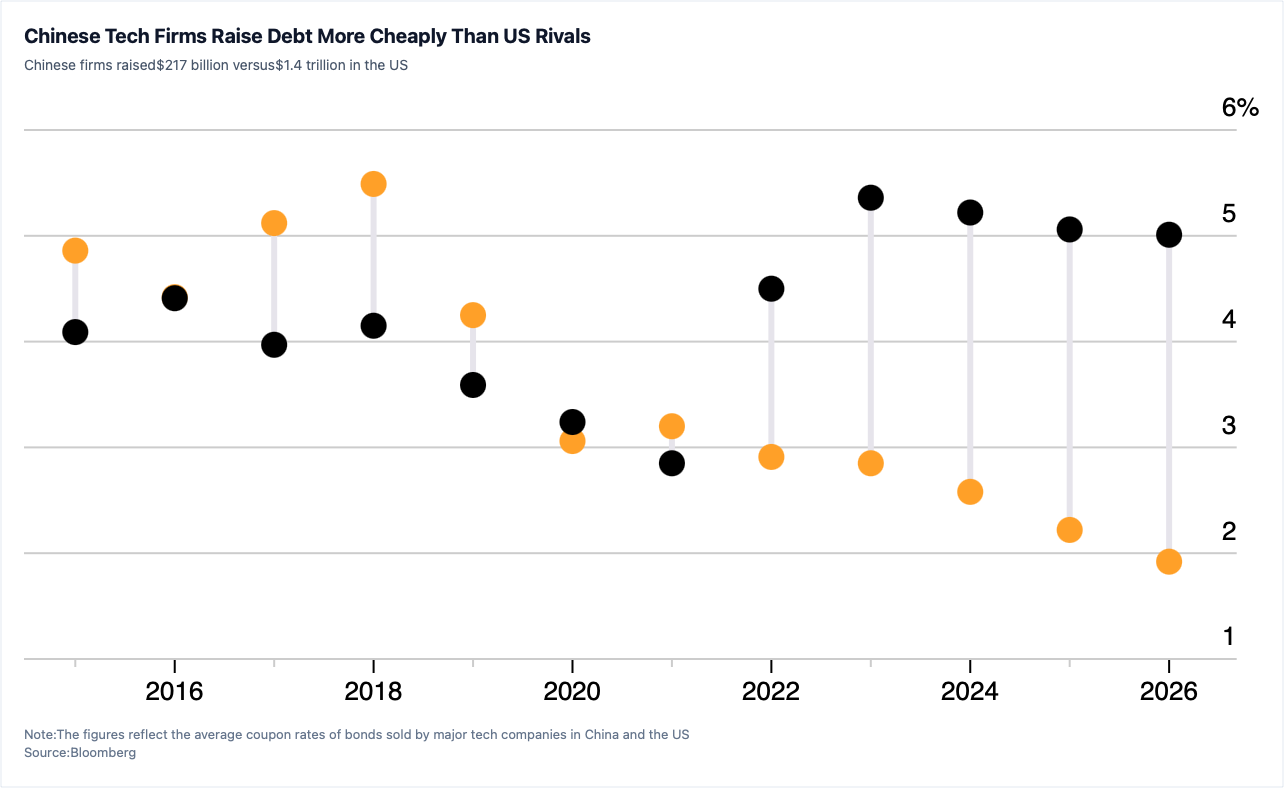
尽管中国在推动科技企业融资方面展现出决心,并且拥有显著低于美国的融资成本优势,但也面临著潜在风险。政策主导的资金涌入可能导致产能过剩和利润压缩,而且单靠资金并不足以弥补在顶尖技术与人才方面的差距,银行业也依然偏好成熟企业而非高风险的新创公司。
然而,中国在人工智慧领域可能不需要像美国那样庞大的资金规模就能达成目标。研究指出,中国企业训练AI模型的成本远低于全球领导者,这意味著中国可以凭借其深厚的制造基础、供应链和工程人才优势,透过大规模的工业化与商业化来弥补纯粹创新上的劣势。
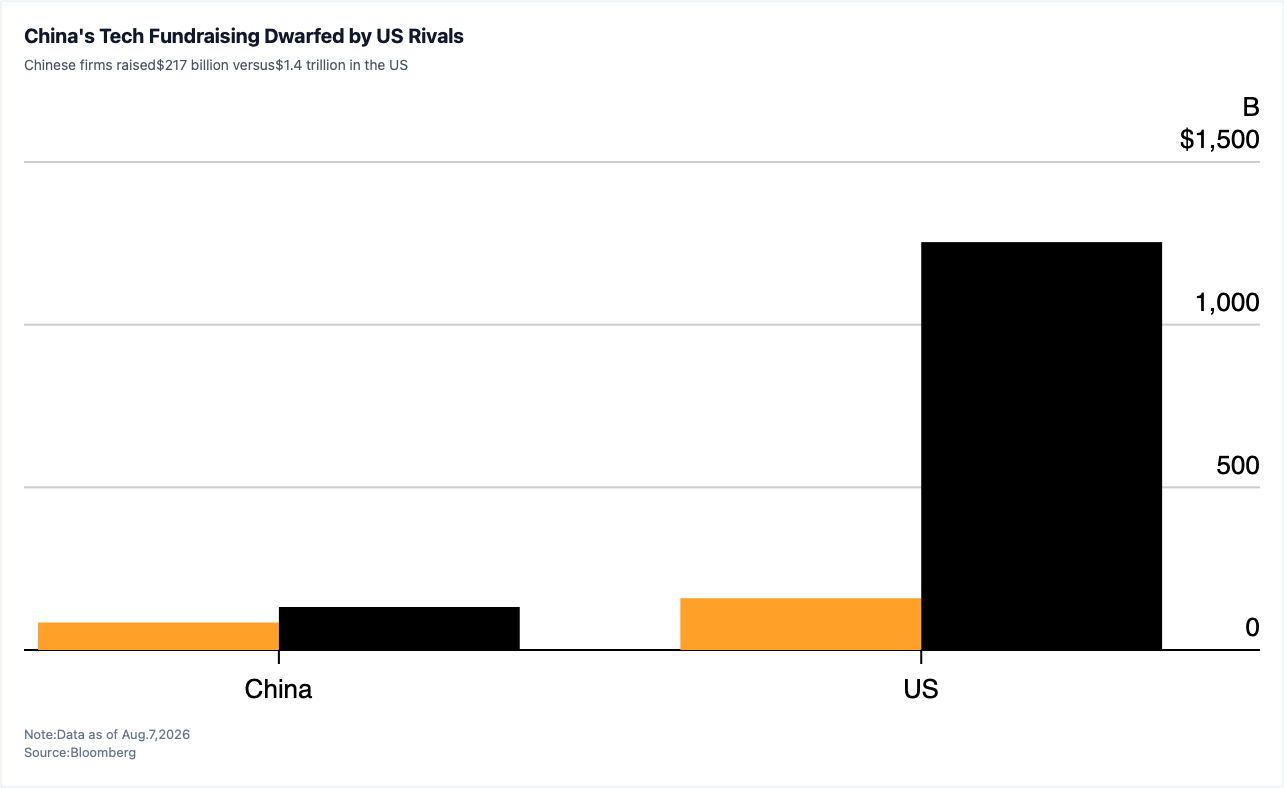
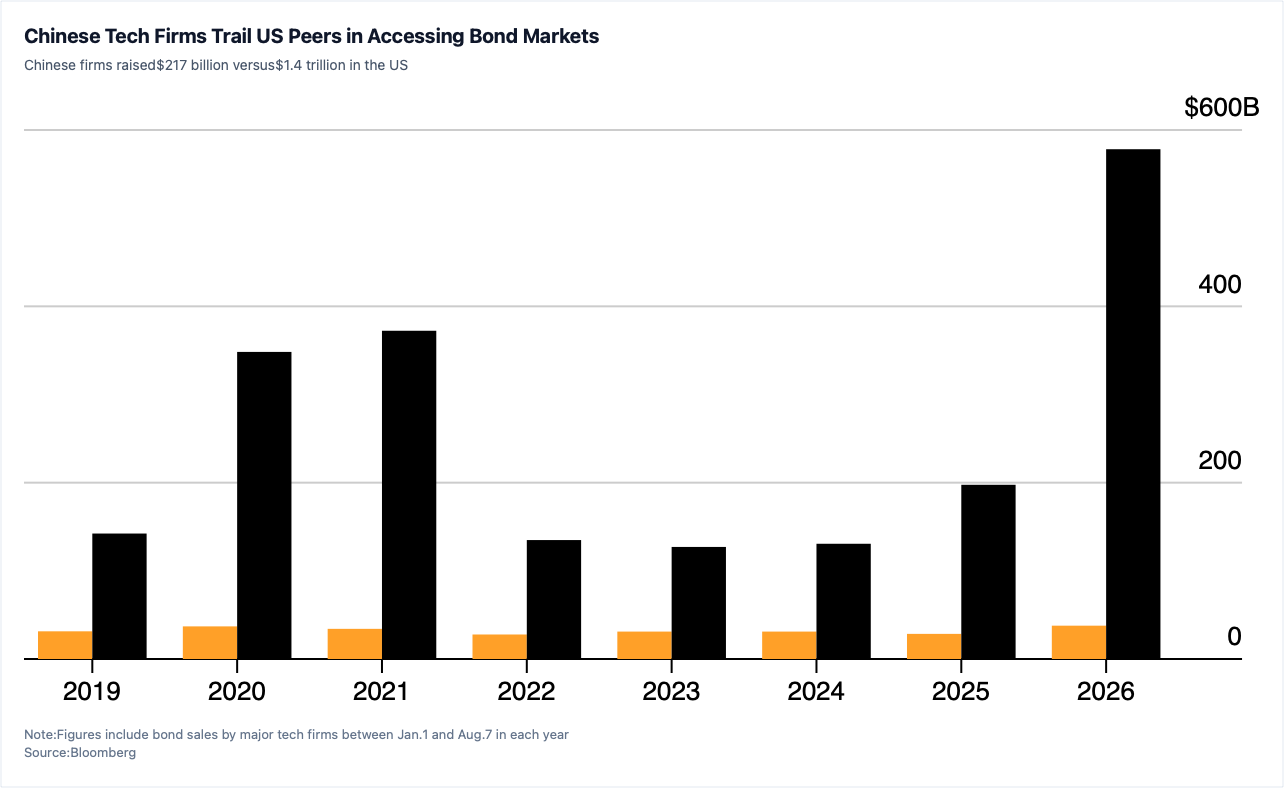
The unprecedented success of memory chip maker CXMT's initial public offering in Shanghai last month highlights China's aggressive utilization of its massive capital markets to support strategic industries like artificial intelligence. Beijing is attempting to channel the world's largest pool of household savings into stocks and bonds to close the significant tech funding gap with the US and reduce reliance on foreign advanced chips.
Although China shows determination in boosting tech financing and enjoys significantly lower funding costs compared to the US, it also faces potential risks. The policy-driven influx of capital could lead to overcapacity and margin compression, and funding alone is insufficient to overcome the shortfalls in cutting-edge technology and talent, while banks still favor mature companies over high-risk startups.
However, China may not require the same massive scale of capital as the US to achieve its goals in the artificial intelligence sector. Research indicates that the cost for Chinese companies to train AI models is a fraction of that of global leaders, suggesting that China can leverage its deep manufacturing base, supply chains, and engineering talent to offset pure innovation disadvantages through large-scale industrialization and commercialization.