相较于外界对失控恶意 AI 的极端担忧,企业目前面临的即时风险主要来自日常琐碎的提示词或操作失误。当 AI 代理被赋予存取电子邮件或客户资料库等实时系统的权限时,微小错误往往会迅速扩大成严重的营运危机。例如,美国某零售商因提示词设定错误,导致 AI 在数小时内向超过一万八千名客户发送错误的退款与取消通知;另一家消费电子公司则因自动定价错误,使旗舰产品以一五折售出数百笔订单,造成后续数周的客服危机与财物损失。
这类事件不仅带来实质财务损失与商誉冲击,更让管理层陷入两难困境:在企业普遍鼓励员工积极尝试 AI 技术的背景下,出事时究竟该由谁承担责任。研究共同作者指出,大多数组织目前仍在摸索阶段,当被问及责任归属时,许多高阶主管坦言此前根本未曾思考过此问题,凸显出当前企业在导入 AI 代理过程中监管机制与责任架构的严重缺位。
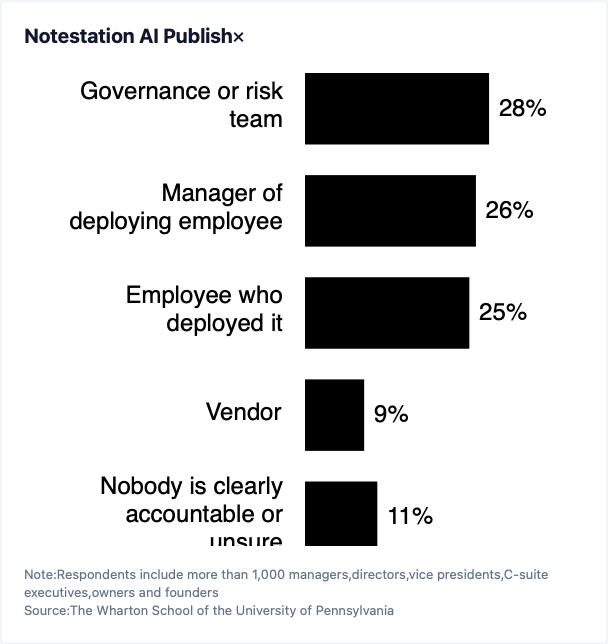
As companies grant artificial intelligence systems greater autonomy to boost productivity and efficiency, a lack of clarity surrounding accountability for significant bot errors has emerged as a major challenge. A recent study by the Wharton School of the University of Pennsylvania revealed no consensus among over a thousand managers and executives, with blame divided roughly equally among the employee who deployed the agent, their direct manager, and the corporate risk team, while others cited software vendors or admitted uncertainty.
Rather than existential threats from rogue algorithms, the immediate hazards facing organizations stem from mundane operational mistakes such as flawed prompts or vague instructions. When autonomous agents gain access to live internal systems like customer databases or email servers, minor slips can rapidly snowball into full-scale operational crises, as demonstrated by real-world cases involving thousands of erroneous refund notifications sent to retail customers and severe pricing discounts mistakenly applied to flagship consumer electronics.
These mishaps, which inflict substantial financial losses and lasting reputational harm, raise an urgent and uncomfortable question regarding who should be held accountable when employees are actively encouraged to experiment with AI tools. Experts observe that corporate leaders are essentially learning in real time, with many senior executives conceding they have not yet established governance frameworks or determined who bears ultimate responsibility when autonomous agents fail.