共同基金对Databricks、Canva及Epic Games等知名软体公司进行了不同程度的减记,而DataRobot和Outreach的估值更被腰斩。与此同时,专注于AI和半导体的公司估值则平均上涨了40%。这种估值分化反映了AI技术对传统软体行业所带来的颠覆性威胁,迫使投资机构重新评估风险。
面对AI带来的生存挑战,私募股权和信用基金正面临资产变现困难及投资人流失等困境。诸如高盛和阿波罗等投资巨头已开始系统性评估其投资组合中的AI颠覆风险。多数软体企业必须在未来18至36个月内完成转型,否则将面临被淘汰的命运。
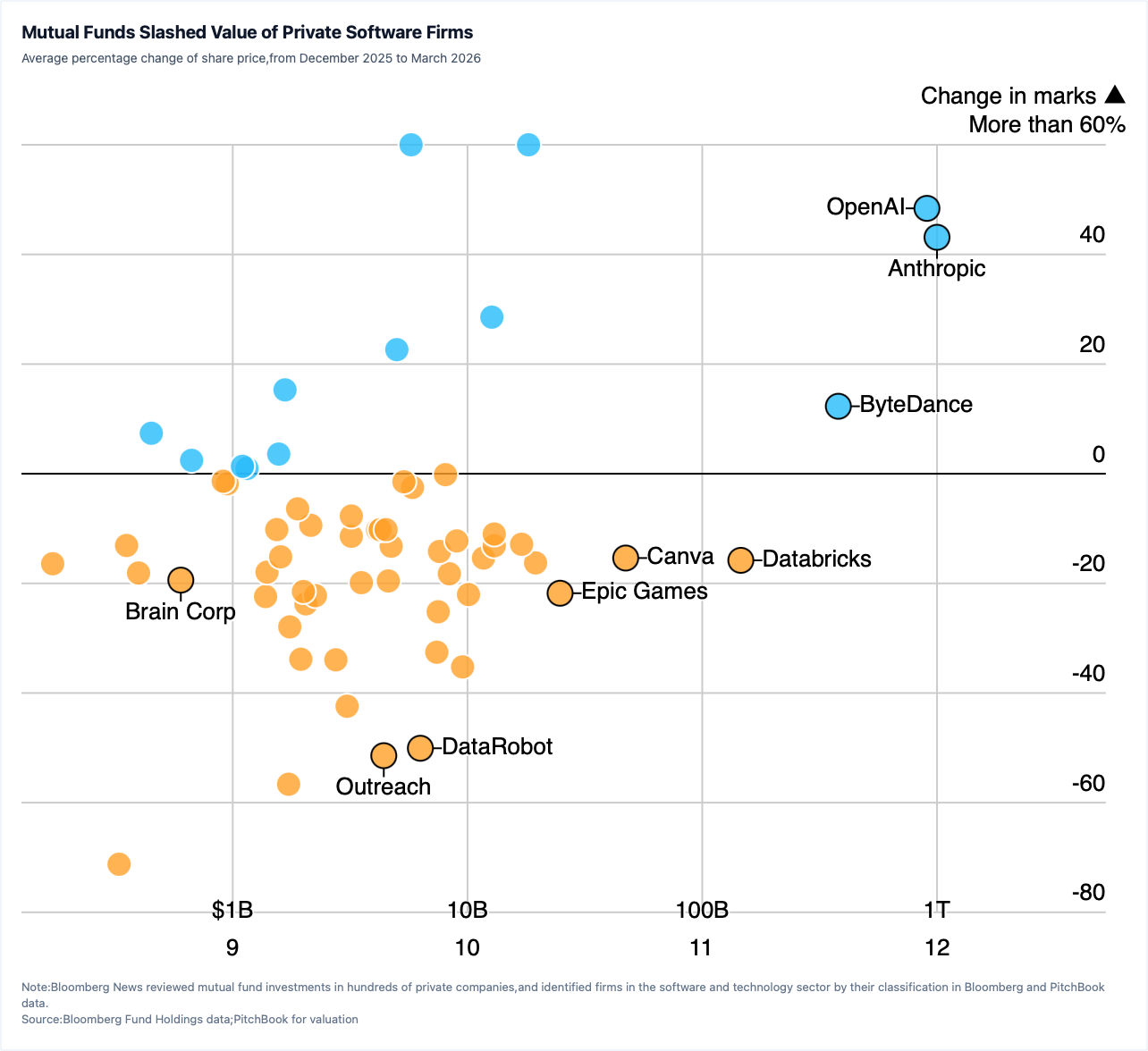
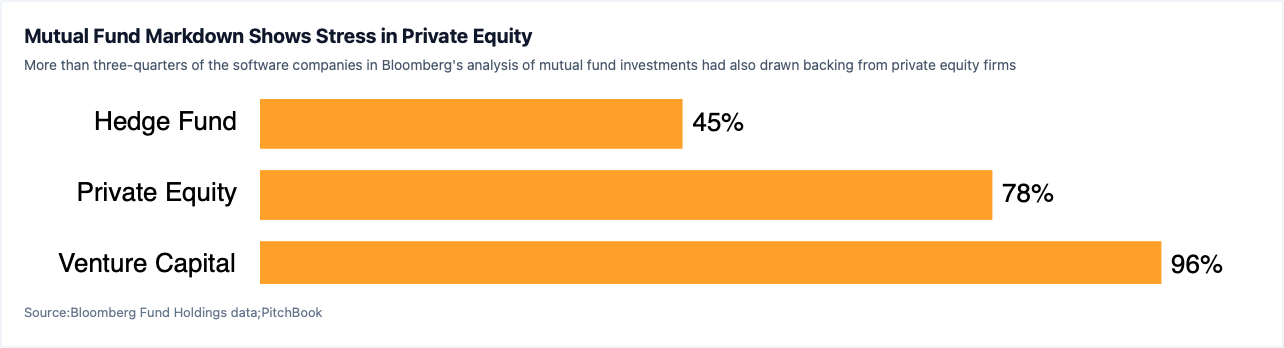
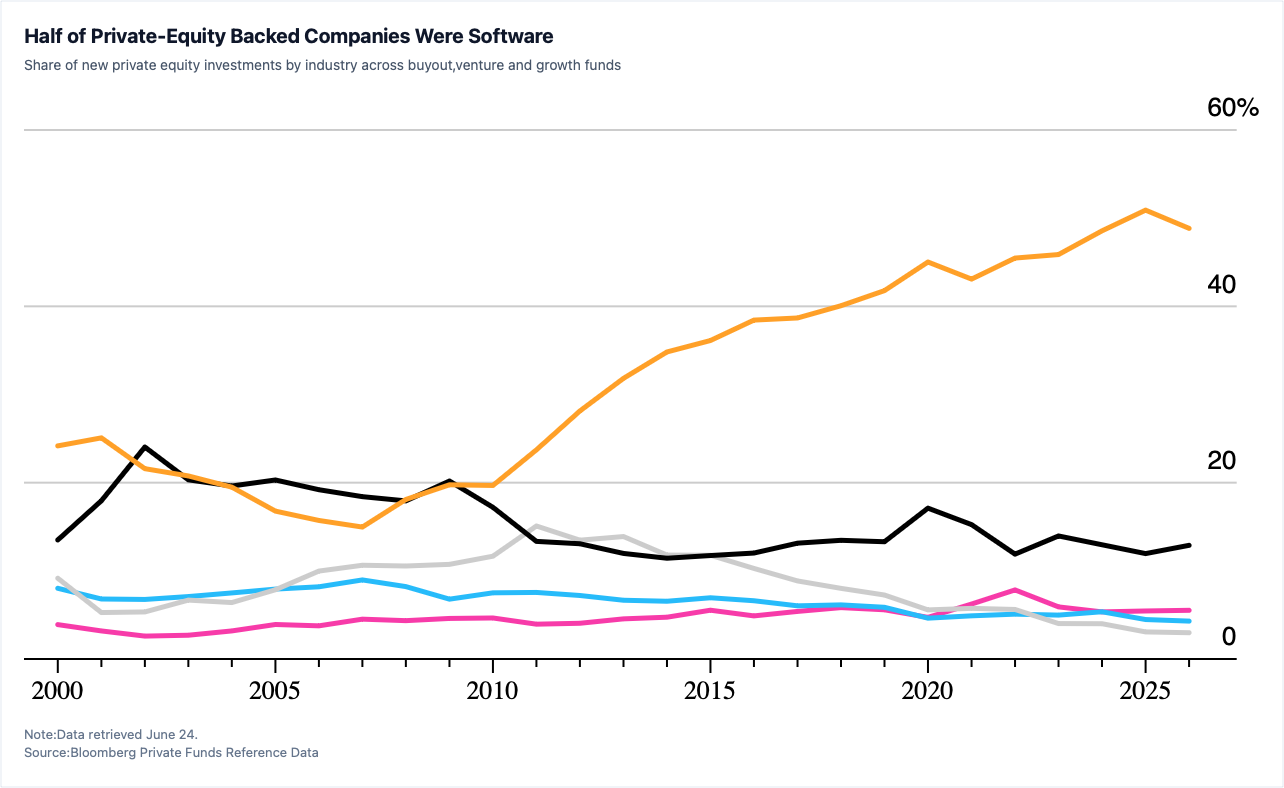
Recently, major Wall Street firms have faced questions about whether artificial intelligence has crippled the value of their software investments. Although private market executives claim there is nothing to worry about, public data from mutual funds show steep declines in the valuations of many private software companies, with some marked down by over 50%, suggesting that private market investors are sitting on tens of billions in paper losses.
Mutual funds have written down the values of prominent software companies like Databricks, Canva, and Epic Games, while DataRobot and Outreach saw their valuations cut by half. In contrast, AI and semiconductor companies held by these funds rose by an average of 40%. This valuation divergence reflects the existential threat AI poses to the traditional software industry, forcing investment firms to re-evaluate their portfolios.
In response to the existential challenge posed by AI, private equity and credit funds are struggling to sell assets at a profit and retain capital. Major investment firms like Goldman Sachs and Apollo have begun systematically assessing the risk of AI disruption within their portfolios. The vast majority of software companies now have about 18 to 36 months to pivot and adapt, or face the consequences of being left behind.