这波增长主要受益于全球(特别是美国)对AI资料中心建设的巨额投资,带动了对中国制造硬体的庞大需求。与美国主要依赖国内资本支出不同,中国的庞大工业基础在这波AI浪潮中获得了巨大的提振。高盛的报告指出,中国企业目前占全球AI相关营收的16%。
尽管高科技和绿色产业今年有望首次超越房地产相关产业,但专家警告,单靠AI无法完全解决中国面临的广泛经济挑战。劳动力减少、过度竞争(内卷)以及去全球化等长期不利因素依然存在。如果全球AI投资热潮停滞,中国经济可能会面临额外的风险。
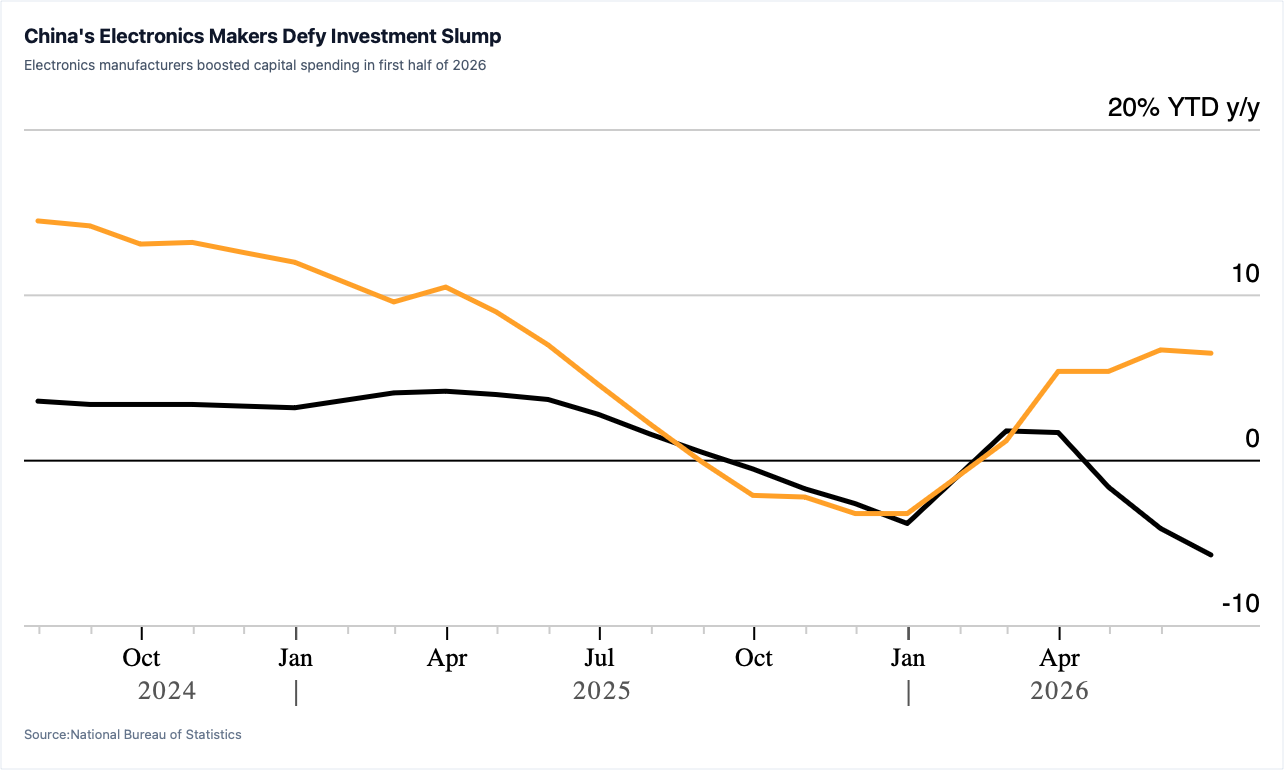
As traditional sectors like real estate contract, artificial intelligence (AI) is emerging as a crucial engine driving China's economic growth. According to estimates, AI-related exports alone contributed 1.1 percentage points to China's nominal GDP growth in the first four months of this year. The technology has rapidly shifted from near irrelevance to economic dominance, with electronics and IT contributing over half of the economic expansion in the second quarter.
This growth is largely fueled by massive global investments, particularly in the US, in building AI data centers, which has driven immense demand for Chinese-manufactured hardware. Unlike the US, which relies heavily on domestic capital expenditures, China's vast industrial base is experiencing a significant boost from this AI wave. A Goldman Sachs report notes that Chinese firms currently account for 16% of global AI-related revenues.
Although high-tech and green industries are on track to surpass property-related sectors for the first time this year, experts warn that AI alone cannot fully solve China's broader economic challenges. Long-term headwinds such as a shrinking workforce, intense internal competition (involution), and de-globalization persist. Furthermore, if the global AI investment boom stalls, China's economy could be exposed to additional risks.