SK海力士计划在2028年前投资约1300亿美元扩充产能,是过去三年投资额的四倍以上。然而,晶片产业向来以繁荣与萧条的剧烈循环著称,纽约州已率先限制资料中心建设,AI大厂如Anthropic或Google也可能放缓扩张步伐,这些因素都可能导致供过于求的局面出现。该公司虽尝试与关键客户签订长期合约以稳定营收,但在纽约发行270亿美元新股仅三周后即未达盈利预期,显示其预测能力令人存疑。
从估值角度看,SK海力士目前股价不到预期两年后盈利的3倍,表面上似乎便宜。但若2028年盈利下降五分之一,本益比约为3倍;若利润腰斩,本益比则升至5倍,接近其十年均值近7倍。这并不代表SK海力士是糟糕的投资标的,但市场已认清它不再是只涨不跌的稳赚选择,投资人需审慎评估周期性风险。
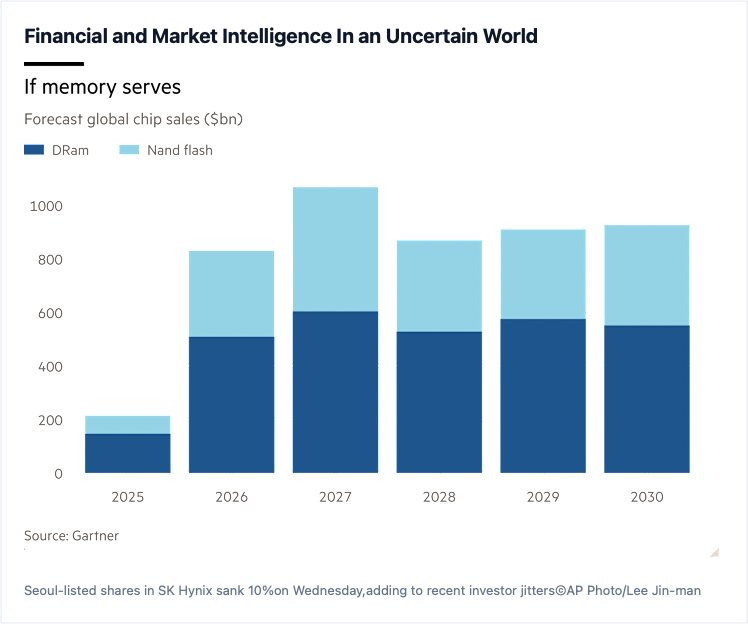
SK Hynix shares plunged 10% on Wednesday and have lost 50% in five weeks, as booming sales and operating profit still fell short of overheated market expectations. The broader memory-chip sector, including Samsung Electronics, has similarly retreated. After a year of surging AI-driven demand that propelled earnings estimates and stock prices to extraordinary heights, investor sentiment has shifted decisively toward caution and a reckoning with cyclical risks.
The company plans to invest roughly $130 billion through 2028, more than four times its spending over the prior three years, while the chip industry's notorious boom-bust cycles loom large. New York State has already moved to restrict data centre construction over energy and water concerns, and major AI players like Anthropic or Google could slow their buildout. Although SK Hynix has begun signing long-term contracts with key customers—some including upfront deposits—its failure to meet earnings forecasts just three weeks after a $27 billion share offering in New York raises serious questions about visibility into future demand.
At less than 3 times forecast earnings two years out, SK Hynix may appear inexpensive, but that valuation hinges on sustaining its pricing power and demand outstripping supply. If 2028 profits were cut by one-fifth, the multiple stays near 3 times; if profits halved—a scenario well within historical precedent given that operating profit dropped 90% in 2011—the stock would trade at about 5 times earnings, closer to its 10-year average of nearly 7. The market now recognises that SK Hynix is not a one-way bet, and investors must weigh meaningful downside scenarios alongside the AI-fuelled upside.