人工智能基础设施的巨额支出推动了企业利润激增,过去一年美国企业税前利润增长1.2万亿美元(增幅达30%),标普500指数成分股业绩普遍超预期,但企业所得税收入却因巨额资本支出的税前扣除而大幅萎缩。尽管经济学家预测人工智能带来的生产率提升可能使年GDP增速提升至3.3%,并在30年内将美国债务与GDP之比相对削减约50%,但政府总体债务仍将持续攀升。更严峻的结构性挑战在于,经合组织(OECD)国家财政严重依赖劳动税,美国约四分之三的联邦税收来自劳动报酬;随着人工智能挤占劳动力收入份额,传统税基面临侵蚀。模型测算显示,若人工智能导致劳动收入占国民收入比重下降10个百分点,意大利的财政赤字占GDP比重可能翻倍以上,法德也将承受重创,美国同样难以幸免。
除税基侵蚀外,人工智能还可能推高公共服务成本并扩大支出需求。在软件等生产率飙升的领域薪资上涨,将引发“成本病”,迫使公共部门大幅加薪以挽留员工;同时被技术替代的劳动力亟需再培训、失业救济乃至普遍基本收入,例如意大利若要补偿被替代人群的收入损失,每年需额外支出2000亿美元,而税收却减少900bn美元,造成占GDP约10%的财政恶化。对此,针对算力或标记征收的直接税税基极为有限,目前美国年均人工智能软硬件开支仅约7000亿美元,远逊于16万亿美元的劳动力薪资总额;而征收财富税则面临富人跨境转移资产、未上市企业难以估值及减缓经济增长的困境,如美国拟对净资产超5000万美元家庭征税的法案充其量仅能带来相当于现行劳动税15%的收入。
因此,经济学界更倾向于优化现有税制,首要方向是调整资本收益税与企业所得税。多国正推动资本收益税率向劳动所得税率看齐,如加州已对已实现资本利得适用普通所得税率,比利时对金融资产利得开征10%税收,澳大利亚对通胀调整后的利得增税,荷兰亦在改革推算收益制,并配以完善的资本亏损抵扣机制。同时,政府可针对人工智能垄断、稀缺土地或专有数据产生的“超额利润”提高公司税,目前多国已逆转数十年的减税趋势。此外,消费税具有税基庞大、富人支出绝对额高且难以避税的优势,政府可通过福利体系对低收入群体进行补偿;随着机器在价值创造中占据主导,税收征管的重心势必从收入的产生端转向资金的消费流向。
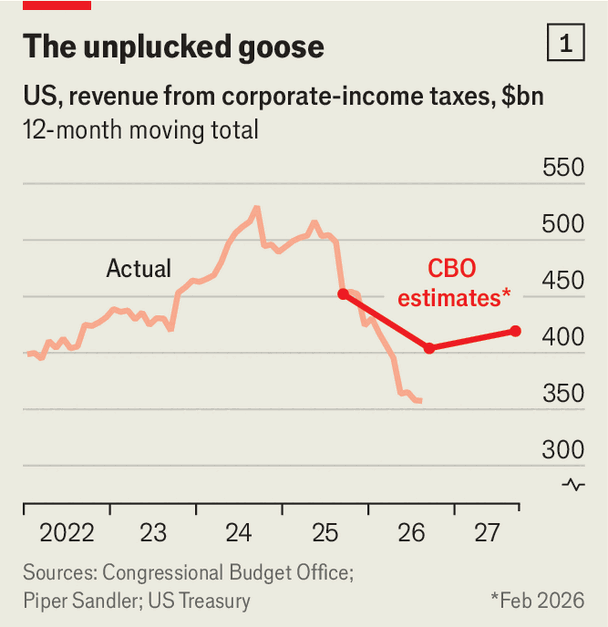
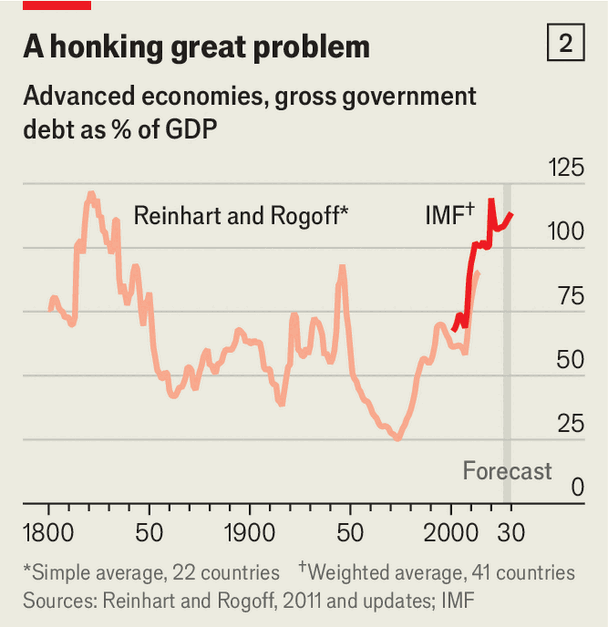
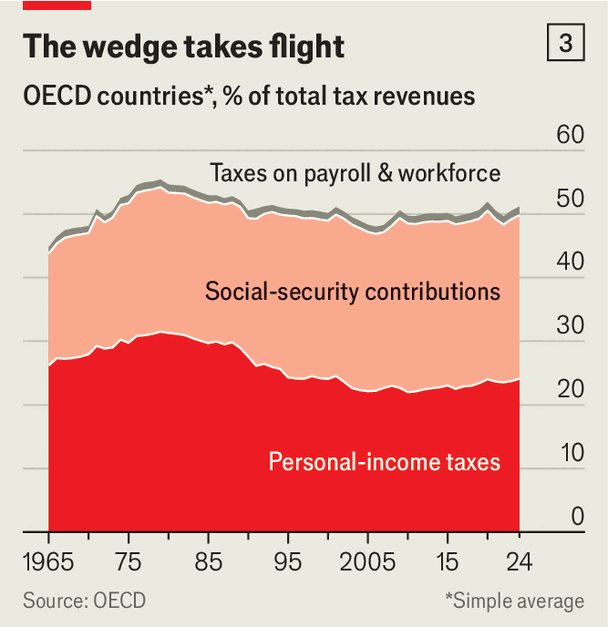
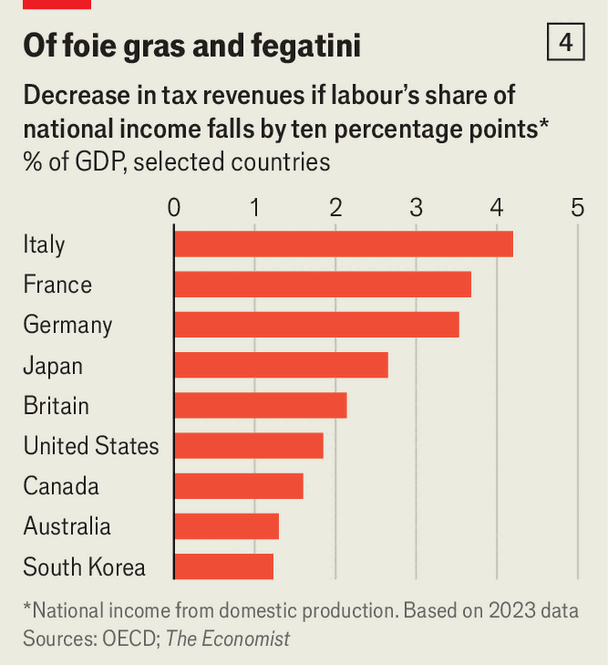
Vast investments in artificial intelligence infrastructure have sparked a corporate profit boom, driving American pre-tax earnings up by $1.2trn, or 30%, over the past year. However, corporate tax revenues have collapsed as tech giants write off massive capital expenditures against tax bills. While economists suggest AI could lift annual GDP growth to as much as 3.3% and lower America’s debt-to-GDP ratio after 30 years by about 50% relative to baseline projections, absolute public debt will continue ascending. Crucially, OECD governments rely heavily on labour, with America deriving three-quarters of federal tax receipts from workers. If AI displaces labour and shrinks its national income share by ten percentage points, government budgets will suffer severe shocks: Italy’s budget deficit as a share of GDP could more than double, with France, Germany, and America also sustaining significant fiscal damage.
Compounding this erosion, AI threatens to trigger Baumol’s "cost disease" by pushing up wages in high-productivity sectors, forcing the public sector to raise pay to retain staff and inflating public service provision costs. Concurrently, public spending demands would surge for worker retraining, unemployment benefits, and potential universal basic income schemes; replacing displaced Italian earnings, for instance, would cost $200bn annually while tax revenues drop by $90bn, generating a fiscal deterioration of 10% of GDP. Direct levies such as compute or token taxes offer limited relief, as America’s current $700bn annual AI spending represents a tiny fraction of its $16trn labour bill. Meanwhile, wealth taxes—such as California’s proposed 5% levy on billionaires or federal proposals taxing fortunes over $50m—face severe capital flight, valuation hurdles, and economic deadweight losses.
Economists increasingly argue that modernising existing taxes represents the most viable path, focusing heavily on capital income. Reforms include aligning capital gains taxes with labour tax rates, mirrored by California's income-tax parity, Belgium's 10% financial asset levy, Australia's inflation-adjusted reforms, and generous loss-offset provisions. Governments are also raising corporation taxes on monopoly rents and excess profits generated by scarce datasets and land, reversing decades of tax cuts. Finally, broad-based consumption taxes offer substantial revenue stability and minimal avoidance opportunities since the wealthy spend significantly more, with progressive welfare transfers mitigating regressive distributional effects as tax systems shift attention from how income is earned to where money is spent.
Source: How the AI boom could worsen the rich world’s fiscal crunch
Subtitle: Even with higher growth, taxes may be harder to find
Dateline: Oct 1st 2026\n