在对伊朗实施的“史诗之怒”军事打击和6月份包含制裁减免与投资诱饵的停火谈判相继失败后,唐纳德·特朗普政府发起了代号为“经济弃儿行动”的极限施压,财长斯科特·贝森特(Scott Bessent)于8月24日公布了这一所谓的“经济诺曼底登陆”计划。当前伊朗国内经济陷入深重危机,自1月以来里亚尔对美元贬值约三分之一,通货膨胀率高达年化88%,炼油厂受损导致燃油严重短缺,政府被迫印钞发放食品券。加之美国对霍尔木兹海峡的封锁,伊朗央行行长于8月20日承认原油出口已“降至零”,海上滞留的8000万桶原油仅能提供杯水车薪的收入。
然而,贝森特的金融威胁被普遍认为虚张声势,难以切断伊朗的关键经济命脉。在封锁前,中国以每桶折价7至12美元的价格采购了伊朗约90%的原油出口(占伊朗财政预算近半),且中方坚决捍卫自身合法权益并拥有独立的跨境支付系统,美方因担心引发全面报复或破坏中美外交接触而不敢轻易对中国大型银行实施二级制裁。同时,作为伊朗第一大进口来源国(占2024年总进口额约30%)的阿联酋虽于8月18日在油轮遇袭后宣布暂停对伊贸易,但其境内复杂的影子银行和空壳公司网络使伊朗能够持续隐秘转移资金。
面对美国的经济战宣言,伊朗政界高层表现出极大蔑视,议长卡利巴夫嘲讽其“绝非诺曼底”,国安顾问雷扎伊更直斥其为政治宣传。德黑兰认定美国转向经济手段反映出其军事冒险的破产,并在贝森特发布会数小时前威胁对霍尔木兹海峡内近50艘违规船只实施罚款或扣押,同时利用对伊拉克等邻国的天然气供应施加地缘杠杆。尽管总统佩泽什基安希望美方重返6月份的停火备忘录以避免陷入类似朝鲜的长期孤立,且巴基斯坦陆军参谋长穆尼尔已赴伊斡旋,但伊朗依然掌握着反制对手的主动权,美国的经济封锁恐将适得其反。
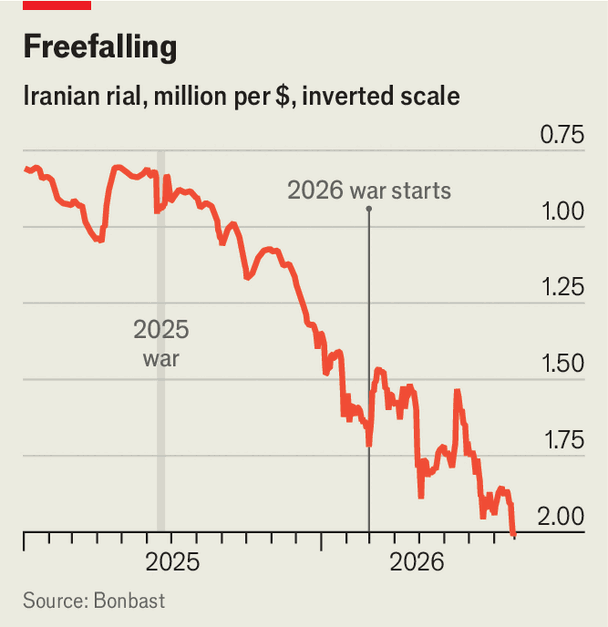
Following the failure of Operation Epic Fury's military strikes and a rejected June offer of sanctions relief and investment, the Trump administration launched Operation Economic Outcast, billed by Treasury Secretary Scott Bessent on August 24th as an "economic D-Day." Iran’s economy is severely distressed: the rial has depreciated by roughly a third against the dollar since January, inflation has reached 88% year on year, and refinery damage has caused acute fuel shortages, forcing the government to print money for food vouchers. Furthermore, with the US naval blockade choking the Strait of Hormuz, Iran’s central bank governor confirmed on August 20th that oil exports had fallen to zero, leaving 80m barrels stranded aboard tankers.
Nevertheless, Mr Bessent’s economic threats appear hollow and face formidable implementation barriers. Prior to the blockade, China purchased 90% of Iranian crude exports at discounts of $7-$12 per barrel—supplying nearly half the regime's budget—and Beijing's proprietary financial channels insulate it against secondary sanctions that Washington fears deploying. Meanwhile, although the United Arab Emirates—Iran’s largest import source, accounting for roughly 30% of its imports in 2024—halted formal transactions on August 18th following maritime attacks, opaque Emirati shadow banks and shell companies continue facilitating illicit capital flows.
Iranian officials have openly mocked the measures, with parliamentary speaker Mohammad Bagher Ghalibaf dismissing "D-Day" rhetoric and security adviser Mohsen Rezaei branding it recycled propaganda. Interpreting Washington’s economic shift as proof of military exhaustion, Tehran threatened to fine or seize roughly 50 vessels in the Strait of Hormuz hours before Mr Bessent spoke, while leveraging gas exports to pressure regional neighbors like Iraq. Although President Masoud Pezeshkian seeks a return to the June memorandum of understanding to avoid permanent North Korea-style isolation, and Pakistani army chief Asim Munir is mediating in Tehran, Iran retains considerable coercive leverage that undermines American financial pressure.
Source: Iran will be able to shrug off America’s financial threats
Subtitle: In the face of fresh sanctions, the regime is defiant
Dateline: Aug 27th 2026