黑海和亚速海港口承担着全球近三分之一的小麦出口。继2022年俄乌冲突爆发引发全球粮食暴涨之后,近期黑海水域战火重燃,导致粮食供应链再度遭受重创。自7月起俄罗斯开始将攻击目标对准驶往乌克兰港口的商船,导致货轮几乎不敢贸然进港;乌克兰则利用无人机封锁了亚速海航线,并在8月重创了俄罗斯最大的小麦出口港新罗西斯克(承担俄小麦出口逾30%的份额)。两军对抗使得今年8月俄乌合计小麦出口量从去年同期的630万吨骤降至预计仅250万吨左右,大宗商品机构荷兰合作银行指出黑海农业出口遭受了有史以来最严重的干扰。
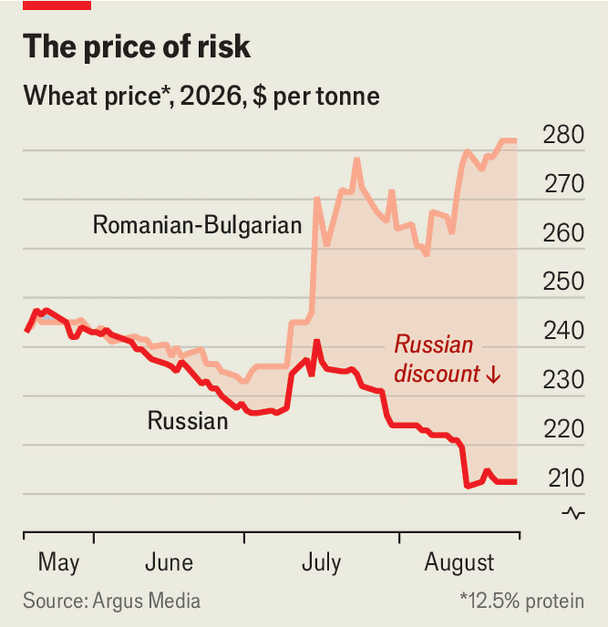
绕行替代方案面临严重的运输瓶颈。乌克兰利用公路和铁路转运多瑙河再经罗马尼亚康斯坦察港出海的路线受阻于多瑙河低水位,且激起了东欧邻国对推高当地运费的强烈抗议;而俄罗斯试图通过波罗的海和里海港口分流的运力也极为有限。受此影响,国际小麦期货价格连续数周上涨,达到两年来新高,较年初上涨约25%。当前粮价之所以未达到2022年的历史峰值,主要得益于北半球进口国刚完成本国夏粮收获,以及2025年全球粮食大丰收留下的充裕库存缓冲。
然而,全球粮食市场的前景正在迅速恶化。与去年的丰收相比,2026年全球小麦收成普遍低迷:美国、加拿大和欧盟受干旱及农户改种其他作物影响出口下滑;受厄尔尼诺气候及霍尔木兹海峡受阻导致化肥成本飙升影响,澳大利亚小麦产量预计将锐减超过20%。一旦黑海港口设施受损和保险拒保导致断航长期化,全球粮食供给缺口将急剧放大,国际粮价恐将面临新一轮剧烈上涨。
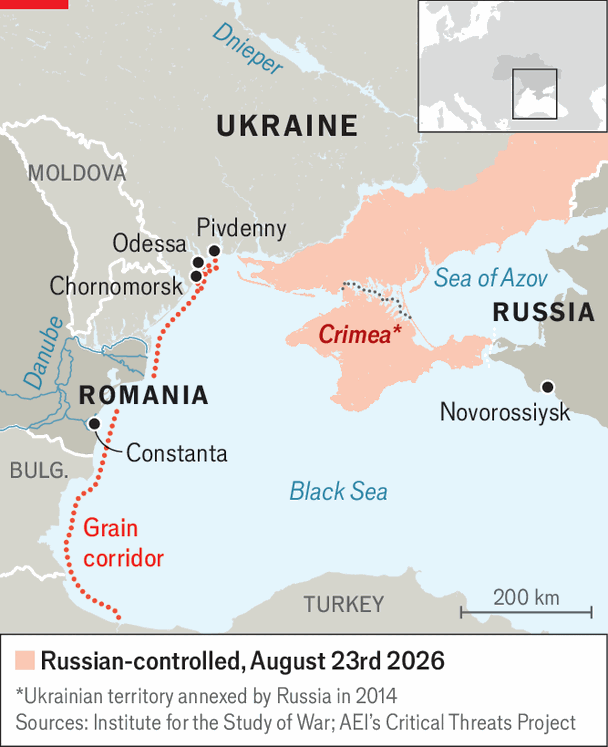
Ports across the Black Sea and Sea of Azov handle nearly one-third of global wheat exports. Following the initial market shocks of 2022, renewed military escalation is once again paralyzing maritime grain corridors. In July, Russian forces began directly striking commercial merchant vessels heading to Ukrainian ports, while Ukrainian drone strikes effectively shut the Sea of Azov and severely damaged grain facilities at Novorossiysk—Russia’s premier grain hub handling over 30% of its wheat exports. Consequently, combined Russian and Ukrainian August wheat exports collapsed from 6.3m tonnes last year to an estimated 2.5m tonnes, marking the worst disruption in the region's modern trading history according to Rabobank.
Alternative export routes face severe logistical bottlenecks. Ukraine's overland and barge routes via the Danube River to Romania's Constanta port are constrained by seasonal low water levels and protests from Eastern European farmers facing inflated freight costs. Similarly, Russian diversions to Baltic and Caspian ports can absorb only a fraction of stranded volume. Although international wheat prices surged by roughly 25% year-to-date to reach two-year highs, immediate price spikes have been tempered because northern hemisphere importers recently completed domestic harvests and retain buffer stocks from 2025's bumper crop.
However, global agricultural fundamentals are rapidly deteriorating. Unlike last year's bountiful output, the 2026 harvest faces widespread deficits: North American and EU exports are declining due to drought and crop-switching, while Australian wheat production is projected to plunge over 20% due to El Niño conditions and fertilizer supply bottlenecks linked to the Strait of Hormuz. If Black Sea shipping lanes remain compromised by hostilities and prohibitive insurance rates, global grain markets face severe structural shortages and sustained upward price pressure.
Source: The renewed threat to global grain supplies
Subtitle: Unlike in 2022, both Ukraine’s and Russia’s exports are under attack
Dateline: Aug 27th 2026