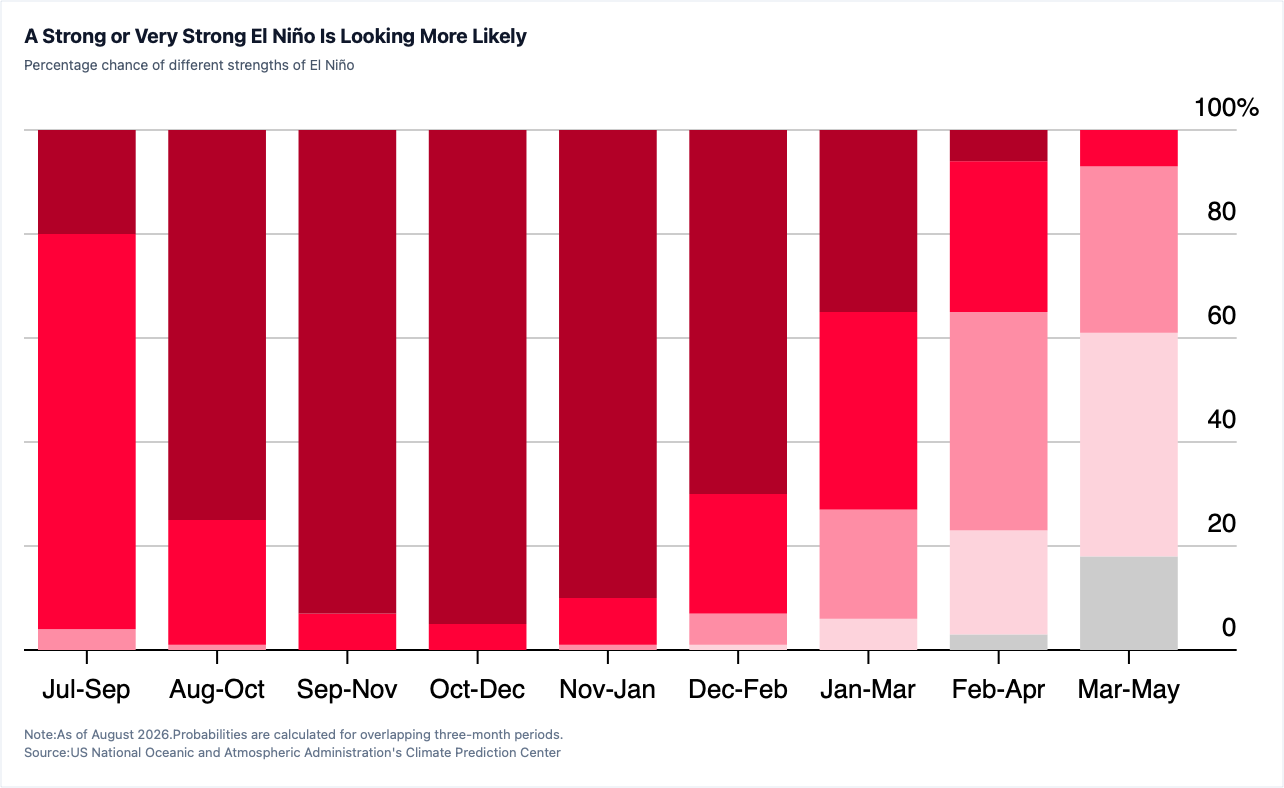
美国气候预测中心指出,今年极有可能出现强烈的「超级圣婴现象」,这将对全球经济与自然环境造成重大冲击。极端天气不仅会影响农作物产量、推升全球粮食价格与通膨,还可能导致电力需求激增,并干扰水力发电与巴拿马运河等重要航运枢纽。此外,圣婴现象也会改变海洋生态系统,严重影响渔业资源。
尽管圣婴现象可能为某些地区带来丰沛雨量以利农业发展,但从历史数据来看,其造成的全球经济损失远大于区域性益处。科学家预测,圣婴现象释放的热量可能使未来的全球气温创下新高。随著全球暖化加剧,科学家担忧圣婴现象的破坏力将进一步被放大,带来更严重的干旱与更极端的强降雨。
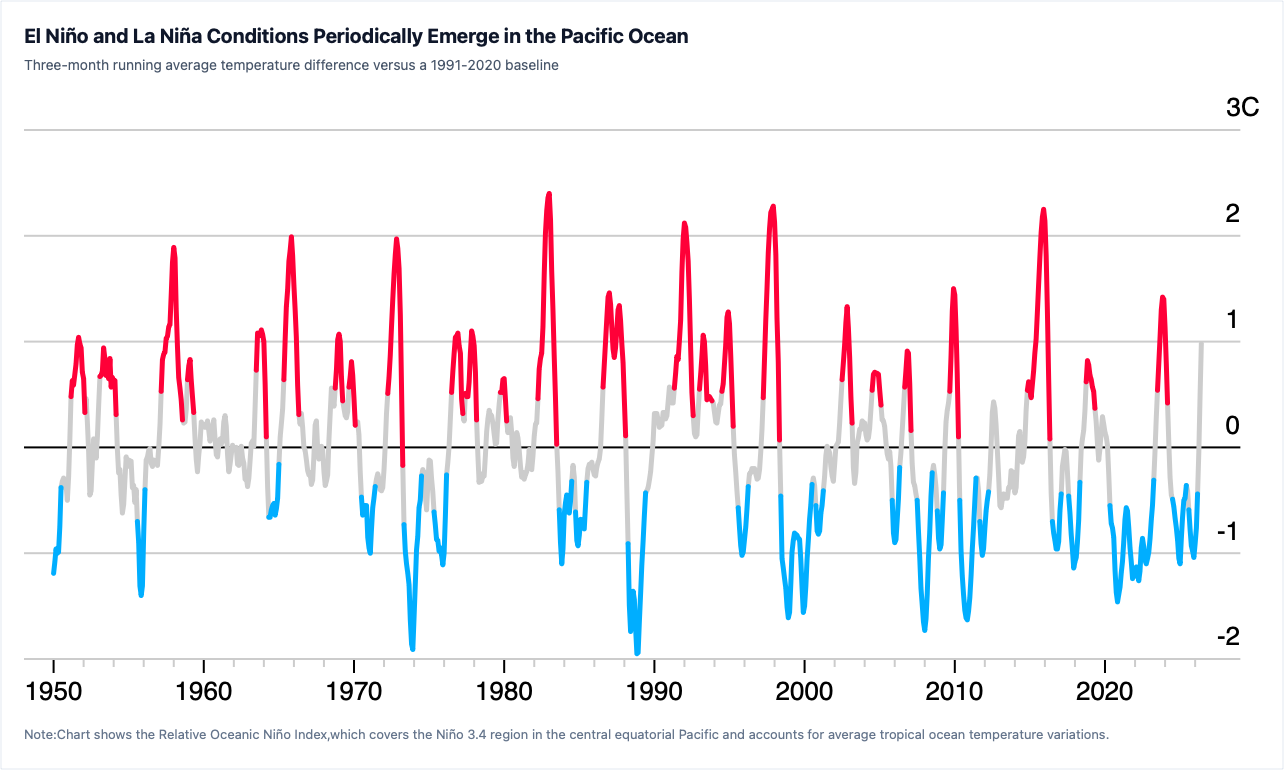
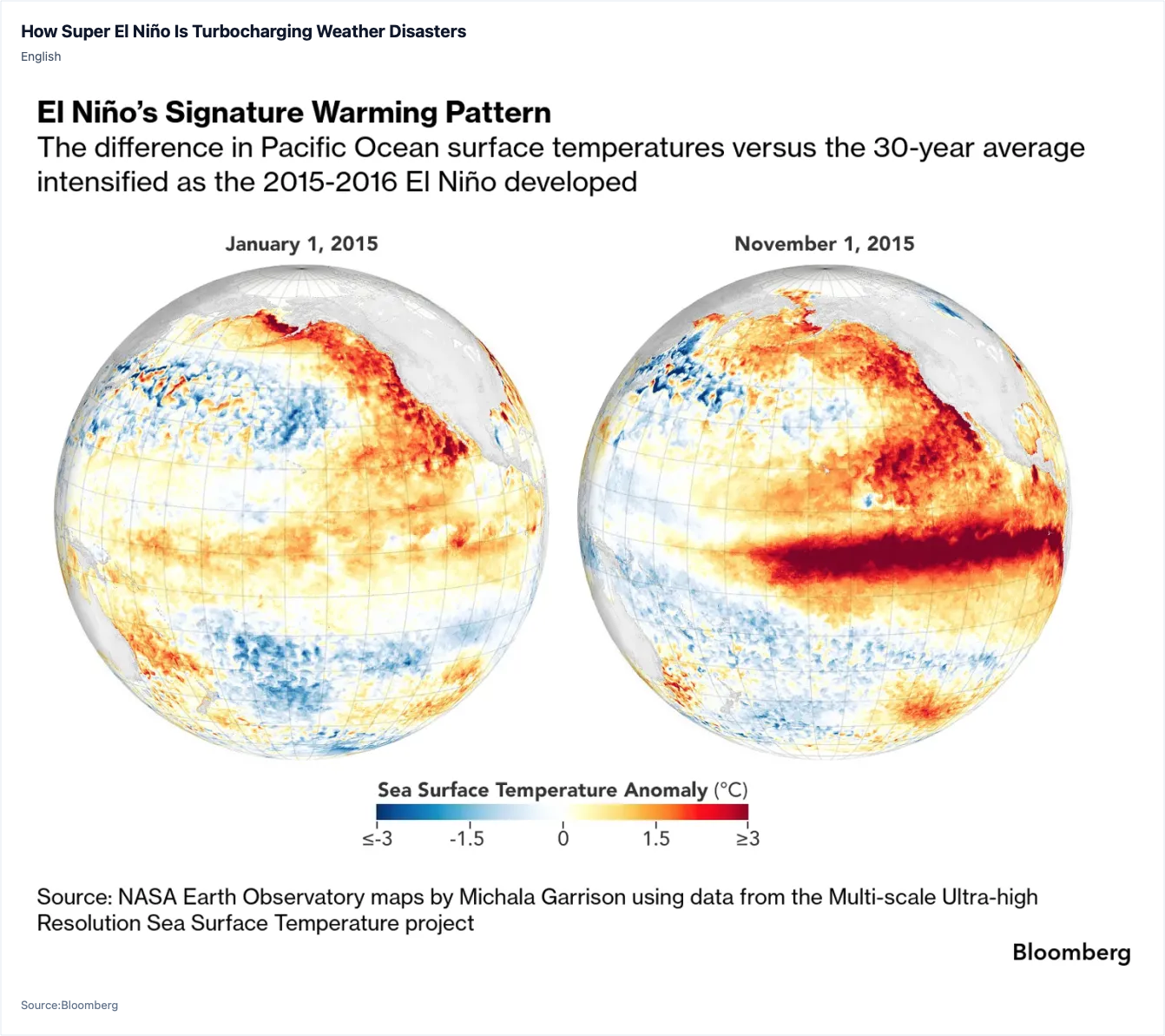
El Niño is a cyclical climate phenomenon that typically occurs every two to seven years. It begins when sea surface temperatures in the equatorial Pacific Ocean rise abnormally, leading to drastic changes in global weather patterns. This phenomenon weakens or reverses the trade winds that normally blow toward Asia, pushing warm water toward the Americas. Consequently, rainfall and storm tracks shift, triggering drought and extreme heat in some regions while causing heavy rain and flooding in others.
The US Climate Prediction Center indicates a high probability of a severe "Super El Niño" this year, which would significantly impact the global economy and environment. Extreme weather can severely affect crop yields, driving up global food prices and inflation. It also threatens to spike electricity demand for cooling while disrupting hydroelectric power generation and crucial shipping routes like the Panama Canal. Furthermore, El Niño disrupts marine ecosystems, severely impacting ocean fisheries.
While El Niño can bring beneficial rainfall to certain agricultural regions, historical data shows that its global economic losses far outweigh the regional benefits. Scientists predict that the heat released by El Niño could push global temperatures to new record highs in the future. As global warming intensifies, experts are increasingly concerned that the destructive impacts of El Niño will be magnified, resulting in more severe droughts and more extreme torrential downpours.