特朗普在刚刚对伊朗发起打击后,在《福克斯新闻》称乌克兰在无人机防御上“根本不需要他们”,但海湾国家在持续遭受伊朗导弹和Shahed无人机攻击后却迅速向乌克兰求援。乌克兰在要求下立即派出228名有实战经验的顾问,泽连斯基3月中旬在该地区签署了与卡塔尔、沙特和阿联酋为期10年的安全合作协议,并继续推进与约旦、科威特的合作。 从4年战争经验看,乌克兰在应对单晚高达1,000架俄制无人机袭击后形成的能力,显著高于美国及多数欧洲在常规军售体系中的水平。文章把这一现实与特朗普“无需帮助”的说法形成对比,凸显了当前无人机防御市场对实战算法与流程能力的依赖。
乌克兰防务企业已把单枚拦截器成本控制在2,000到5,000美元,并可对单价约50,000美元的Geran-2无人机实现高达90%的拦截效果。以此对比,海湾国家若用每枚4,000,000美元的爱国者拦截系统或50万美金级的AIM-9X“响尾蛇”去打慢速Shahed,属于资源错配,后者更应留给速度更快、反应窗口更短的弹道导弹和巡航导弹。 乌方通过AI战场管理系统Delta提升了“按目标匹配发射器”的命中效率,结合传感与指挥流程优势,让海湾国家在建设大规模传感阵列前,就能快速吸收数据识别和分层处置经验,逐步实现对伊朗每日已大幅减少的少量来袭无人机的稳定拦截。
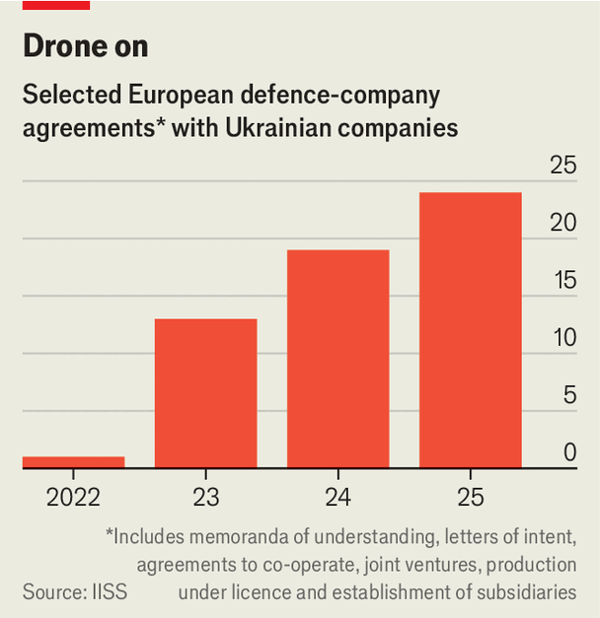
合作细节仍有保密色彩,但共研与联产正在推进,乌克兰防务企业预计将获得融资和新订单,形成现金与产能支撑。即便面向未来,乌克兰分析人士也强调这种新型安全关系为其带来“新增筹码”,而非单纯依赖捐助者角色,也即使在美国高压政治叙事下也能重塑议价地位。 欧洲已加速跟进,2025年乌克兰与欧洲企业签署的协议超过20份,几乎是2023年的两倍;今年2月又有4家乌克兰制造商与丹麦、芬兰和拉脱维亚组建合资,欧盟又批准了17亿美元的防务产业一体化计划。欧洲传统机构仍按30年计划运转、审批周期长,甚至出现德国莱茵金属总裁在3月27日将乌克兰无人机技术比作“玩乐高”“主妇在厨房3D打印机”后引发反噬的舆情,同时这也反映出体系与战时创新节奏之间的代沟;该文也更正了4月14日对2024年签约数字的错误,准确年份应为2023。
Shortly after launching the strike on Iran, Trump told Fox News that Ukraine was unnecessary for drone defense, saying America had the best drones. Yet Gulf states under missile and Shahed drone attacks asked Ukraine for help, which quickly sent 228 combat-seasoned advisers, while Zelensky in late March signed ten-year security partnerships with Qatar, Saudi Arabia and the UAE, and continued work with Jordan and Kuwait. Ukraine’s four-year war experience, including nights with up to 1,000 Russian drones, now sits above what the U.S. and much of Europe can offer in practical air-defense delivery, making battlefield-grade process knowledge more decisive than declarative political posture.
Ukrainian firms produce interceptors costing $2,000–$5,000, and those systems can shoot down up to 90% of Russian Geran-2 drones priced around $50,000. By contrast, using a Patriot interceptor at $4,000,000 per shot or a $500,000 AIM-9X against slow drones is fiscally inefficient and better reserved for ballistic or cruise missiles that outrun drone-based threats. Through the AI-enabled Delta command architecture, Ukraine has become efficient at matching shooter to target, while Gulf partners are absorbing rapid lessons on interpreting sensor data; once baseline processes improve, officials believe Ukraine can stop Iran’s now-reduced daily launches with very high reliability.
Some agreements remain partly secret, but co-production pathways between approved Ukrainian firms and Gulf counterparts are emerging with financing, orders, and immediate upside such as Qatar’s transfer of 12 Mirage jets and diesel support. Uforce’s Oleksiy Honcharuk describes sharply increased Gulf demand, while analysts frame these deals as Ukraine gaining strategic bargaining value rather than being treated as a passive actor. Europe is scaling too: in 2025, more than 20 EU-Ukrainian defense agreements were signed, nearly twice the 2023 total, and four Ukrainian manufacturers launched ventures with Denmark, Finland and Latvia in February, alongside a $1.7bn European Commission integration program. Cultural and procurement frictions remain—many European defense actors still operate on 30-year bureaucratic cycles, a gap highlighted by Rheinmetall’s March 27 Atlantic remarks likening Ukraine’s drone work to “Lego” made by “housewives,” and the piece’s April 14, 2026 correction clarified the earlier year reference should have been 2023.
Source: In the Gulf, Ukraine flaunts its skill at intercepting drones
Subtitle: Deals with Saudi Arabia, Qatar and the United Arab Emirates show it is now a defence-industry power
Dateline: 4月 16, 2026 04:31 上午