美国的人工智能热潮把东北亚富裕芯片经济体推向创纪录贸易表现:台湾产出正以14%的年率增长,韩国存储芯片制造商的营业利润一年内增长超过500%,日本、韩国和台湾在2025年都创下出口和经常账户盈余纪录。可是,在芯片和服务器之外,随着中国从低价值组装转向全供应链竞争,该地区正在去工业化,使台湾对大陆的货物顺差转为逆差,早先也让韩国出现同样变化,并把日本对华双边逆差推至纪录水平。
该地区对芯片日益加深的依赖带来波动性和地缘政治暴露:东北亚出口篮子集中度比富裕世界平均水平高73%,且自2019年以来继续上升,同时供应链在投入和最终需求上都高度依赖美国和中国。国内需求仍然疲弱,因为遗留的出口优先体系通过双轨劳动力市场、不平等养老金、弱币或国家信贷政策以及较高的老年相对贫困率压低消费,因此改革应提高实际工资、最低收入和资本配置效率。
建议的应对方式是多元化,而不是更多产业政策:让失败制造商退出,停止对台积电和三星等巨头的补贴,减少贸易壁垒,达成韩日自由贸易协定,并让韩国加入日本主导的CPTPP。风险在于相反趋势,韩国承诺提供5300亿美元芯片补贴,日本引导投资61种“战略”商品,这种富国出口推动会使该地区更贫穷、更暴露,而不是在国内更有活力、在海外更多元化。
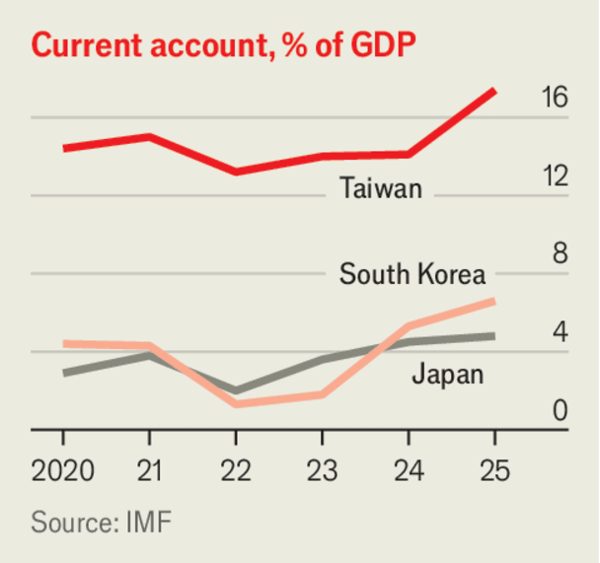
America’s AI boom has pushed north-east Asia’s rich chip economies into record trade performance: Taiwan’s output is rising at a 14% annual pace, South Korean memory-chip makers’ operating profits are up more than 500% in a year, and Japan, South Korea and Taiwan all posted record exports and current-account surpluses in 2025. Yet outside chips and servers, the region is deindustrialising as China shifts from low-value assembly to competition across the full supply chain, turning Taiwan’s goods surplus with the mainland into a deficit, earlier doing the same to South Korea, and driving Japan’s bilateral deficit with China to a record level.
The region’s growing dependence on chips brings volatility and geopolitical exposure: north-east Asia’s export-basket concentration is 73% above the rich-world average and has increased since 2019, while supply chains rely heavily on America and China for inputs and final demand. Domestic demand remains weak because legacy export-first systems suppress consumption through two-tier labour markets, unequal pensions, weak-currency or state-credit policies, and high elderly relative poverty, so reforms should raise real wages, minimum incomes and efficient capital allocation.
The recommended response is diversification rather than more industrial policy: let failing manufacturers exit, stop subsidies for giants such as TSMC and Samsung, reduce trade barriers, create a South Korea-Japan free-trade deal, and have South Korea join the Japan-led CPTPP. The risk is the opposite trend, with South Korea pledging $530bn in chip subsidies and Japan steering investment into 61 “strategic” goods, a rich-country export push that would make the region poorer and more exposed instead of more dynamic at home and diversified abroad.
Source: How East Asia should respond to its China shock
Subtitle: As they deindustrialise, Taiwan, South Korea and Japan must reform
Dateline: 5月 28, 2026 05:18 上午