11月30日,普京身着军装在国营电视上视察指挥所并宣称俄军“几乎在所有地方”推进;两天后他又在投资会议上称经济在“成功应对”问题并准备与欧洲作战。现实是推进缓慢且代价高昂,四年仍未攻下顿巴斯,乌军仍守住俄方数周前声称已夺取的前线城市波克罗夫斯克。
经济尚未崩溃但压力上升:过去一年油气收入下降22%,预算赤字逼近GDP的3%。克里姆林宫将约一半预算用于军队、军工、国内安全和债务偿付,并在两位数利率与劳动力短缺背景下通过国内借款与加税为战争融资,从而进一步挤压民用部门。
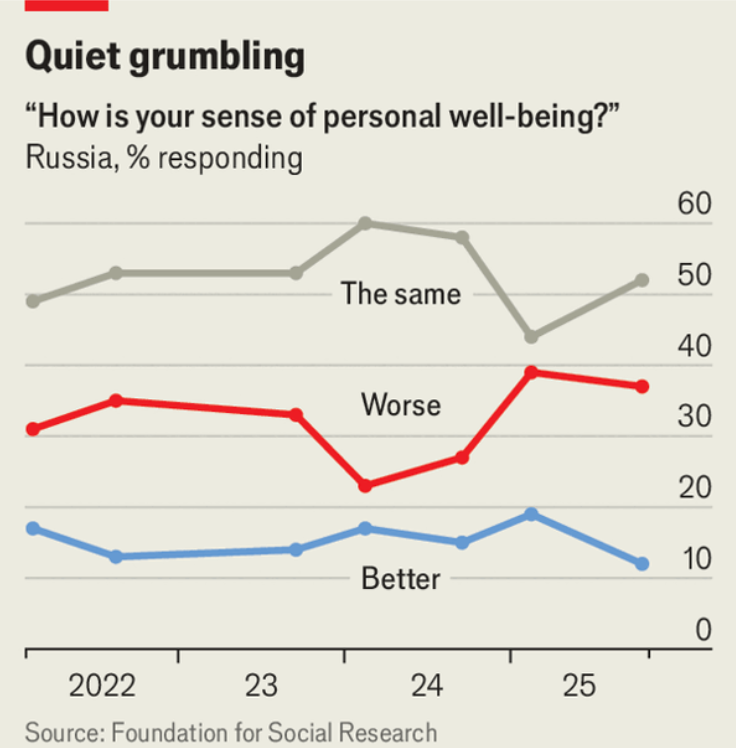
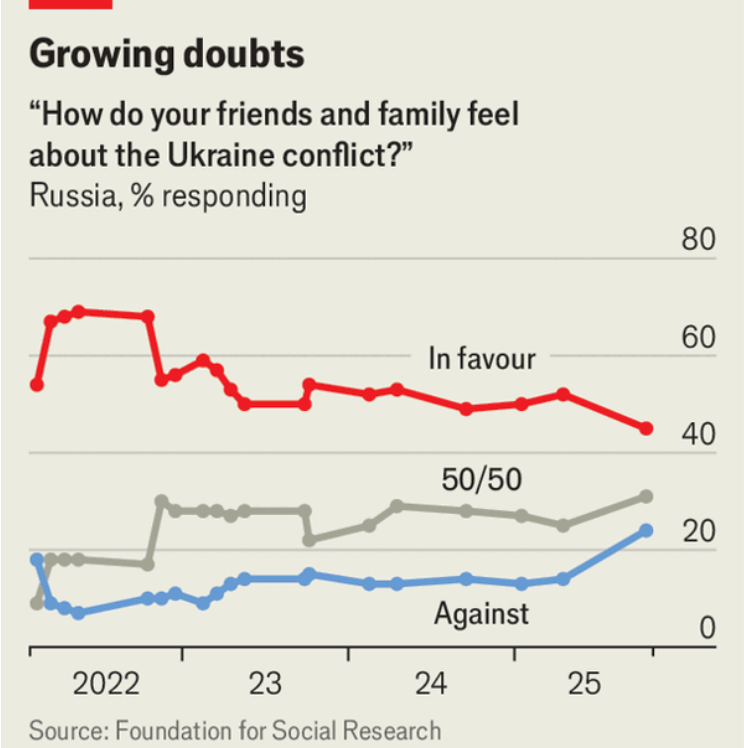
民意指标同步转弱:一项调查中称自身福祉恶化者是称改善者的三倍,且为战争开始以来最高。狂热支持者占比从未超过25%,而“圈内主流”认知从2023年5月的57%对39%支持转为2025年10月的55%对45%反对或势均力敌;列瓦达调查称仅40%把参战者视为英雄,实验性提问中88%希望战争结束但只有47%预计普京会做到。
On November 30 Putin appeared on state TV at a command post in fatigues claiming Russian troops were advancing “virtually everywhere”; two days later he told an investment conference the economy was “successfully tackling” problems and was ready for war with Europe. In reality gains are slow and costly, Donbas is still unconquered after four years, and Ukraine still holds Pokrovsk weeks after Russia claimed it had fallen.
The economy is not collapsing but strain is rising: oil and gas revenues are down 22% over the past year, and the budget deficit is nearing 3% of GDP. About half the budget goes to the armed forces, the military-industrial complex, domestic security, and debt service, while wartime financing relies on inflationary domestic borrowing and higher taxes amid double-digit interest rates and labor shortages.
Public sentiment data are deteriorating too: in one survey, those saying well-being was worsening were triple those saying it was improving, the highest since the war began. War zealots never exceeded 25%, and perceived “inner-circle” opinion flipped from 57%–39% pro-war in May 2023 to 55%–45% anti-war or evenly split in October 2025; Levada finds only 40% see veterans as heroes, and an experiment found 88% wish the war to end but only 47% expect Putin to deliver that.
Source: Russia is not as resilient as it wants you to think
Subtitle: But Vladimir Putin will keep fighting, and claiming victory prematurely
Dateline: 12月 11, 2025 07:12 上午