4月17日,在伊朗外长宣称霍尔木兹海峡“完全开放”后,布伦特原油在当日下跌10%,到90美元/桶;次日伊朗袭击一艘印度油轮后,全球基准价反弹了5%,目前虽回到100美元上方,却仍低于3月下旬高点约15美元,尽管美国封锁使更多石油滞留海湾。战争进入第50天时,海湾已流失5.5亿桶原油,几乎等于去年全球产量的2%;若海峡每月持续受阻,全球每月将失去约700万吨液化天然气,约占年度供应量的2%。
文章强调西方“看似平稳”是误导:到4月20日,战争前最后出发的油轮都已到达马来西亚和加州,随着假日交通季临近,全球已无海运缓冲。指标面显示,能源系统的严重损害已发生;若海峡不尽快重开,总体成本可能上升到引发燃料体系“卡死”;即使立即重开也只是刚好避免灾难,额外痛苦仍不可避免。推动接近崩溃的三大因素是:可购买油货减少、炼厂减产以及欧洲等地需求被人为维持在高位。
战事初期,异常高企的海上库存暂时延缓了恐慌,二次加速的航运交付后这类库存已耗尽;亚洲除中国外的原油库存到4月19日已降至约6700万桶(降幅11%),亚洲炼厂产能已被削减逾300万桶/日(占总能力10%),若海峡继续封闭,5月或许会降至500万桶/日,7月可能达1000万桶/日。亚洲现货汽油、柴油、航空煤油价格分别由80/93/94美元/桶升至120/175/200美元,欧洲则出现严重升贴水倒挂;若欧洲继续补贴消费,模型显示其库存在6月前将快速下滑,整体系统性风险同步上升。
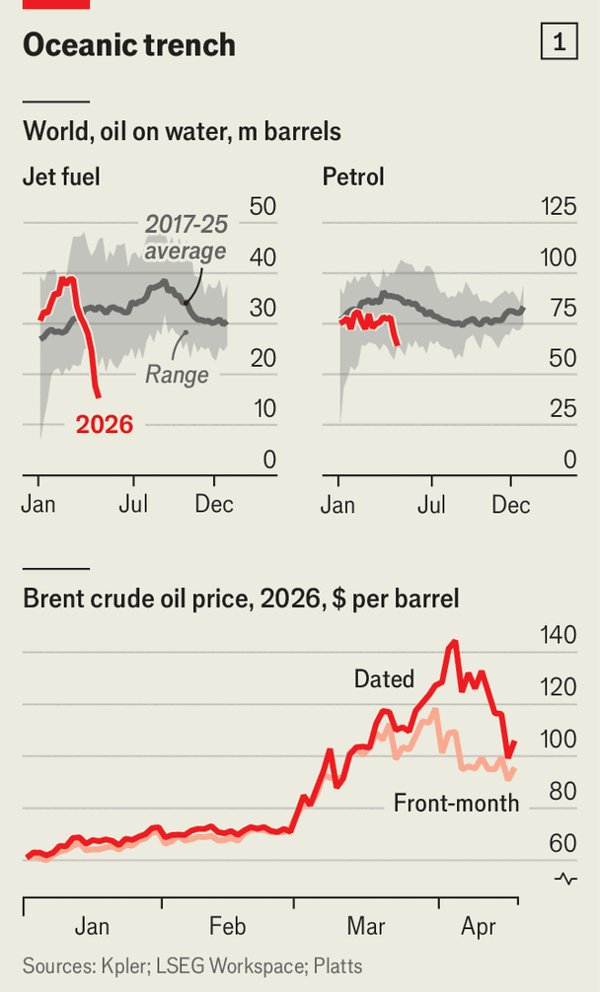
On April 17, Brent crude dropped 10% to about $90 a barrel after Iran’s foreign minister said the Strait of Hormuz was “completely open,” then rose 5% the next day after Iran attacked an Indian tanker; it has since climbed above $100 but remains roughly $15 below its late-March high, even as a U.S. blockade has trapped more oil in the Gulf. Fifty days into the conflict, 550 million barrels of Gulf crude had been removed from supply, almost 2% of last year’s global output, and each additional month of closure is estimated to forfeit about 7 million tonnes of LNG, around 2% of annual global supply.
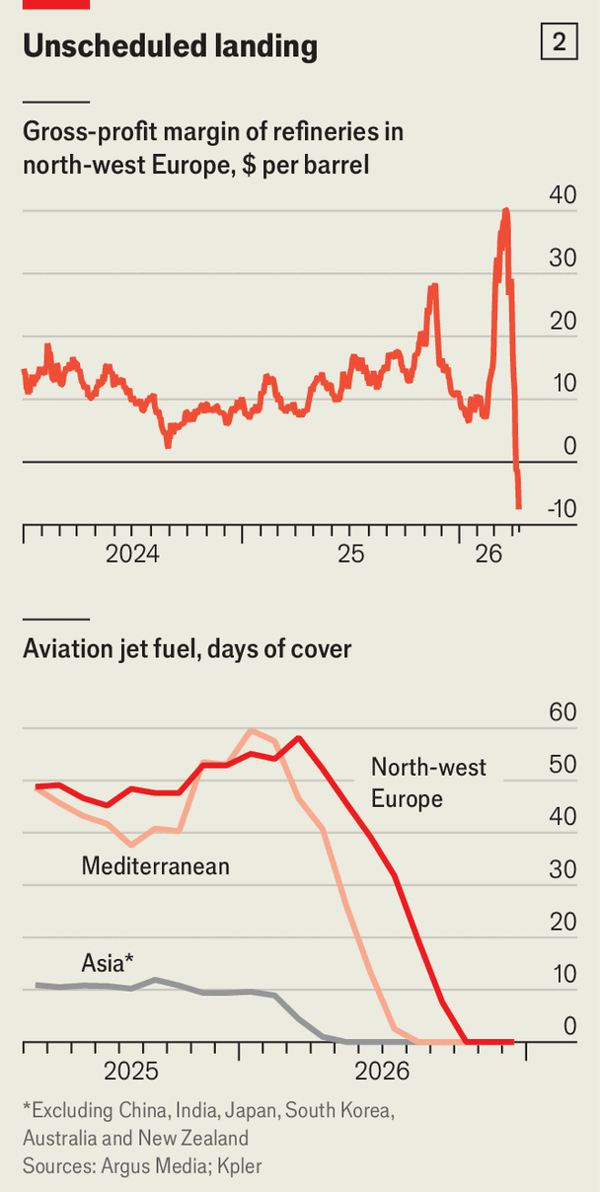
The apparent calm in Western markets is misleading: by April 20 the last tankers that left before shutdown had already reached Malaysia and California, leaving almost no maritime buffer as seasonal transport demand rises. The dashboard of indicators shows harm is already substantial; without a quick reopening total costs could snowball into a fuel-system shutdown, while reopening now only narrowly avoids calamity and still leaves additional pain unavoidable. Three forces are pushing markets toward the edge: available cargoes are shrinking, refineries are cutting throughput, and demand is being kept artificially high, especially in Europe.
At first, near-record at-sea inventories delayed panic, but those stocks have now been largely consumed after recent Iranian and Russian cargoes were absorbed. By April 19, crude inventories in Asia excluding China had fallen 67 million barrels, down 11%, and Asian refiners had cut throughput by over 3 million b/d (10% of combined capacity), with risks of 5 million b/d cuts in May and 10 million b/d by July if Hormuz stays closed. Spot prices in Asia rose from $80/$93/$94 to $120/$175/$200 for petrol, diesel, and jet fuel, while Europe faces severe backwardation; if Europe continues subsidizing consumption, stock models project a sharp fall by June and heightened systemic strain.
Source: Global energy markets are on the verge of a disaster
Subtitle: Scenarios now range from bad to awful
Dateline: 4月 23, 2026 03:39 上午 | Lausanne