垂直整合的中国电动汽车巨头比亚迪(其海鸥车型售价仅为1万美元)的年营收在过去十年中增长了十倍,去年达到1160亿美元,并在2025年超越特斯拉成为销量冠军。然而,比亚迪的营业利润在2025年出现了四年来的首次下滑,截至4月份,其销量已连续八个月同比下降。
尽管吉利在2026年初短暂终结了比亚迪连续三年多中国电动车销量第一的纪录,但随着行业转向软件,该公司正面临巨大压力。竞争对手正与华为等科技巨头合作(华为联合推出了售价超过10万美元的尊界电动车),而比亚迪则坚持自主研发包括自动驾驶芯片和10分钟快充电池在内的所有技术。
为了应对自动驾驶领域的安全担忧和竞争,比亚迪最近承诺将承担自动驾驶事故带来的损失。尽管对比亚迪而言电池优势依旧存在,但其严密的垂直整合模式已显露出明显的疲态。
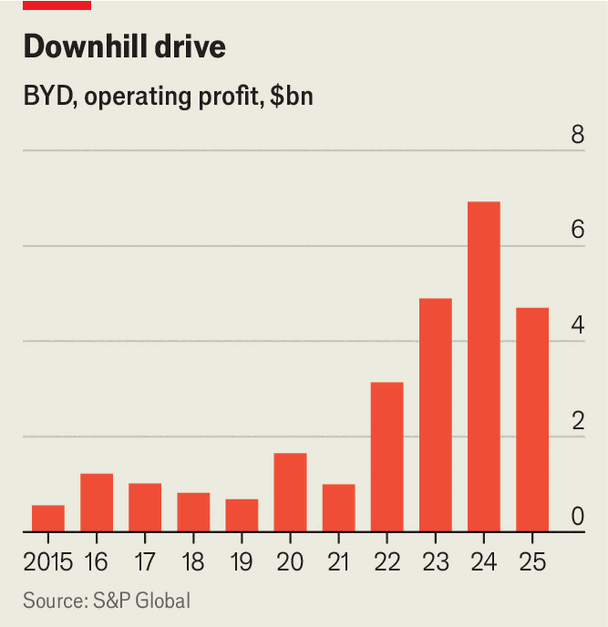
Vertically integrated Chinese EV giant BYD, whose Seagull model sells for just $10,000, saw its revenue increase ten-fold in the past decade to $116 billion, selling more cars than Tesla in 2025. However, in 2025, BYD's operating profit fell for the first time in four years, and by April, year-on-year sales had declined for eight consecutive months.
While rivals like Geely briefly ended BYD's three-year run as China's top EV seller in early 2026, the company faces intense pressure as the industry shifts toward software. Competitors are partnering with tech giants like Huawei, which co-launched the $100,000 Maextro EV, whereas BYD insists on developing its technology—including self-driving chips and rapid 10-minute charging batteries—entirely in-house.
To address safety concerns and competition in autonomous driving, BYD recently promised to cover losses from self-driving accidents. Despite maintaining its battery advantage, BYD's strict vertical integration model is showing clear signs of strain.
Source: BYD is losing its spark
Subtitle: The Chinese EV giant is struggling to stay ahead in an industry defined by software
Dateline: June 4th 2026