欧盟是一个由27个成员国组成的集团,是仅次于美国的世界第二大经济体、仅次于印度和中国的第三大内部市场,但其GDP和股市在过去十年仍落后于美国;4月其服务业活动降至62个月低点。covid-19、俄罗斯入侵乌克兰以及美国对伊朗的战争给增长带来冲击,但欧盟自身规则也负担沉重:2014年至2024年间委员会审议逾1000项提案并采纳约660项,而当前的报告和文书工作被估计每年使企业成本高达1500亿欧元(接近GDP的1%),拟议新规可能再增加800亿欧元;国际货币基金组织估算欧盟内部贸易壁垒仍相当于货物44%和服务110%的“等效关税”,且2025年一项调查显示德国企业三年来额外聘用了325,000名员工应对官僚手续。
欧盟各国政府现将单一市场的深化定义为全体成员与欧盟机构的“迫切共同责任”,并正在推进十项“综合法案”以简化合规;示例包括对每年进口低于50吨高排放产品免征碳边境税、员工少于1000人且销售额低于4.5亿欧元企业的环境报告负担减轻、员工少于5000人且年营收低于15亿欧元企业不再追踪全球环境足迹和人权影响,以及预计对大约750名员工以下企业取消许多客户数据记录义务。官员预计到2029年,简化举措可每年减少企业行政成本375亿欧元,而Ifo对2006—2020年27项全球去规制案例的研究发现,人均GDP平均可提升4.6%。
国际货币基金组织认为,制度质量改善和市场一体化可在未来十年把GDP提升3%,这对比2008—2024年低于1%的年均增长率是显著的;金融一体化被期待降低跨境基金摩擦,而跨境基金在每个成员国的设立成本仍为每次2万到6万欧元、每年行政成本约40万欧元。尽管如此,成员国不太可能共享税收与劳工体系控制权,语言和法律差异也客观存在,并且投资者普遍谨慎,因此4月28日AI“综合法案”谈判破裂、以及服务护照与“第28号制度”有限成效的既往经历表明,前景虽有希望,但并非自动实现。
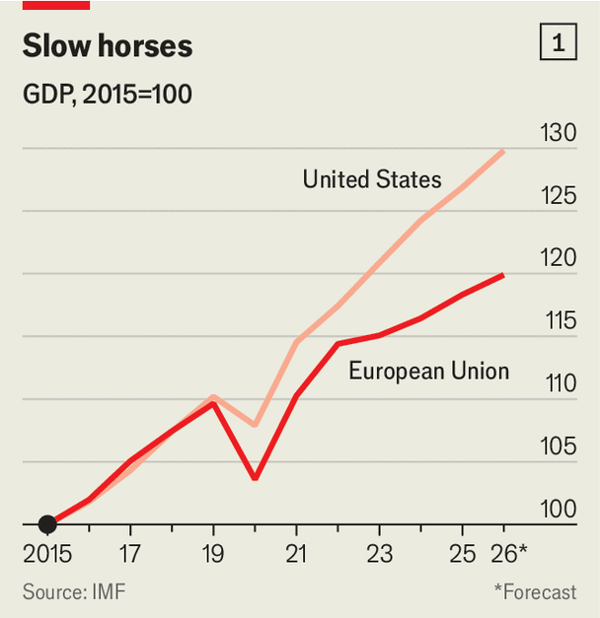
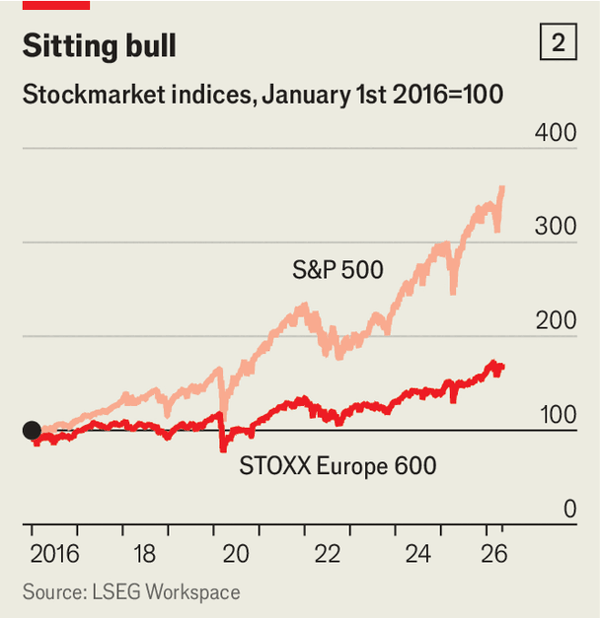
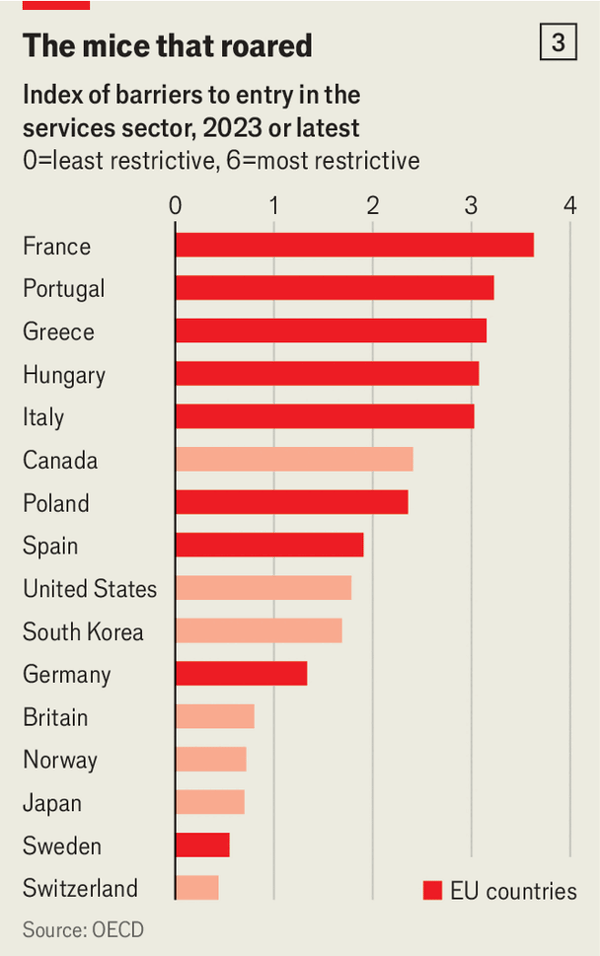
The European Union is a 27-member bloc, the world’s second-largest economy after the United States and the third-largest internal market after India and China, yet its GDP and stock market have lagged the U.S. over the last decade; services activity fell to a 62-month low in April. External shocks from covid-19, Russia’s invasion of Ukraine, and America’s war on Iran hurt growth, but internal rules also impose heavy burdens: from 2014 to 2024 the Commission reviewed over 1,000 proposals and adopted around 660, while current reporting and paperwork are estimated to cost firms €150bn per year (nearly 1% of GDP), with possible additional rules adding €80bn; IMF estimates internal trade barriers still equal tariffs of 44% for goods and 110% for services, and a 2025 survey found German firms had to hire 325,000 extra workers in three years for bureaucracy.
EU governments now define deep single-market integration as an urgent shared responsibility and are pushing ten omnibus bills to simplify compliance; examples include carbon-border-tax exemptions for imports under 50 tonnes of high-emission goods, lighter environmental reporting for firms with fewer than 1,000 employees and under €450m in sales, no global footprint/human-rights tracking for firms under 5,000 employees and under €1.5bn revenue, and an anticipated cutoff around 750 employees for many customer-data record-keeping duties. Officials expect simplification to cut annual business administrative costs by €37.5bn by 2029, and the Ifo study of 27 global deregulation episodes found average GDP-per-capita gains of 4.6%.
The IMF says stronger regulation quality and integration could lift GDP by 3% over the next decade—high relative to the 2008–2024 average yearly growth below 1%; financial integration is expected to lower cross-border fund frictions, while setup costs for cross-border funds still range from €20,000 to €60,000 per member state with about €400,000 annual administration. Yet member states are unlikely to pool control over tax and labour systems, linguistic and legal differences are real, and investors remain cautious, so setbacks such as the broken AI omnibus talks on April 28 and the limited track record of service passports and the “28th regime” suggest the outlook is promising but not automatic.
Source: The EU wants to unshackle its economy. For real this time
Subtitle: Eurocrats are belatedly developing a healthy distaste for red tape
Dateline: 5月 07, 2026 06:28 上午