受海洋气候变暖推动,英格兰南部海域的章鱼种群在过去两年内呈爆发式激增。仅在2026年前七个月,德文郡布里克瑟姆(Brixham)渔港的章鱼卸货量就已突破700吨,达到2021至2024年年均水平的六倍以上。然而,这一新物种的骤增引起了传统渔民的强烈排斥。章鱼不仅体表黏液与墨汁繁杂,更成为沿海甲壳类生物的顶级掠食者。龙虾捕捞者屡屡发现诱捕笼内的渔获被章鱼抢食殆尽;2025年前九个月,英国西南部褐蟹和顶级扇贝的捕捞量同比暴跌了50%。
章鱼的北迁是海洋变暖重塑英国近海生态与渔业资源的最典型缩影。当前英格兰周边海域的平均海表温度较过去40年的基准水平升高了约2.2摄氏度。海水升温使幼体章鱼随英吉利海峡气流向北扩散并在适宜水温中迅速繁衍,同样受益于水温上升的还有曾因过度捕捞而绝迹的蓝鳍金枪鱼。然而,适应冷水环境的本土传统经济鱼种正遭遇生存危机。鳕鱼(cod)和黑线鳕(haddock)等冷水鱼类正被推至生理承受极限,被迫加速向苏格兰及更北的极地寒冷海域退缩。
这种剧烈的生态迁移给英国渔业产业链带来了严峻的转型阵痛。尽管少数转捕章鱼的船只获利丰厚,但严重依赖传统蟹类与龙虾的中小渔民生计遭受重创。英国本土配套加工基础设施极度匮乏,绝大多数在布里克瑟姆捕获的章鱼必须直接出口至西班牙加工;同时英国本土饮食习惯短期内难以转变,市场需求仍然受限。长远来看,英国渔船未来虽将转向沙丁鱼、海鲈鱼和章鱼等“气候移民”,但真正的生存危机将落在塞舌尔等热带发展中国家,当地水域鱼群流失后将再无任何更暖海域的物种进行替代补充。
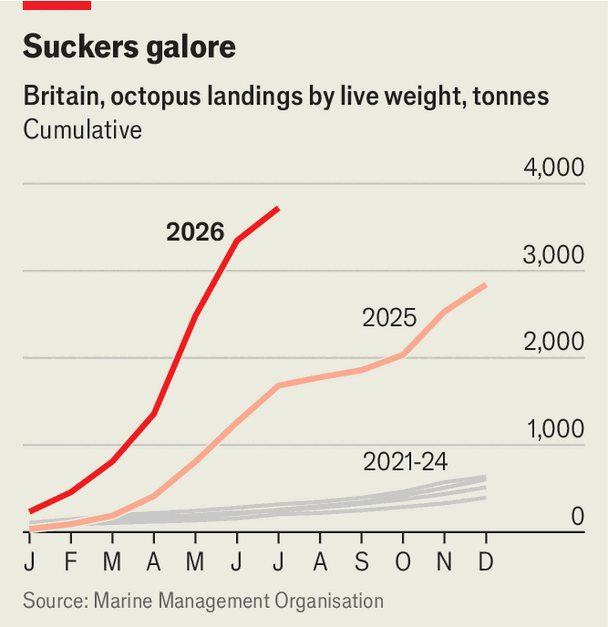
Driven by accelerating marine warming, octopus populations off England’s southern coast have exploded over the past two years. In the major port of Brixham, landings surpassed 700 tonnes during the first seven months of 2026 alone—more than six times the annual average recorded between 2021 and 2024. However, the surge has infuriated traditional pot fishermen, as the aggressive cephalopods ravage local crustacean stocks. During the first nine months of 2025, commercial landings of brown crabs and king scallops across south-western Britain plummeted by 50% year-on-year, with octopuses systematically plundering baited lobster pots.
This cephalopod bloom vividly illustrates how climate disruption is transforming Britain’s marine ecology. Sea-surface temperatures around England are currently approximately 2.2°C above their 40-year historical baseline, allowing southerly larvae drifting across the English Channel to flourish in newly warmed waters alongside returning bluefin tuna. Conversely, cold-water groundfish adapted to temperate conditions are struggling with thermal stress. According to the Marine Biology Association, staple commercial species such as cod and haddock are reaching their physiological thermal boundaries off the southern coast, retreating steadily northwards into colder waters.
Adapting to this ecological transformation presents severe commercial hurdles for the British fishing fleet. While specialized trawlers have profited from octopus landings, traditional inshore crab and lobster fishermen face collapsing revenues. Domestic processing infrastructure remains inadequate, forcing Britain to ship the vast majority of its octopus catch to Spain for processing, while domestic consumers remain slow to embrace cephalopods on coastal dinner plates. While northern British fisheries will eventually offset lost cold-water stocks with warm-water migrants like sea bass, sardines, and octopus, tropical nations such as Seychelles face catastrophic net losses with no ecological replacements.
Source: Warming seas are enticing octopus to British waters
Subtitle: But some fish are being pushed away
Dateline: Sep 10th 2026