经合组织(OECD)最新公布的2026年国际学生评估项目(PISA)测试结果粉碎了后疫情时代的复苏希望,富裕国家的15岁青少年学业成绩出现全方位恶化,阅读素养的下滑更呈加速态势。在持续参与测试的23个OECD成员国中,平均成绩在2012年前后见顶后持续下滑,当前的数学与阅读能力已倒退至十年前14岁学生的水平。更为严峻的是教育不平等的急剧扩大,高低分学生差距创下历史极值;OECD成员国中高达20%的青少年在阅读、数学与科学三科皆被定性为“低能力表现者”(较四年前攀升4个百分点),这意味着五分之一的年轻人甚至难以读懂基础水电气账单。
学业能力的系统性退化源于疫情后遗症、屏幕沉迷与教育行政理念偏差的三重共振。富裕国家约15%的学生每两周至少旷课一天(2019年仅为10%),旷课率居高不下直接侵蚀基础认知。同时,智能手机与社交媒体泛滥导致深阅读习惯瓦解,在美仅37%的9岁儿童出于兴趣阅读课外书(1990年代近60%),快餐式浏览严重削弱了学生解析复杂文本的核心能力,并拖累了数理逻辑的理解。雪上加霜的是,OECD教育主管指出,西方学校普遍滋生自满文化、宽容平庸并盲目引进未经实证的教育软件,导致课堂秩序持续恶化。此外,芬兰曾标榜的弱化考试、推崇“游戏中学习”等进步主义教改已被证明误导了全球教育路线,芬兰自身成绩近年出现断崖式暴跌。
相比之下,东亚地区与英国英格兰的教改经验为破局提供了反差样本。新加坡、中国台湾与日本不仅保持领跑,其高薪精选精训教师、推行大班制而非盲目扩大师资规模的做法极具成效。英格兰在过去15年坚持反潮流而行,拒绝时髦的“软实力”空谈,推行“知识密集型”传统教学、强化标准化考试并严格考评,促使英国在三项学科中稳居全球前十,与重金推行宽松课程却成绩暴跌的苏格兰形成鲜明对照。经济学研究显示,PISA成绩提升25分可拉动富国长期年均GDP增长0.5个百分点;在AI重塑就业格局、残酷淘汰低技能劳动力的当下,重构严谨的基础教育已成为攸关国家未来的生死之战。
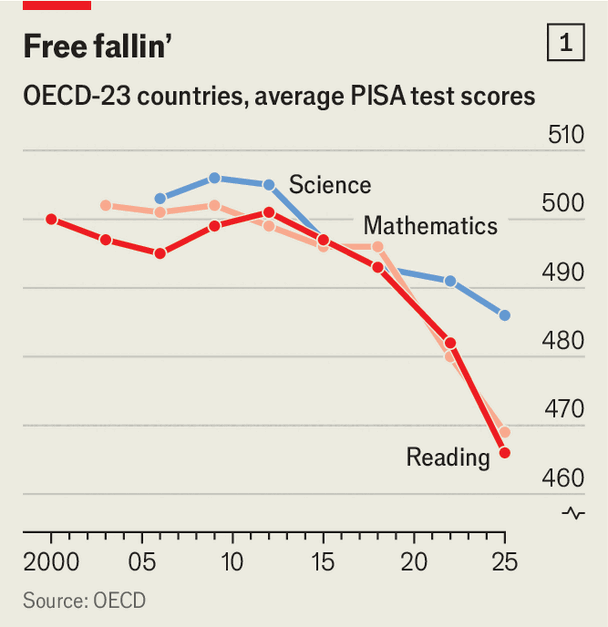
The OECD’s latest 2026 Programme for International Student Assessment (PISA) dashed post-pandemic recovery hopes, revealing catastrophic declines in educational attainment across rich countries, with reading proficiency deteriorating at an accelerating pace. Across the 23 OECD economies tested consistently since 2000, average performance peaked around 2012; today's 15-year-olds exhibit reading and mathematics skills equivalent to 14-year-olds a decade ago. Crucially, the achievement gap between high and low performers reached an all-time high: fully 20% of OECD teenagers now fail basic competency thresholds across reading, mathematics, and science simultaneously—up from 16% four years ago—leaving them functionally unable to comprehend basic utility bills or rudimentary texts.
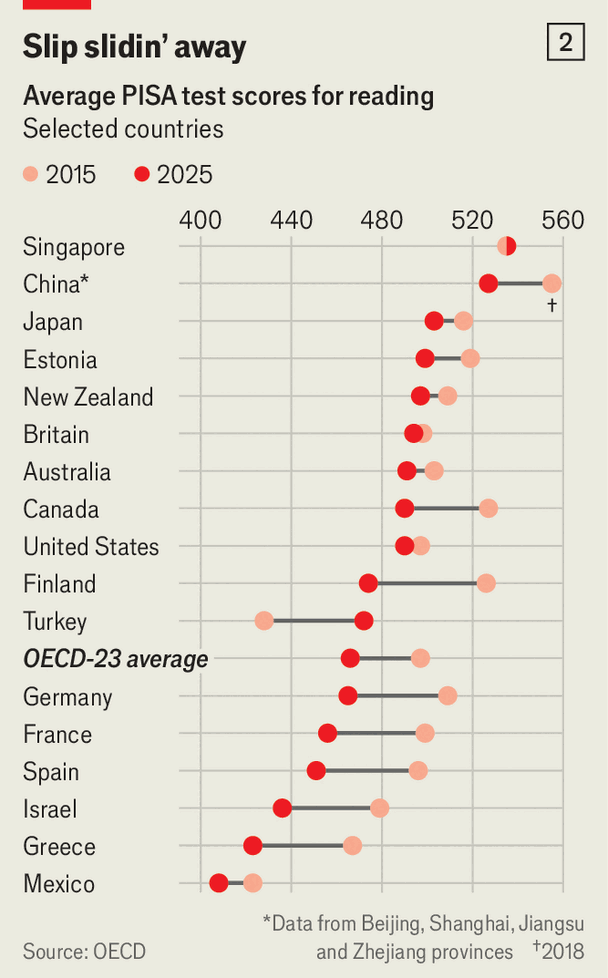
Multiple systemic failures drive this intellectual contraction. Chronic absenteeism persists post-covid, with 15% of primary pupils across developed economies missing at least one day per fortnight (up from 10% in 2019). Simultaneously, ubiquitous digital devices have gutted deep literacy: only 37% of nine-year-olds in America now read for pleasure, down from nearly 60% in the 1990s, fostering "hasty readers" incapable of complex textual analysis. Andreas Schleicher, the OECD's education chief, highlights institutional complacency, lax classroom discipline, and reckless reliance on unproven ed-tech software. Furthermore, the global mimicry of Finland’s "play-based," test-free progressive model has backfired disastrously, as Finland itself records one of the steepest, most protracted score collapses worldwide.
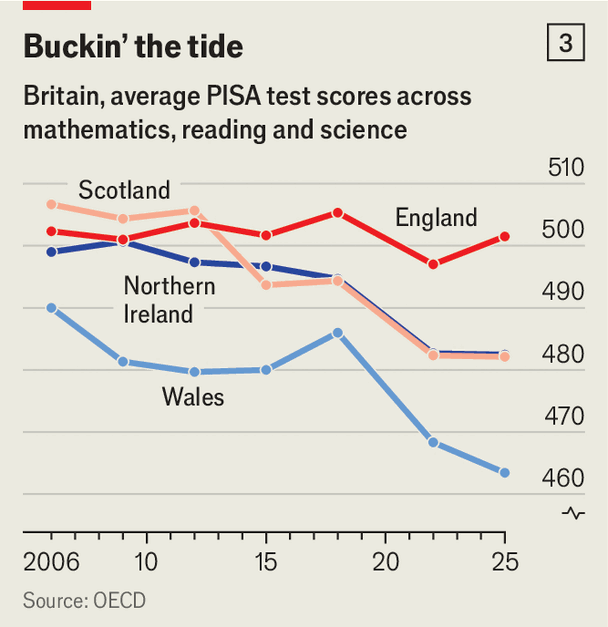
Conversely, East Asian systems and England provide vital counter-models. East Asian hubs like Singapore, Taiwan, and Japan maintained top tiers by prioritizing teacher selection, intensive professional training, and rigorous standards over Western obsessions with small class sizes. Similarly, England bucked progressive pedagogical trends over the past 15 years by introducing "knowledge-rich" factual curriculums, objective examinations over easily manipulated coursework, and stringent inspections, propelling Britain into the global top ten across all subjects while high-spending, progressive Scotland tumbled. As econometric analyses show that a 25-point PISA increase boosts annual GDP growth by 0.5 percentage points, rigorous basic education is imperative to shield future workers from artificial-intelligence displacement.
Source: Are teenagers growing dimmer?
Subtitle: The latest global school tests reveal shocking new declines
Dateline: Sep 10th 2026