尽管面临西方制裁和国际智库关于结构性枯竭的预测,俄罗斯的战时经济依然保持着韧性,避开了衰退的预测。官方第一季度数据显示的国内生产总值(GDP)同比收缩0.2%很大程度上是一种统计错觉,这是由1月份增值税(VAT)从20%提高到22%引起的,该税率的上调将消费提前到了2025年底。在扣除通胀因素后,2022年至2025年间人均GDP增长了12%,私营部门的金融指标表明,在稳定石油出口的支持下,该国经济继续经历缓慢增长而非衰退。
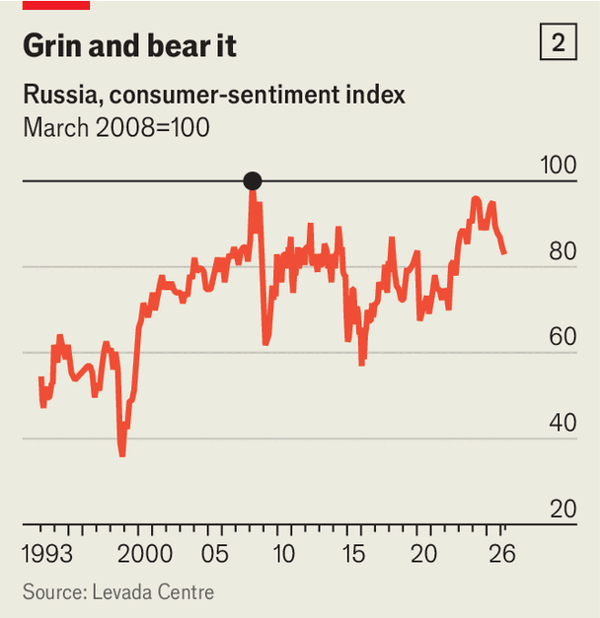
国内经济指标显示出相对强劲的迹象,失业率接近2%的历史低点,实际工资比2019年的水平高出25%。通胀率较超过10%的峰值减半,而消费活动依然强劲:在1月至5月期间,俄罗斯航空(Aeroflot)的旅客周转量同比增长近10%至400亿客公里,而像兰博基尼这样的豪华汽车进口量较2025年激增了80%。尽管乌克兰对能源基础设施的打击使燃料出口复杂化,但4月份的商品出口总额与去年相比仍略有增长。
去年政府在国防上的支出达到了GDP的7-8%,较战前常态仅有3-4%的适度增长。虽然这种军事开支使国家资源紧张,但民用经济仍在维持现状而非萎缩。俄罗斯约占GDP 3%的财政赤字依然可控,因为政府可以提高税收、在内部借贷或动用国家储备基金。因此,俄罗斯预计今年将实现1%左右的GDP增长,这一表现与法国或加拿大相当,表明尽管面临更严厉的国际制裁,其战时经济仍将继续运转。
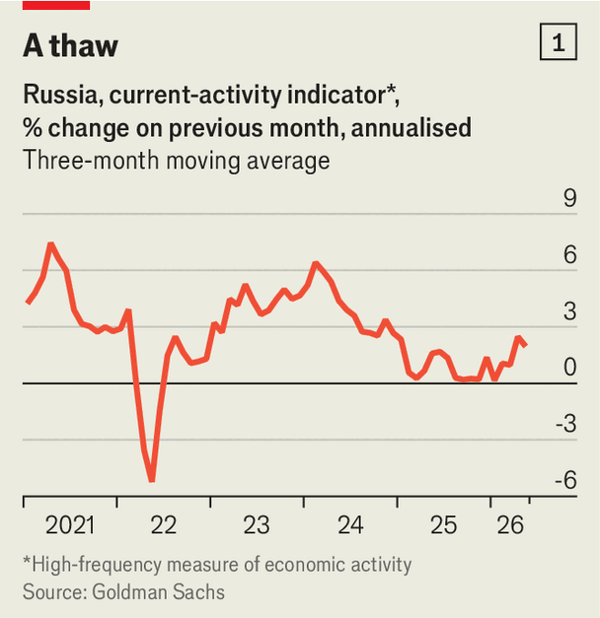
Despite Western sanctions and predictions of structural exhaustion by international think tanks, Russia's war economy remains resilient, defying recession predictions. Official first-quarter statistics indicating a 0.2% year-on-year GDP contraction are largely a statistical illusion caused by a January value-added tax (VAT) increase from 20% to 22%, which pulled purchases forward into late 2025. When adjusted for inflation, GDP per person rose by 12% between 2022 and 2025, and private financial indicators suggest the economy continues to experience sluggish growth rather than a slump, supported by stable oil exports.
Domestic economic metrics show signs of relative strength, with unemployment near a record low of 2% and real wages rising 25% above 2019 levels. Inflation has decreased by half from its peak of over 10%, while consumer activities remain strong: Aeroflot passenger distance rose by nearly 10% year-on-year to 40 billion kilometers between January and May, and luxury vehicle imports like Lamborghinis surged by 80% from 2025. Although Ukrainian strikes on energy infrastructure have complicated fuel exports, total goods exports in April still grew slightly compared to the prior year.
Government spending on defense, which reached 7-8% of GDP last year, represents a modest 3-4% increase relative to pre-war norms. While this military spending strains national resources, the civilian economy continues to tread water rather than contract. Russia's fiscal deficit of approximately 3% of GDP remains manageable, as the government can raise taxes, borrow domestically, or tap state reserve funds. Consequently, Russia is projected to achieve GDP growth of around 1% this year, a performance comparable to France or Canada, suggesting the war economy will continue to function despite tougher international sanctions.
Source: Russia’s war economy has problems—but is not about to crash
Subtitle: Vladimir Putin is still able to fund his aggressio
Dateline: 6月 25, 2026 03:29 上午